 SwitchMyTool

My verdict
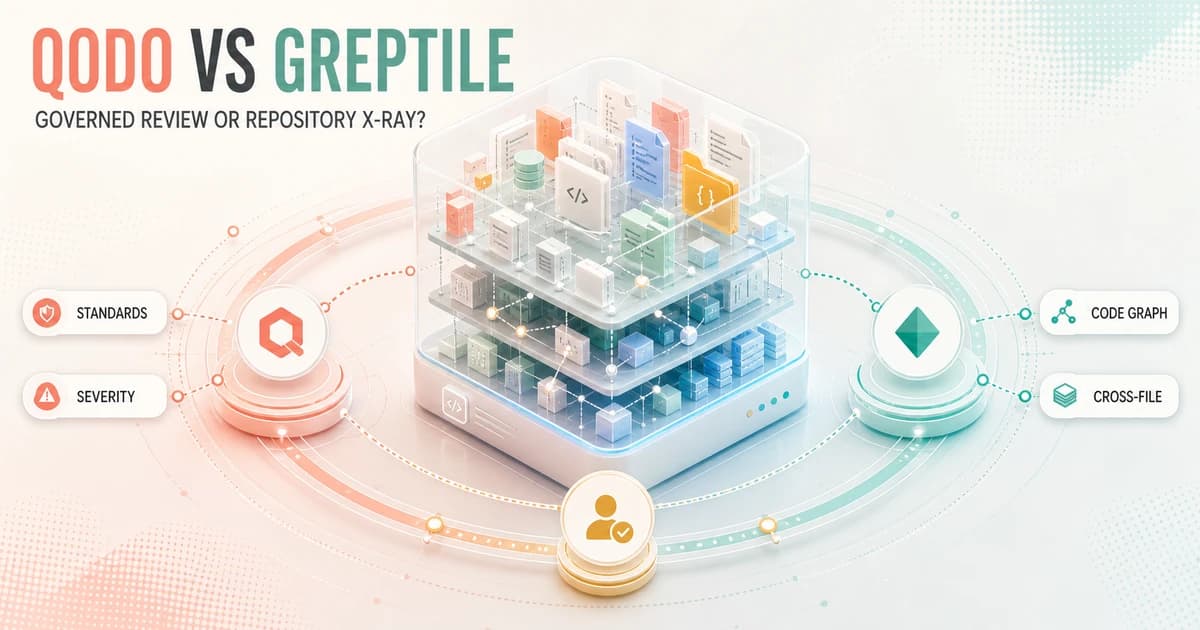
Qodo governs the review. Greptile investigates the repository.
I choose Qodo when the problem is consistency across a team. Its strongest ideas are not merely that an AI can read a diff. Qodo gives me review effort, severity thresholds, visibility controls, repository standards, specialized agents, and a clearer way to decide which findings deserve attention first.
I choose Greptile when the difficult bug is likely to live outside the changed file. Greptile builds a graph of functions, classes, imports, files, directories, callers, dependencies, and repeated patterns. That repository model gives it a concrete way to ask what else a small change can break.
The distinction matters because both vendors now make broad context claims. I do not buy either claim at face value. I test whether the reviewer finds a broken caller, notices a violated local pattern, suggests a useful test, and then stays quiet when the pull request is sound.
My Qodo vs Greptile verdict is therefore conditional. Qodo is the better fit for review governance. Greptile is the sharper fit for repository relationship analysis. Neither gets permission to merge.
If both feel too specialized, my guide to Qodo alternatives compares seven review workflows, including lighter GitHub options and deterministic quality platforms.
The real difference
One product organizes judgment. The other models relationships.
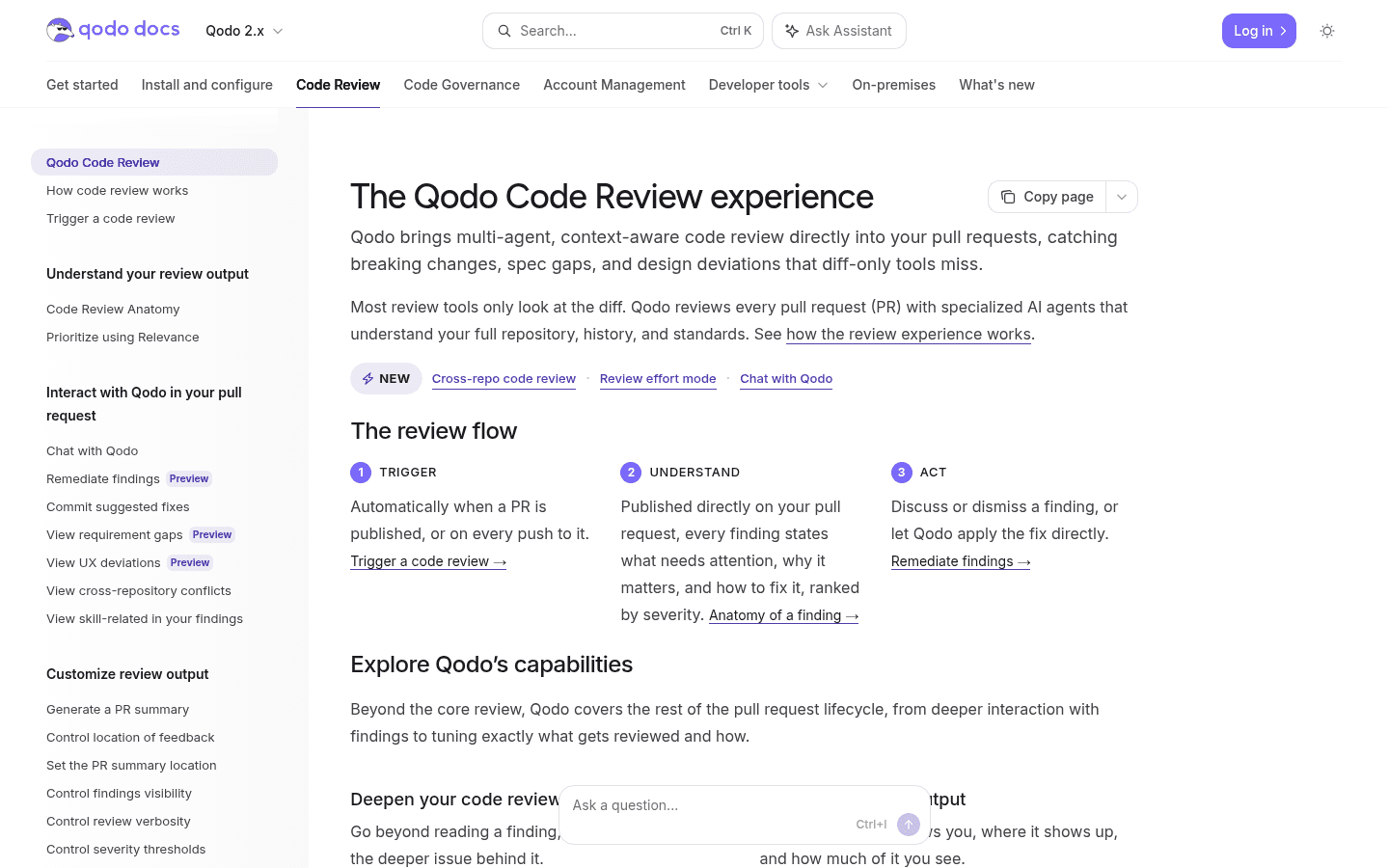
Qodo treats review as a managed process. A pull request can trigger several specialist agents. The system combines findings, ranks them, controls how much detail appears, and lets the team tune depth by risk. I can also define where feedback appears, what content is ignored, and which severity reaches developers.
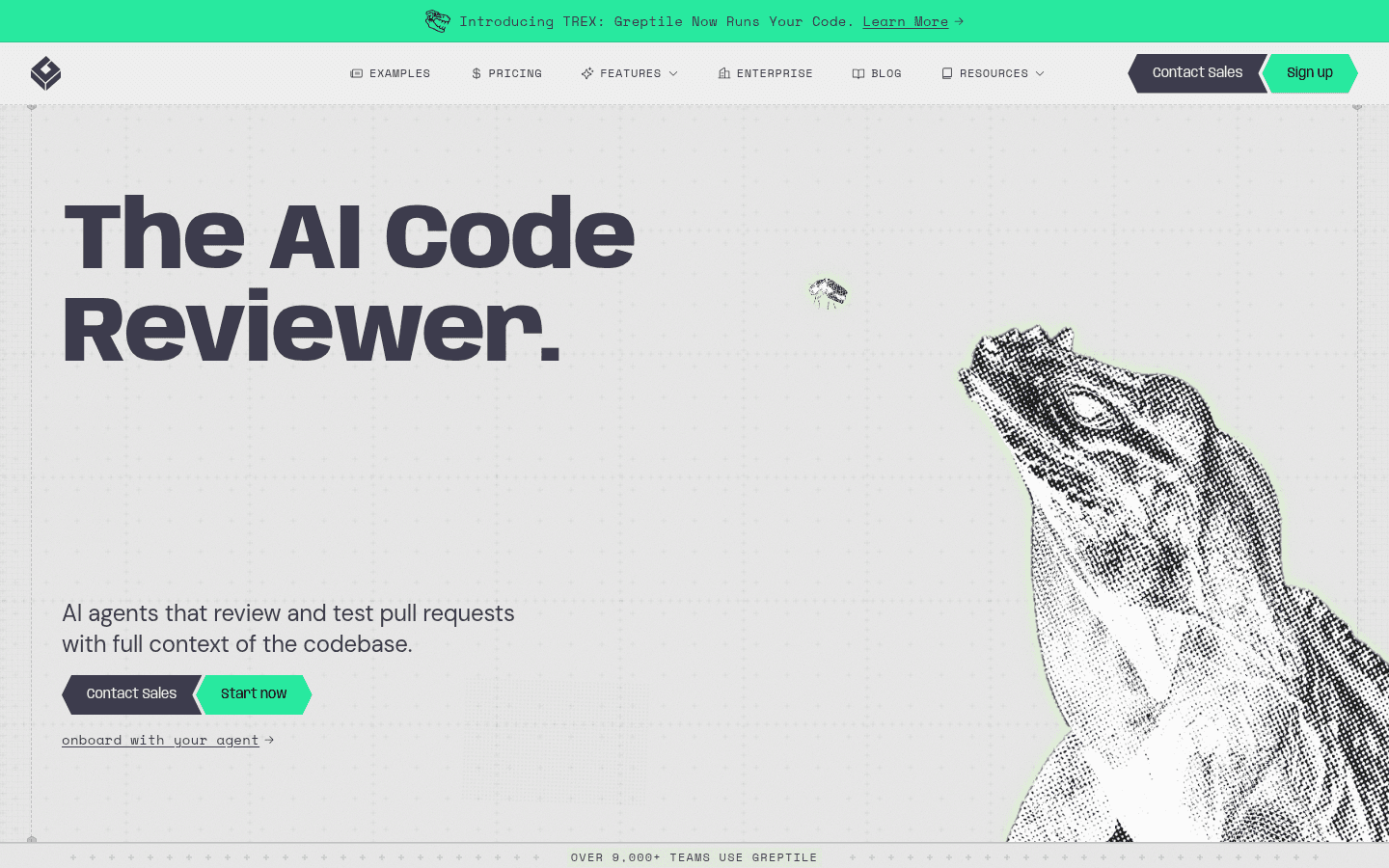
Greptile starts one layer lower. It indexes the repository into a graph, then retrieves relevant relationships while reviewing a diff. A changed function can lead it to callers, dependencies, usage sites, sibling implementations, and established patterns. That approach is attractive when a pull request looks harmless in isolation but violates a contract three files away.
Qodo also understands repositories, and Greptile also supports rules and feedback learning. This is not a tidy feature monopoly. The difference is product emphasis. Qodo makes review policy legible. Greptile makes code relationships legible.
I would not choose from the homepage claim that one catches more bugs. I would choose from the type of mistake my team repeatedly ships. If postmortems say standards were known but inconsistently enforced, I lean Qodo. If postmortems say reviewers missed a ripple effect, I lean Greptile.
At a glance
Qodo vs Greptile feature comparison
| Decision | Qodo | Greptile |
|---|---|---|
| Core job | Runs a multi-agent review system, ranks findings by severity, and gives teams controls for standards, review effort, visibility, and governance. | Builds a graph of the repository and uses it to trace dependencies, callers, related code, and patterns while reviewing a pull request. |
| Context model | Uses full-repository history, architecture, standards, and optional cross-repository context. | Indexes functions, classes, files, directories, imports, and relationships into a codebase graph. |
| Tuning | Review effort, verbosity, finding location, ignored content, severity thresholds, and repository guidelines. | Custom rules, nitpick controls, pattern repositories, feedback learning, and related repository context. |
| Review behavior | Specialized agents inspect different risks, then findings are organized and prioritized for the pull request. | The reviewer retrieves code affected by the diff and follows relationships beyond the changed files. |
| Price shape | Pro Team starts at $30 and uses pooled credits. Qodo advertises no repository or review rate limits and lets customers cap overage. | Starter is free for one active developer with 50 monthly credits. Pro is $30 per seat monthly with 50 credits per seat and $1 additional credits. |
| Best fit | Teams that need consistent review policy, severity, cross-repository standards, and an organization-wide quality workflow. | Teams whose expensive bugs hide in dependency chains, shared modules, monorepos, or code outside the visible diff. |
The table makes Greptile look more specialized, but specialization is not automatically precision. A code graph can retrieve the right files and still produce a weak conclusion. A multi-agent system can debate several dimensions and still flood the pull request with observations nobody acts on.
I care about the final unit of value: an accepted finding that changes code, adds a test, prevents a regression, or records a decision the team needed. Every other comment has a cost because a developer must read, verify, dismiss, or discuss it.
Review workflow
Both live in the pull request. The setup burden appears before the first useful comment.
Qodo can run automatically when a pull request is published or when new commits arrive. I can also request a review manually. Findings explain what needs attention, why it matters, and how to fix it, then Qodo lets me discuss, dismiss, or apply a remediation.
That workflow feels familiar after installation, but the useful work is configuration. I have to decide review effort, verbosity, comment placement, ignored content, severity, and which repository rules are worth giving to the reviewer. The default may be acceptable for a trial; it should not become policy by accident.
Greptile also reviews pull requests automatically, but it first needs a trustworthy repository index. The product says its feedback learning reduces comments the team does not care about over time. I still plan for an onboarding period where developers react to findings, correct assumptions, and identify generated or noisy areas.
I treat both as asynchronous first reviewers. They should arrive before a senior engineer spends twenty minutes rebuilding obvious context, but they should not interrupt every push with a fresh essay. I run automatic review at meaningful milestones and use deterministic CI for formatting, type errors, known security rules, and tests.
Repository context
Greptile has the cleaner mental model for ripple effects.
Greptile's graph is the most concrete differentiator in this comparison. Its documentation describes indexing code elements and their connections, then using real-time graph queries to find imports, callers, dependencies, and similar patterns. This is useful in monorepos, shared libraries, API contracts, generated clients, and service code where a local edit changes behavior somewhere else.
Pattern repositories add another useful idea. A team can point Greptile at a repository that represents preferred architecture or conventions. Related frontend and backend repositories can also provide each other context. I would test this on a schema change that must propagate across server, client, tests, and documentation.
Qodo approaches the same risk through full-repository analysis, history, standards, architecture, review effort, and cross-repository review. I prefer Qodo when the important question is not only where the code connects, but whether the change violates an agreed organizational rule and how severe that violation is.
Neither tool can recover context that does not exist. If a pricing exception, regulatory rule, or customer promise lives only in a meeting memory, the reviewer will invent a plausible interpretation. I put important invariants into tests, short architecture notes, repository guidelines, or comments next to the strange code.
- Seed the pilot with one cross-file bug and one cross-repository contract change.
- Exclude generated files, build output, vendor code, snapshots, and lockfiles unless they are the purpose of the review.
- Write rules as verifiable constraints with a file scope and one useful example.
- Ask every finding to cite impact and evidence, not merely state a preference.
- Move deterministic style checks out of the AI reviewer and into CI.
Comment quality
The winner is the reviewer developers still read after week four.
The fastest way to ruin an AI reviewer is to celebrate comment count. A tool that leaves twelve comments may look busy in a demo. In a real repository, ten can be duplicates, style preferences, imaginary edge cases, or refactors outside the pull request's purpose.
Qodo's severity ranking and judge-style combination are valuable because they can turn several agent observations into a smaller queue. I test whether critical and high findings are actually more consequential, whether overlap disappears, and whether persistent review stays coherent after new commits.
Greptile's advantage should appear when a finding names an affected caller or an inconsistent pattern elsewhere in the repository. That evidence is easier to verify than a generic warning. Its learning loop also matters, but I do not wait several weeks without measuring whether false positives are falling.
I calculate signal as accepted findings divided by all actionable comments. Then I add cleanup time. A reviewer with slightly lower recall can still win if developers trust it, while a theoretically clever reviewer loses when every pull request starts with a dismissal ritual.
Pricing and credits
The sticker price is similar. The usage model is not.
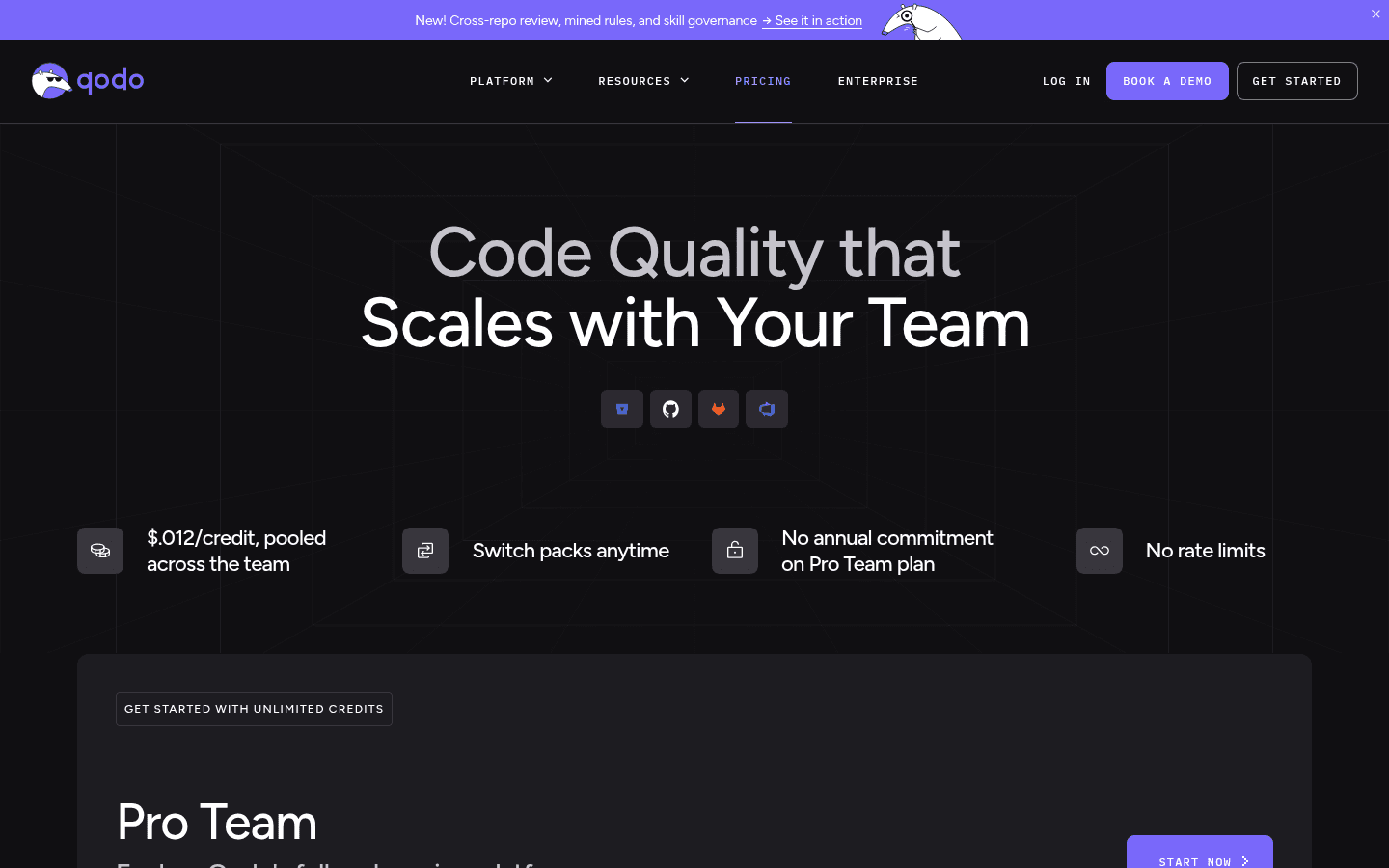
Qodo Pro Team currently starts at $30. Its pricing page lists pooled credits at $0.012 per credit, allows teams to change packs, and says there are no repository or review rate limits. Qodo offers a 14-day trial with unlimited credits, but no permanent free tier. Teams can set a monthly overage cap.
Pooled credits can suit a team with uneven activity because the busiest reviewer does not strand capacity on quiet seats. The downside is forecasting. I need to understand how review effort, repeated pushes, large pull requests, and cross-repository work consume credits before I call the budget predictable.
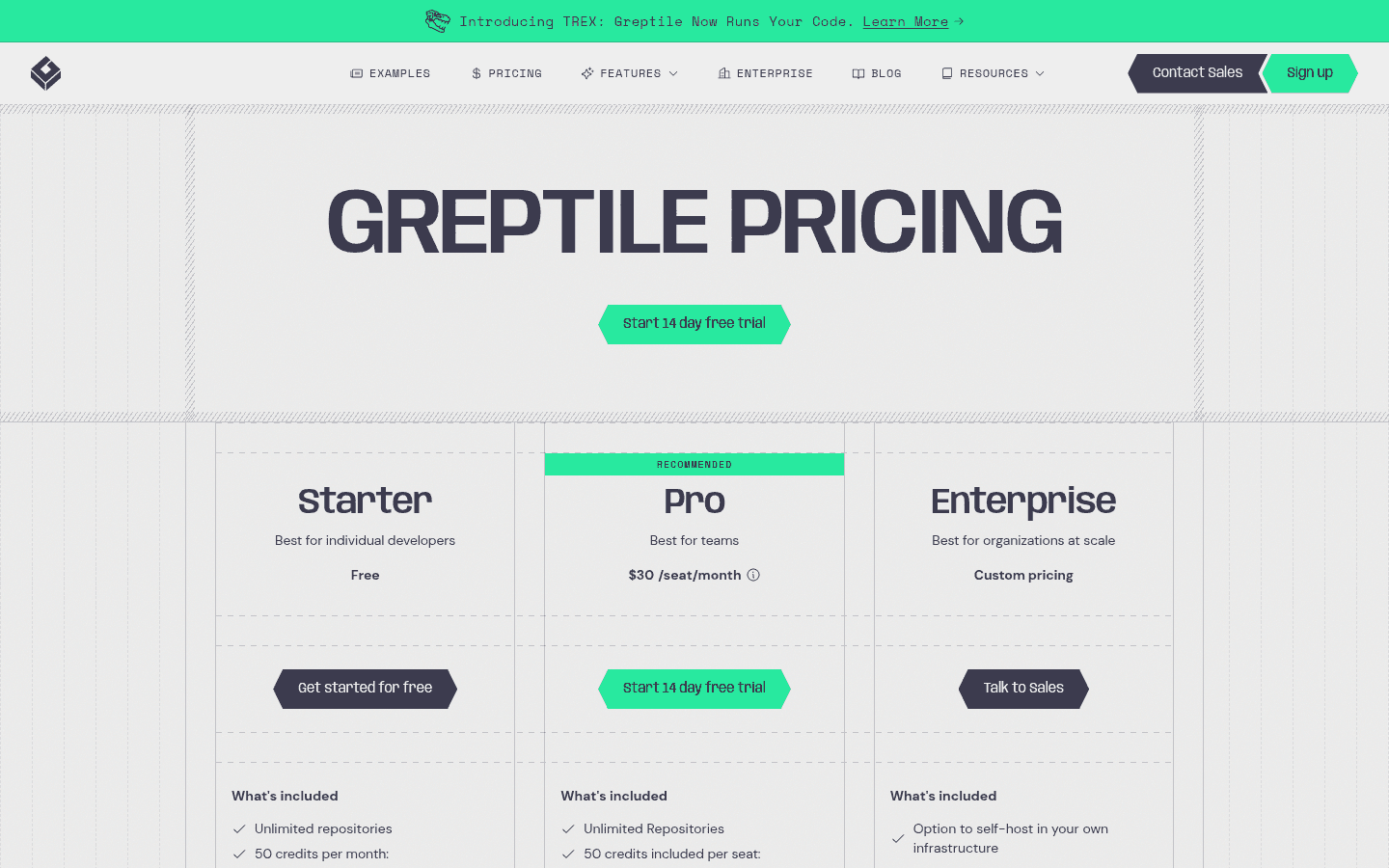
Greptile's Starter plan is free for one active developer and includes unlimited repositories plus 50 credits each month. Pro costs $30 per seat monthly and includes 50 credits per seat. One standard review uses one credit, one TREX review uses three, and each additional credit costs $1.
Greptile is therefore easier to try alone. At team scale, seat count and review volume both matter. TREX can also change the budget because it runs code in a sandbox rather than only reading the diff. I would separate standard and TREX reviews in the pilot instead of averaging them into one vague monthly estimate.
Enterprise requirements can reverse the choice. Qodo lists single-tenant SaaS, on-premises, and air-gapped deployment options. Greptile lists self-hosting in customer infrastructure. Those are sales-led plans, so I compare the actual security architecture, model routing, support terms, and operational burden, not the checkbox.
Fit before features
Buy for the failure mode you can name.
- Choose Qodo
- I need one review policy across several teams, clear severity, configurable review effort, and a workflow that makes findings easier to govern.
- Skip Qodo
- I need a permanent free reviewer, dislike credit forecasting, or have a small codebase where tests and deterministic checks already catch most regressions.
- Choose Greptile
- I regularly review changes whose real impact sits in callers, dependencies, sibling services, or patterns spread across a large repository.
- Skip Greptile
- I cannot grant repository indexing access, need support for an unsupported Git host, or do not want to maintain another codebase graph and tuning loop.
- Keep human review
- The change touches authorization, payments, personal data, concurrency, compliance, migrations, or a business rule that is not encoded in the repository.
A five-person startup with one service may get more value from Greptile Starter or a lightweight reviewer than from building a governance program. A platform group with many repositories may value Qodo's policy controls because consistency itself has become expensive.
I also consider who owns the tool. Greptile naturally attracts the engineer worried about hidden code relationships. Qodo can appeal to the staff engineer or quality lead who needs the same review expectations across teams. The owner should be able to tune rules, inspect usage, and remove low-value behavior without opening a procurement ticket.
Customer research
Reddit complaints are a test backlog, not a winner's podium.
The recurring Reddit complaint is context failure. Developers describe tools that recommend standard libraries while missing private wrappers, misunderstand architecture that exists only in markdown files, or offer confident fixes that ignore legacy constraints. That problem can affect Qodo and Greptile despite their context claims.
The second complaint is trust in recommendation threads. Vendors and affiliates participate heavily in AI code review discussions. I look for concrete reports about an unsupported Git host, stale or incomplete indexing, false positives, comment volume, missing local conventions, or cost after normal pull-request activity.
The third complaint is workflow ownership. Developers do not want another bot unless somebody tunes it. A reviewer that nobody maintains slowly becomes part of the scenery. My pilot has an owner, a weekly comment-quality review, and an explicit off switch.
Switching cost
Installation takes an afternoon. A trustworthy baseline takes weeks.
| Work | What I migrate | Cost |
|---|---|---|
| Permissions and indexing | Install the challenger on two lower-risk repositories first. Review app permissions, data handling, retention, and the time needed to build usable context. | Medium |
| Rules and standards | Translate existing Qodo guidelines or Greptile rules into short, testable constraints. Remove preferences that belong in a formatter or linter. | Medium |
| Repository relationships | Map frontend, backend, schema, SDK, infrastructure, and documentation repositories that must be understood together. | Medium to high |
| Budget model | Replay one month of normal pull requests against pooled Qodo credits or Greptile seats, standard reviews, TREX reviews, and additional credits. | Medium |
| Comment baseline | Record accepted findings, false positives, duplicates, missed seeded regressions, and minutes spent resolving comments before changing tools. | High |
| Team habit | Decide when automatic review runs, who dismisses a weak finding, when humans enter, and what evidence is required before a comment is resolved. | High |
The largest migration risk is not losing a feature. It is changing the team's idea of what a useful automated review looks like. If Qodo currently filters and ranks findings, moving to Greptile may expose a different comment shape. If Greptile currently learns repository relationships, moving to Qodo requires me to express more policy directly.
I keep both tools away from the most sensitive repository until security has reviewed permissions and data flow. I also preserve branch protection, human approvals, tests, static analysis, dependency checks, and secret scanning throughout the pilot. An AI reviewer is an added source of evidence, not the control plane.
A practical pilot
Thirty pull requests reveal more than thirty feature bullets.
I select ten historical pull requests with known defects, ten normal completed pull requests, and ten live pull requests. The set includes a small bug fix, a dependency update, a data migration, a configuration change, generated code, a cross-file contract change, a test-only change, and one large refactor.
For historical work, I hide the final fix and ask both reviewers to inspect the original change. For live work, I run both without letting one tool's comments influence the other. A maintainer labels each finding useful, duplicate, weak, wrong, or outside scope.
- Accepted findings that changed code or added a useful test.
- Known regressions found and known regressions missed.
- False positives and duplicate comments per pull request.
- Median time to first useful finding and total review latency.
- Developer minutes spent verifying, discussing, and dismissing comments.
- Cost per accepted finding under normal and busy-month usage.
- Trust after week one and again after week four.
I choose Qodo if its prioritization and standards produce a cleaner, more governable queue. I choose Greptile if the repository graph repeatedly finds real impact outside the diff. If neither beats the current human-plus-CI baseline, I do not buy a reviewer merely because the category is fashionable.
FAQ
Qodo vs Greptile questions I would answer before procurement
Which is better in Qodo vs Greptile?
I choose Qodo when review governance, severity, standards, and cross-team consistency are the main problems. I choose Greptile when the harder problem is tracing a change through repository relationships and code outside the visible diff.
What is the main difference between Qodo and Greptile?
Qodo is a broader code review and governance system that uses specialized agents and prioritizes findings. Greptile is a repository-context specialist that builds a graph of the codebase to reason about dependencies, callers, related code, and patterns.
Is Greptile free?
Greptile currently has a free Starter plan for one active developer with unlimited repositories and 50 credits per month. One standard review uses one credit, while one TREX review uses three.
Does Qodo have a permanent free plan?
Qodo currently offers a 14-day Pro Team trial with unlimited credits, but its pricing FAQ says there is no permanent free tier. Qualified open-source projects can apply for free access.
Can Greptile or Qodo replace human code review?
No. I use either as a first reviewer for regressions, missing tests, risky patterns, and cross-file impact. Humans still own architecture, product behavior, security, policy, and final merge approval.
How should I test Qodo against Greptile?
Run both on the same 30 historical and live pull requests. Measure accepted findings, false positives, duplicate comments, missed regressions, review latency, developer cleanup time, and cost under realistic usage.
Official references
Product and pricing pages checked for this comparison
Read related articles
Keep reading practical SwitchMyTool guides after this one.
Qodo vs Codacy in 2026: Better AI Review or Stronger Merge Gates?
I compare Qodo and Codacy by AI review, static analysis, security gates, pricing, migration cost, team fit, and common Reddit complaints.
Read more
Qodo vs Graphite Agent in 2026: Better Review Governance or a Better PR Workflow?
I compare Qodo and Graphite Agent by review quality, stacked pull-request workflow, pricing, team fit, migration cost, and common Reddit complaints.
Read more
Qodo vs Bito in 2026: Better Review Governance or Broader Developer Coverage?
I compare Qodo and Bito by review governance, Git and IDE coverage, repository rules, pricing, team fit, migration cost, and Reddit complaints.
Read more