 SwitchMyTool

My verdict
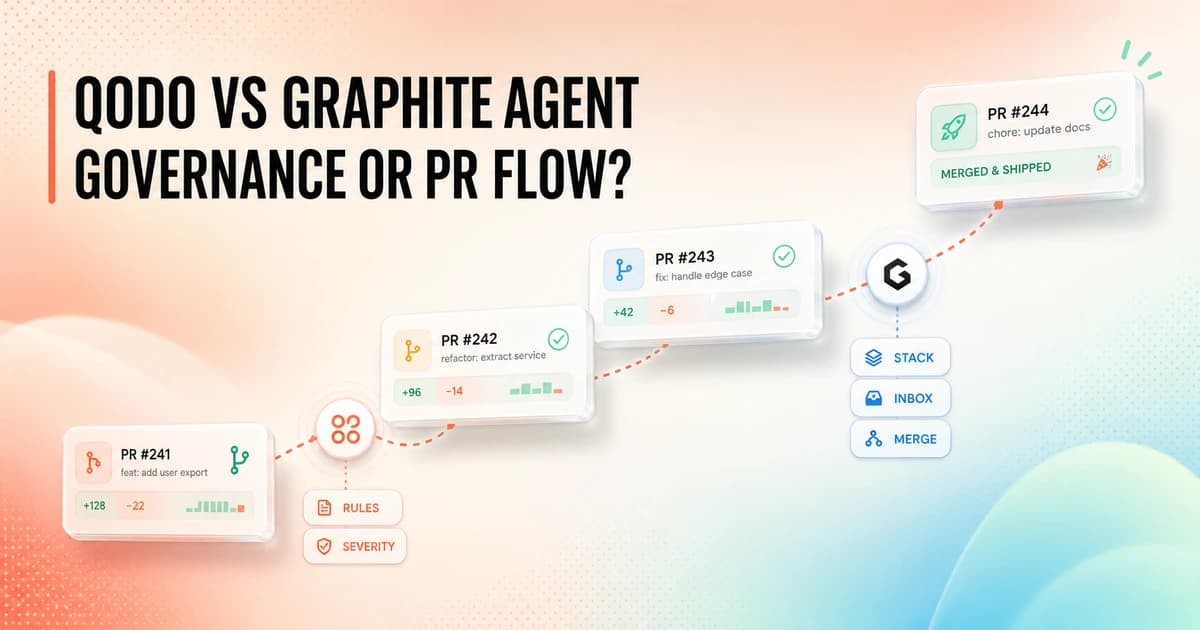
Qodo is the better reviewer to govern. Graphite Agent is the better reason to rebuild the PR workflow.
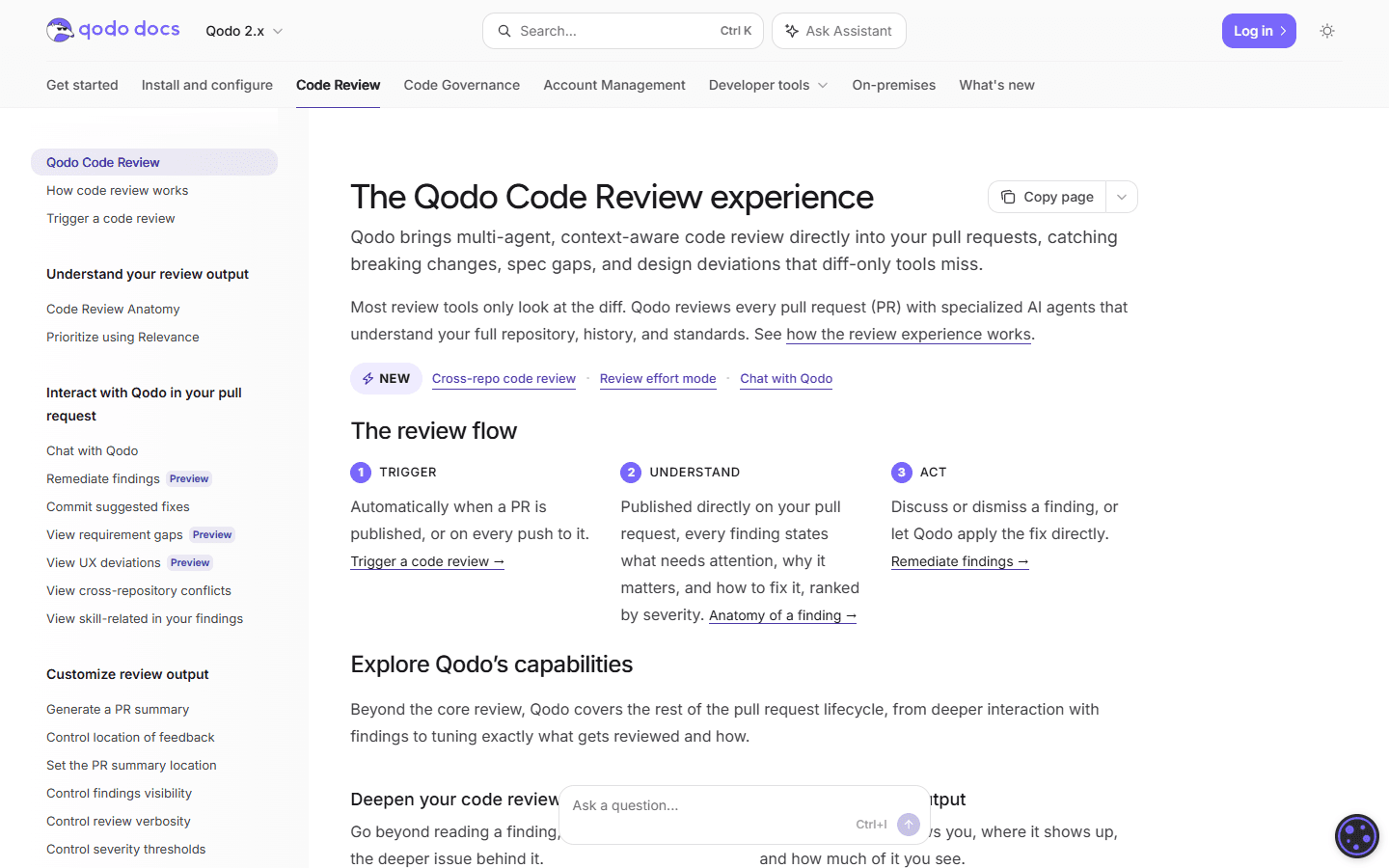
I choose Qodo when a team already has a workable pull-request process but needs better judgment inside it. Qodo gives me multi-agent review, severity, review effort, repository standards, noise controls, cross-repository analysis, and a clearer route from finding to remediation.
I choose Graphite Agent when the review bot is only one part of the bottleneck. Graphite also changes how developers create stacks of small changes, find PRs that need attention, navigate reviews, handle dependencies, and move approved work through a merge queue.
That makes Qodo vs Graphite Agent an awkward comparison in a useful way. Qodo asks whether the review itself can become more consistent. Graphite asks whether the whole PR system is making reviewers late, authors blocked, and large changes harder to understand.
If I only need higher-quality comments, I would start with Qodo. If my GitHub team already wants stacked PRs and a stronger merge operation, I would pilot Graphite. I would not adopt Graphite solely because its AI catches a few more bugs in a demo. The workflow change needs to pay rent too.
For a wider field that includes lighter reviewers and deterministic quality tools, see my Qodo alternatives guide.
The real difference
Qodo improves the review decision. Graphite improves the path around that decision.
Qodo treats a pull request as a risk assessment. Specialized agents inspect correctness, architecture, requirements, standards, and other dimensions. A judge agent combines findings, removes duplicates, and filters weak results before developers see them. The team can then tune severity, effort, verbosity, location, and visibility.
Graphite Agent also reads beyond the diff, posts inline findings, suggests fixes, and learns from feedback. The distinction is what surrounds it. The same product includes a pull-request inbox, Graphite's review interface, stacking through the CLI and VS Code, automations, a merge queue, and analytics.
I think of Qodo as a senior review policy encoded in software. I think of Graphite as a different operating system for GitHub pull requests with an AI reviewer built in. Both can catch an off-by-one error. Only one of them is asking the team to learn restacking.
The right answer depends on the postmortem. If bugs escape because teams apply standards inconsistently, Qodo is the more direct answer. If reviews stall because changes are too large, dependent PRs are hard to follow, and nobody knows which review needs attention, Graphite attacks more of the actual queue.
At a glance
Qodo vs Graphite Agent feature comparison
| Decision | Qodo | Graphite Agent |
|---|---|---|
| Core job | Runs multi-agent, context-aware review and gives teams detailed controls for severity, review effort, standards, visibility, and governance. | Adds codebase-aware AI review to Graphite's broader GitHub pull-request workflow, including inbox, stacked PRs, chat, merge queue, and analytics. |
| Review output | Ranks findings by severity, explains impact, supports discussion and dismissal, and can apply or hand off fixes. | Leaves inline comments with the issue, impact, and suggested fix, then lets developers commit suggestions from the review. |
| Context | Uses the full repository, history, standards, requirements, and optional cross-repository relationships. | Analyzes the wider codebase, learns from reactions to comments, and combines that context with Graphite's PR and stack state. |
| Workflow surface | Pull requests, Git integrations, IDE integrations, and governance dashboards. | GitHub plus Graphite's PR page, inbox, CLI, VS Code extension, stacked changes, automations, and merge queue. |
| Customization | Review effort, severity thresholds, verbosity, feedback location, ignored content, extra instructions, rules, and persistent comments. | Repository selection, custom rules, exclusions, file exclusions, automation, and per-rule acceptance analytics on supported plans. |
| Price shape | Pro Team starts at $30 with pooled credits at $0.012 each. There is a 14-day trial, but no permanent free tier. | Hobby is free with limited AI reviews. Starter is $20 per user monthly when billed annually. Team is $40 and includes unlimited AI reviews. |
| Best fit | Teams that need a consistent review policy across repositories, products, and risk levels. | GitHub teams that want AI review and also want to redesign PR creation, review, stacking, and merge flow. |
Feature tables flatter both products. A rule editor does not prove that the rule catches a real defect. Full-codebase context does not prove that the model understands the reason a strange abstraction exists. One-click fixes do not prove that the fix belongs in the current pull request.
I measure accepted findings, false positives, duplicates, developer cleanup time, and missed seeded defects. For Graphite, I add stack size, time waiting for review, time from approval to merge, and queue failures. Otherwise I would be comparing Qodo's reviewer against only one slice of Graphite's value.
Review quality
Qodo exposes more review knobs. Graphite exposes better evidence that the team uses the output.
Qodo gives me a detailed set of controls for the review itself. I can adjust effort by risk, decide what severity becomes Action Required, reduce low-priority noise, exclude content, add instructions, keep persistent comments updated after pushes, and control how much resolved material stays visible.
That is valuable in organizations where a payments repository should receive a deeper review than a documentation site. It also helps when teams disagree about whether an informational observation belongs beside a release-blocking bug.
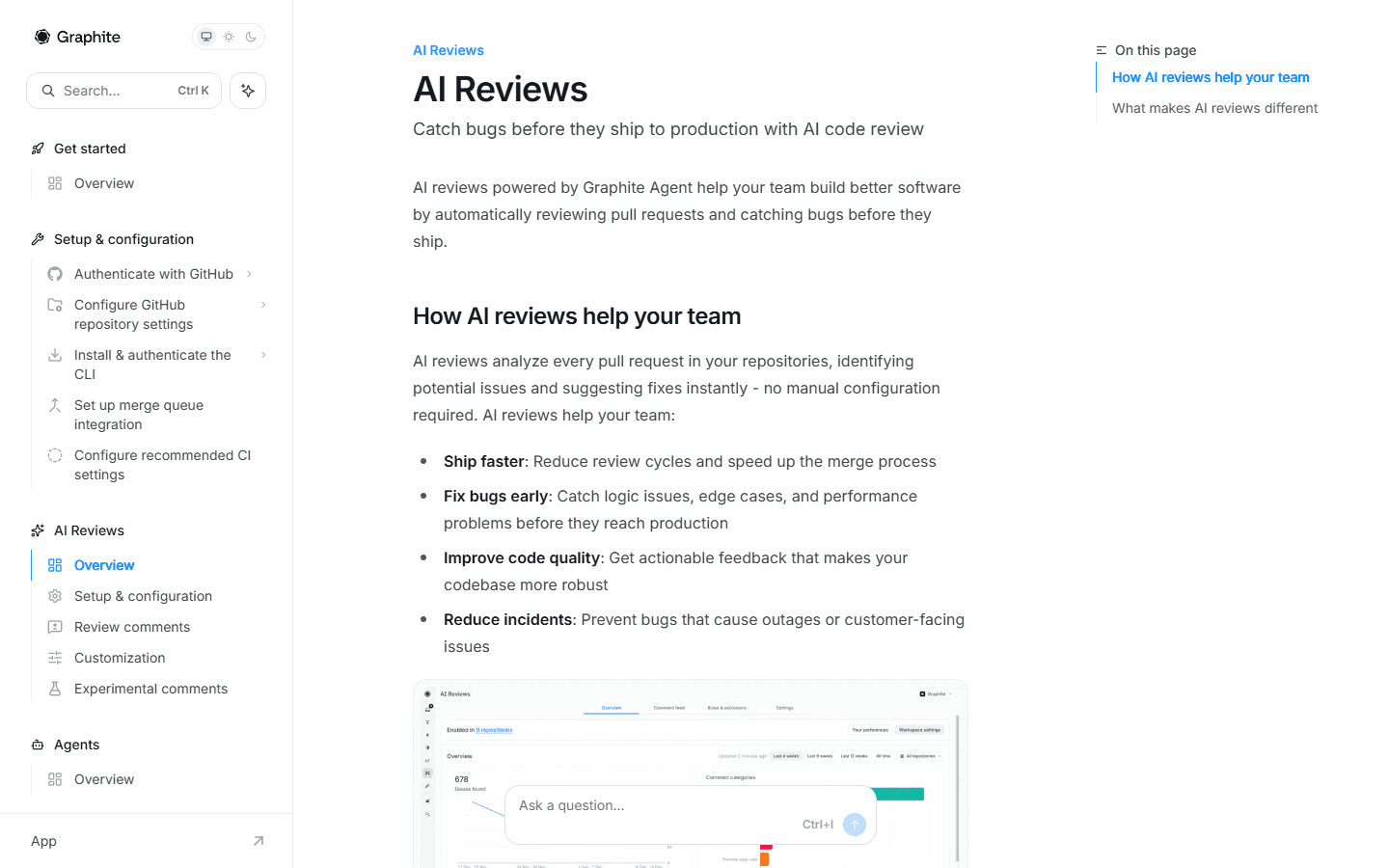
Graphite Agent's comments contain a problem description, an explanation of impact, and a concrete fix suggestion. The useful part for me is the surrounding dashboard: issues found, issues accepted, acceptance rate, PRs reviewed, downvote rate, category breakdown, and a feed of comments. The team can inspect whether a rule catches useful issues instead of merely existing.
Graphite also documents a practical ceiling: a PR above 200,000 characters can show as Not running. That is not a scandal. It is a reminder that huge changes already broke the review workflow before an AI arrived. A stack of smaller PRs can improve both machine and human review.
PR workflow
Graphite earns its price only when the team uses more than the comments.
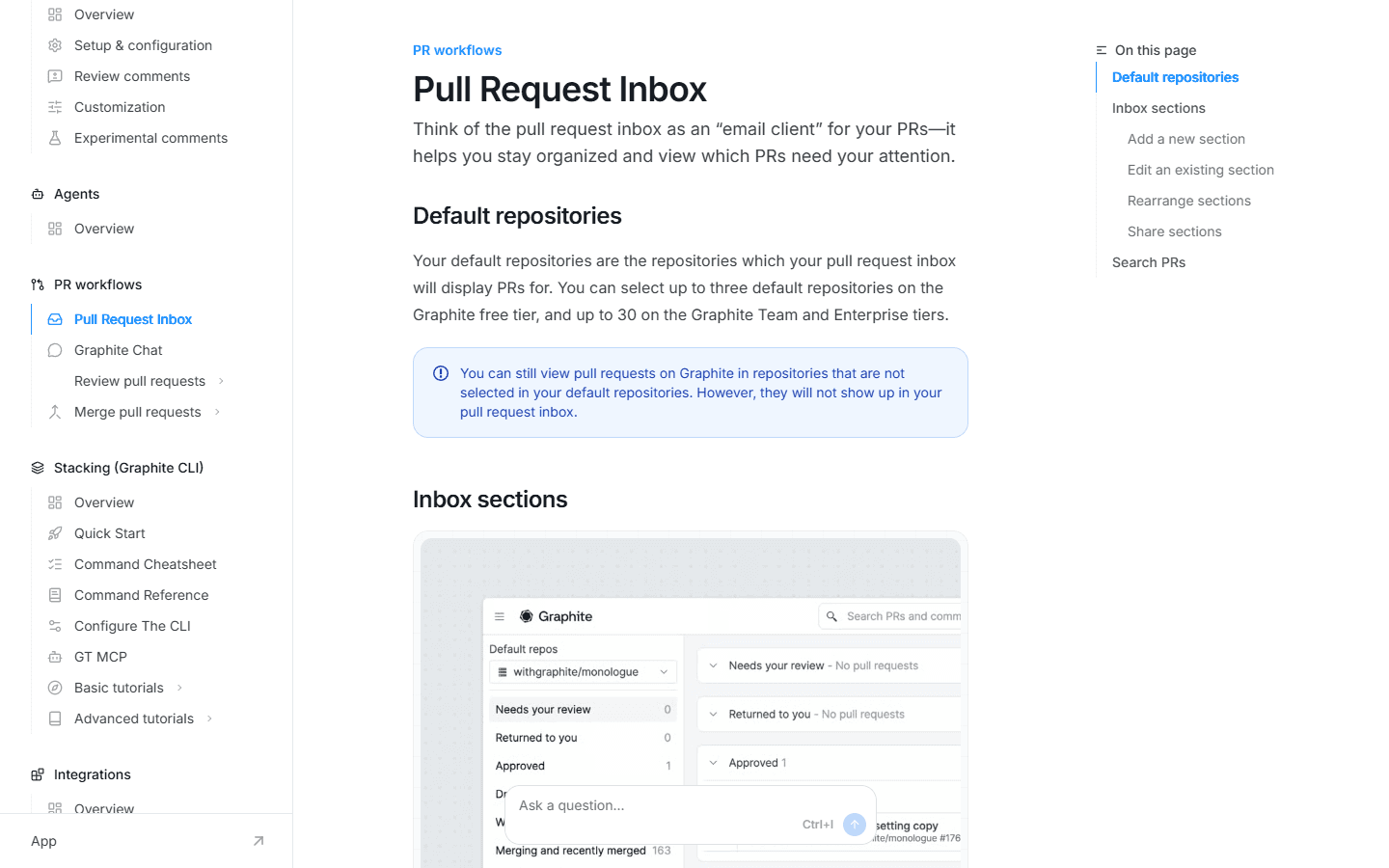
Graphite's PR Inbox acts like an email client for reviews. It separates work that needs my review, came back to me, was approved, or is moving through the system. Custom sections and repository selection help a reviewer avoid opening six GitHub tabs just to discover that nothing needs attention.
Stacked pull requests are the more consequential change. I can break one feature into small dependent branches, submit them as a stack, review each change in isolation, and keep later work moving while an earlier layer waits. The Graphite CLI and VS Code extension manage the branch relationships.
This is not automatically better. A team that does not understand restacking can create confusing chains. A reviewer can approve one layer while missing how later layers alter the behavior. A merge queue can also become a black box if nobody owns failures and queue policy.
When it works, however, Graphite solves the problem AI review tools often complain about: enormous diffs. Qodo can analyze a large change with different effort levels, but no model makes a 2,000-line pull request pleasant. Graphite's strongest advantage is encouraging a smaller unit of review before the agent reads it.
Rules and context
Context is not a checkbox. It is a maintenance job.
Qodo analyzes the full repository and can apply standards learned from code, pull-request history, and requirements. Its cross-repository review can trace contracts between related repositories. That makes it attractive when a backend schema change can break an SDK or a frontend owned by another team.
Graphite Agent says it analyzes the entire codebase, focuses on real bugs rather than style, and learns from how the team reacts to comments. Teams can add custom rules, exclusions, and file exclusions. The Rules and exclusions view can show acceptance rate and issues caught for each control.
I still write the important rules down. An AI reviewer cannot infer a contractual exception from a meeting nobody documented. I encode security boundaries, compatibility requirements, migration order, generated-file exclusions, and the small number of architectural constraints that repeatedly cause expensive mistakes.
I do not ask either product to enforce formatting that a linter can settle in milliseconds. That wastes model attention and trains developers to ignore comments. The AI should investigate behavior, relationships, tests, and intent. CI should argue about semicolons.
- Give each rule a file scope, a reason, and one concrete violation.
- Exclude generated code, lockfiles, snapshots, vendor code, and build output unless they are the subject of the change.
- Seed the pilot with one cross-file bug, one authorization mistake, and one missing compatibility case.
- Require every serious finding to cite the affected behavior or relationship.
- Delete rules that create repeated dismissals instead of defending them as configuration investment.
Pricing
Qodo meters review activity. Graphite prices the workflow by seat and plan.
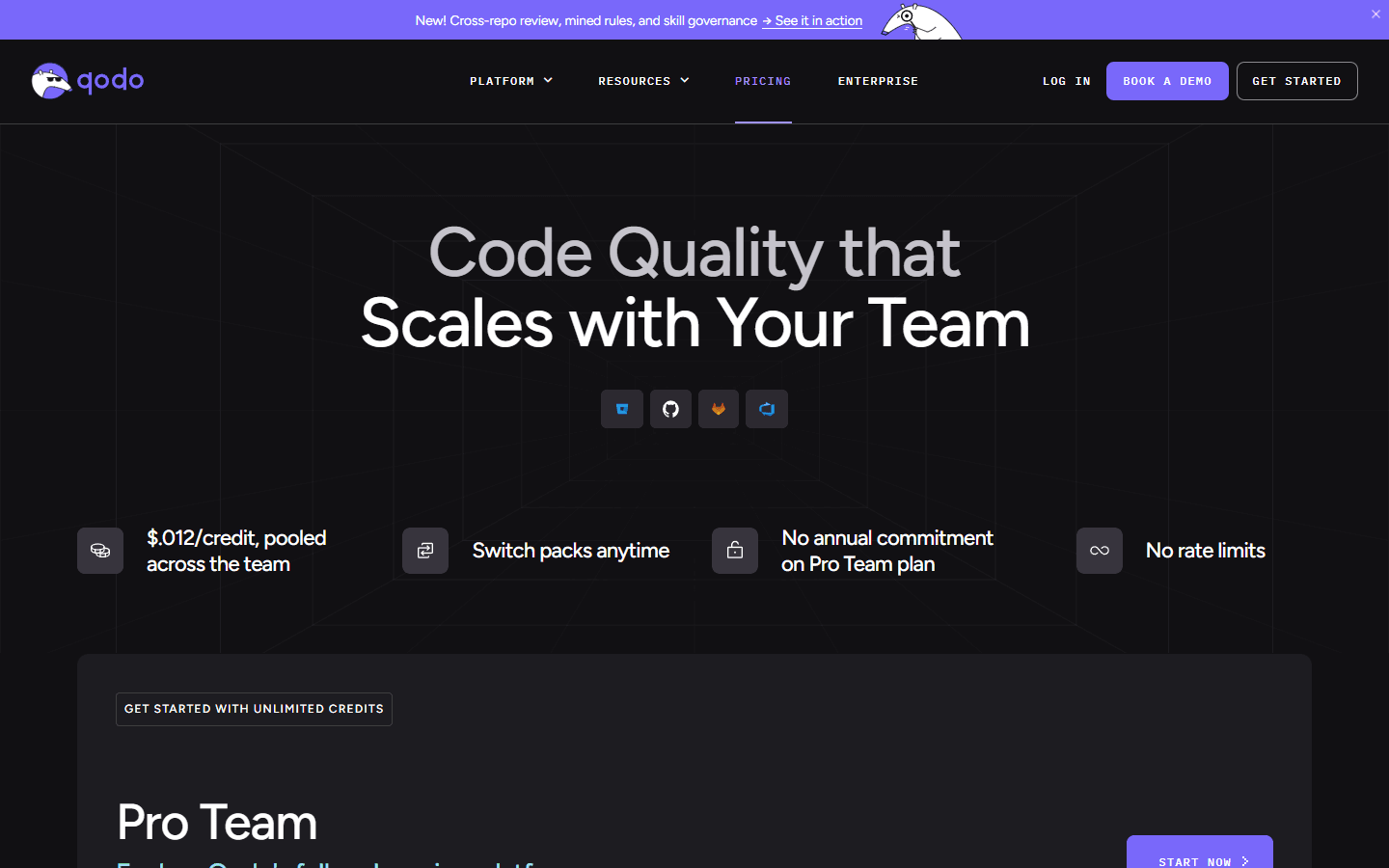
Qodo Pro Team currently starts at $30. Credits cost $0.012 and are pooled across the team. The listed packs include 2,500, 5,000, and 20,000 credits, with rough monthly review estimates that depend on pull-request size and complexity. Unused credits expire each month.
The 14-day Qodo trial includes unlimited reviews and credits without a card. After that, there is no permanent free tier, although qualified open-source projects can apply for free access. Reviews can continue into overage at the same per-credit rate until the customer-set monthly cap is reached.
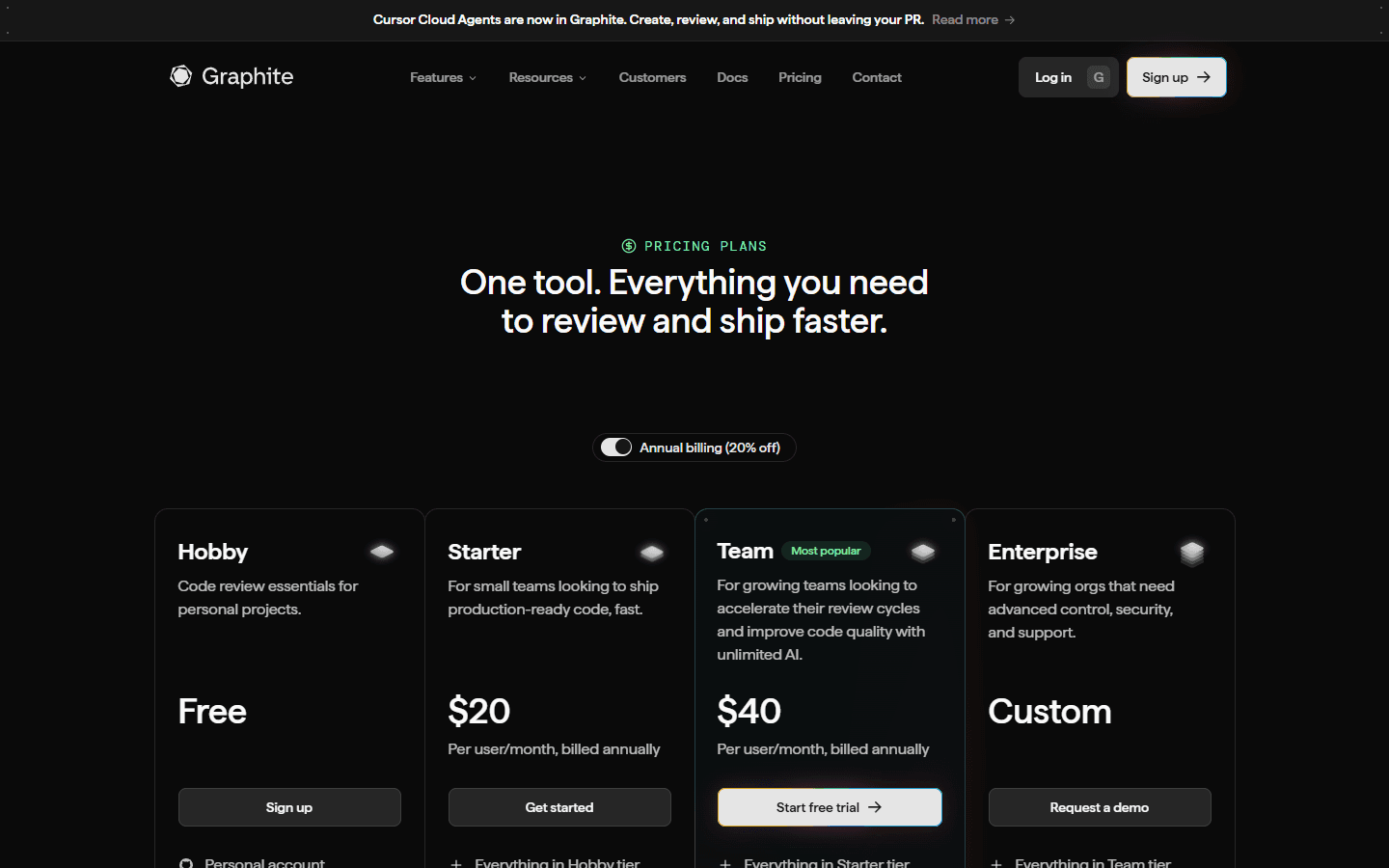
Graphite Hobby is free for personal repositories and includes limited AI reviews. Starter is $20 per user per month when billed annually and also lists limited AI reviews. Team is $40 per user per month annually and adds unlimited AI reviews, review customization, automations, merge queue, and unlimited Graphite Chat.
A ten-person team therefore sees a visible Graphite Team baseline of $400 per month before enterprise terms. Qodo can be cheaper or more expensive depending on review volume, credit pack, and overage. I replay one real month of pull requests through both price models instead of multiplying the cheapest number on each page.
Graphite becomes easier to justify when the inbox, stacking, automations, and merge queue replace other friction. If developers continue to live entirely in GitHub and only consume Agent comments, the organization may be paying a workflow price for a reviewer-sized benefit.
Fit before features
Buy the workflow that matches the failure, not the demo that catches the cutest bug.
- Choose Qodo
- I need severity, review-effort controls, cross-repository governance, and one standards system that can follow several teams.
- Skip Qodo
- I need a permanent free plan, dislike credit forecasting, or only want a lightweight second reviewer for a small GitHub repository.
- Choose Graphite Agent
- My team is GitHub-first and already wants smaller stacked changes, a shared PR inbox, better review navigation, and a managed merge queue.
- Skip Graphite Agent
- I only want AI comments, use several Git hosts, or have no appetite for a new PR page, CLI vocabulary, and merge workflow.
- Keep human review
- The pull request changes authorization, payments, personal data, migrations, concurrency, compliance, or a business rule that is not encoded in the repository.
Qodo is easier to defend when a platform or quality lead owns review policy across many repositories. The product can keep standards, risk levels, and review behavior explicit without requiring every developer to adopt a new branching model.
Graphite Agent fits an engineering organization whose GitHub workflow is already under strain. The buyer should want smaller PRs, faster review discovery, and better merge orchestration even if the AI reviewer disappeared tomorrow. That is the honest test of the larger migration.
A solo developer can experiment with Graphite Hobby, but the most interesting comparison appears at team scale. That is where Qodo's governance controls and Graphite's operational workflow both become meaningful, and where weak comments also become expensive.
Customer research
Reddit's common complaint is not that AI finds nothing. It is that AI never knows when to stop.
The endless-critique complaint is credible because review agents are rewarded for producing findings. Run another pass and a model can discover a fresh preference, speculative edge case, or refactor. I stop that loop by defining acceptance criteria and refusing to reopen style questions after the relevant checks pass.
Context remains the second complaint. Developers describe reviewers that miss dependency injection, private libraries, domain logic, or a pattern two folders away. Qodo and Graphite both market broader context, so I test that exact failure instead of repeating the claim.
The third complaint is workflow theater. AI writes the patch, AI reviews it, AI applies the fix, and a human approves a green page. My rule is simple: the author must explain the behavioral change and the human reviewer must reconstruct at least one critical path. Automation can shorten that work. It cannot make ownership optional.
Switching cost
Moving to Graphite is a process change. Moving to Qodo is mostly a governance change.
| Work | What I migrate | Cost |
|---|---|---|
| Git and permissions | Review the GitHub App scope, repository selection, indexing, retention, model routing, and whether every target repository is supported. | Medium |
| Rules and exclusions | Translate Qodo instructions into Graphite rules and exclusions, or move Graphite rules into Qodo review standards. Keep deterministic checks in CI. | Medium |
| PR habits | If moving to Graphite, train authors on stacks, restacking, the PR inbox, Graphite's review page, and merge queue behavior. | High |
| Budget model | Replace Qodo credit forecasting with Graphite seats and plan limits, or model Qodo credits from real Graphite review volume. | Medium |
| Analytics baseline | Export or record accepted findings, downvotes, false positives, review latency, and merge time before switching. | Medium |
| Trust and ownership | Name one owner for rules, noisy findings, permissions, spend, and the weekly decision to tune or disable the reviewer. | High |
The Graphite migration is high when I adopt the product properly. Developers learn the CLI or extension, create stacks, understand branch relationships, use the inbox, review in a different interface, and trust a merge queue. Managers also need to decide whether Graphite analytics change how performance is discussed.
A Qodo migration still needs security review, repository installation, rules, exclusions, credit forecasting, and a comment-quality baseline. It is usually less disruptive because the existing pull-request workflow can remain intact.
I do not switch all repositories at once. I start with one service that has active development, useful tests, a manageable risk profile, and maintainers willing to label weak comments. Then I add a cross-repository or stack-heavy project only after the first team's signal improves.
A practical pilot
Thirty pull requests are enough to expose noise and workflow friction.
I use ten historical pull requests with known defects, ten ordinary completed pull requests, and ten live changes. The sample includes a small fix, a dependency update, a configuration change, a data migration, generated code, a cross-file contract change, a security-sensitive change, and one feature that can be split into a stack.
For historical work, I hide the final correction and let each reviewer inspect the original change. For live work, I prevent one tool's comments from influencing the other. A maintainer labels each finding useful, duplicate, weak, wrong, or outside scope.
- Accepted findings that changed code or added a meaningful test.
- Known regressions found and known regressions missed.
- False positives, duplicates, and comments dismissed without discussion.
- Median time to first useful finding and total human cleanup time.
- Cost per accepted finding under a normal and a busy month.
- For Graphite, time waiting for review, average stack size, and approval-to-merge time.
- Developer trust after week one and again after week four.
I choose Qodo if severity, standards, and review controls produce a cleaner queue across different repositories. I choose Graphite Agent if comment quality is competitive and the wider PR workflow measurably reduces waiting, oversized changes, and merge friction. If neither beats the human-plus-CI baseline, I keep the money.
FAQ
Qodo vs Graphite Agent questions I would answer before buying
Which is better in Qodo vs Graphite Agent?
I choose Qodo when review governance, severity, standards, and cross-repository consistency are the main problems. I choose Graphite Agent when a GitHub team also wants stacked pull requests, a PR inbox, automations, and a merge queue.
What is the biggest difference between Qodo and Graphite Agent?
Qodo is primarily a code review and governance platform. Graphite Agent is an AI reviewer inside a broader pull-request operating model. The Graphite decision therefore includes workflow adoption, not only comment quality.
Is Graphite Agent free?
Graphite's Hobby plan is free for personal repositories and includes limited AI reviews. Starter also has limited AI reviews. Unlimited AI reviews and review customization are packaged in the $40-per-user Team plan with annual billing.
Does Qodo have a free plan?
Qodo offers a 14-day Pro Team trial with unlimited credits, but its current pricing FAQ says there is no permanent free tier. Qualified open-source projects can apply for free access.
Can Qodo or Graphite Agent replace human code review?
No. I use either as an early reviewer for logic mistakes, missing tests, edge cases, security smells, and local standards. Humans still own architecture, product intent, risk acceptance, and the final merge decision.
How should I test Qodo against Graphite Agent?
Run both on the same 30 historical and live pull requests. Measure accepted findings, false positives, duplicate comments, missed regressions, cleanup time, cost, review latency, and whether Graphite's wider workflow actually improves merge time.
Official references
Product and pricing pages checked for this comparison
Qodo code review documentation
Graphite AI Reviews documentation
Read related articles
Keep reading practical SwitchMyTool guides after this one.
Qodo vs Codacy in 2026: Better AI Review or Stronger Merge Gates?
I compare Qodo and Codacy by AI review, static analysis, security gates, pricing, migration cost, team fit, and common Reddit complaints.
Read more
Qodo vs Bito in 2026: Better Review Governance or Broader Developer Coverage?
I compare Qodo and Bito by review governance, Git and IDE coverage, repository rules, pricing, team fit, migration cost, and Reddit complaints.
Read more
Qodo vs Cursor Bugbot in 2026: Better Review Governance or a Faster Cursor Loop?
I compare Qodo and Cursor Bugbot by review depth, pre-push workflow, repository rules, usage pricing, team fit, migration cost, and Reddit complaints.
Read more