 SwitchMyTool

My verdict
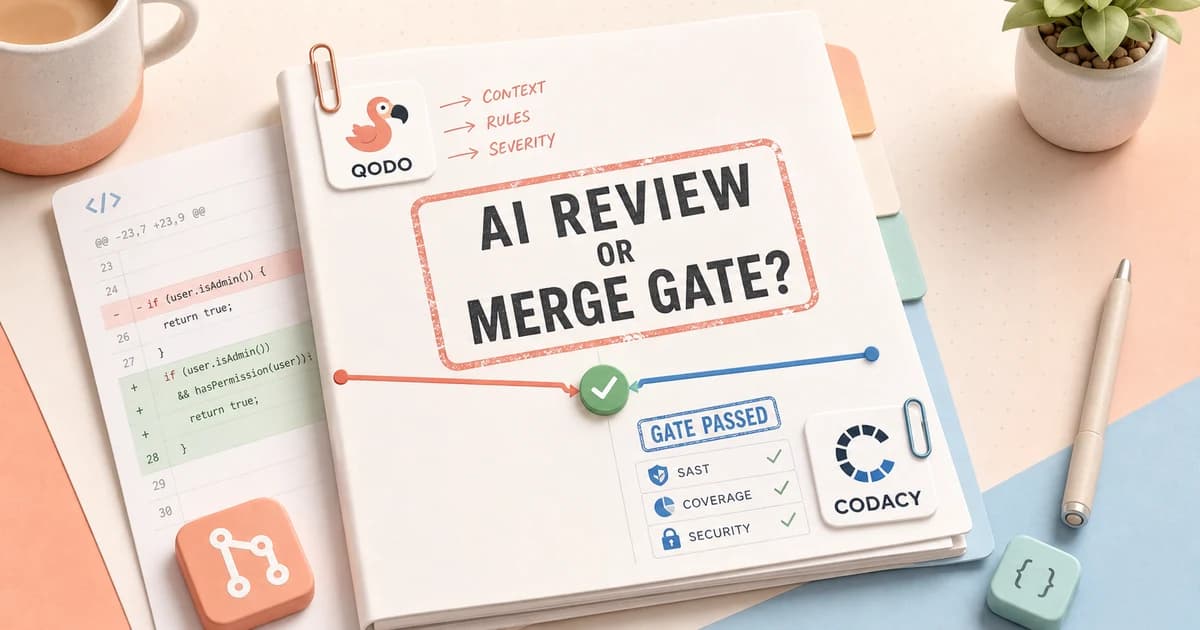
Qodo is the better AI reviewer. Codacy is the stronger quality floor.
I choose Qodo when the existing CI pipeline already catches syntax, dependencies, secrets, and coverage failures, but human reviewers still miss intent, architecture, cross-file behavior, or organization-specific rules. Qodo is built around that fuzzy middle where a change can pass every ordinary check and still be wrong.
I choose Codacy when the engineering team cannot answer a simpler question: what exactly blocks a merge? Codacy brings code patterns, security checks, dependency risk, duplication, complexity, and coverage into one gate. Its AI Reviewer adds context on GitHub, but I would buy Codacy for the deterministic platform first.
That is the useful answer to Qodo vs Codacy. Qodo tries to improve reviewer judgment. Codacy tries to make the minimum acceptable standard visible and enforceable. A mature team may use both, but only after removing duplicate comments. Two tools shouting about the same null check is not defense in depth. It is an expensive notification setting.
For most teams starting from a thin CI setup, I would implement Codacy's floor before adding a premium AI reviewer. For teams with strong scanners and inconsistent review decisions, I would pilot Qodo first.
I compare more review products in my Qodo alternatives guide.
The real difference
Qodo asks whether the change is right. Codacy asks whether the change clears the floor.
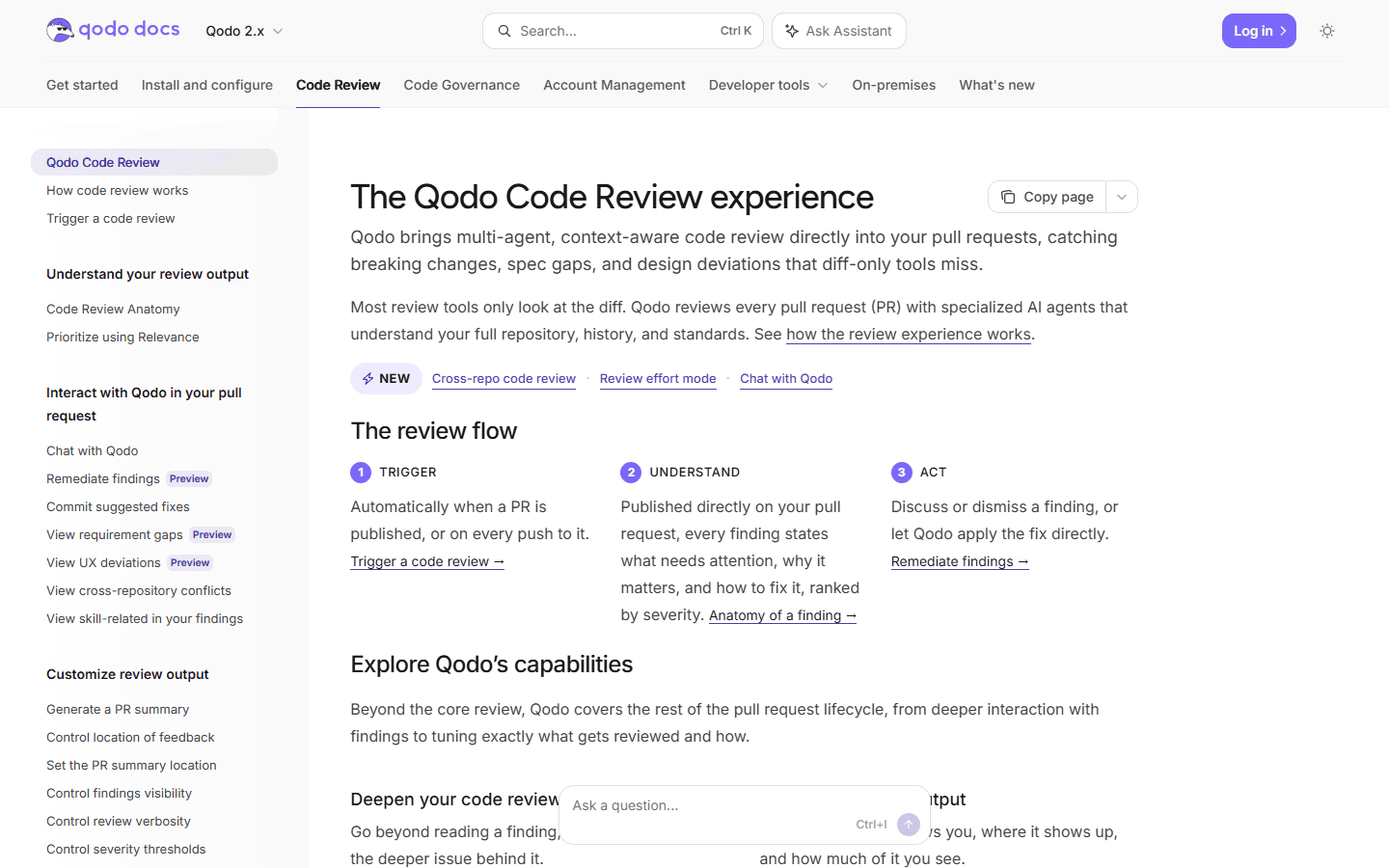
Qodo 2.x reviews pull requests with specialized agents and repository-wide context. It can use code, history, requirements, and team standards, then rank findings by severity and explain the cause and remediation. Governance controls let an organization set defaults for triggers, visibility, severity, volume, scope, and team access.
Codacy begins with analyzers. It scans code against configured patterns, tracks duplication and complexity, consumes coverage reports, and reports security and dependency findings. Quality gates turn those results into a pass-or-fail status that branch protection can require before merge.
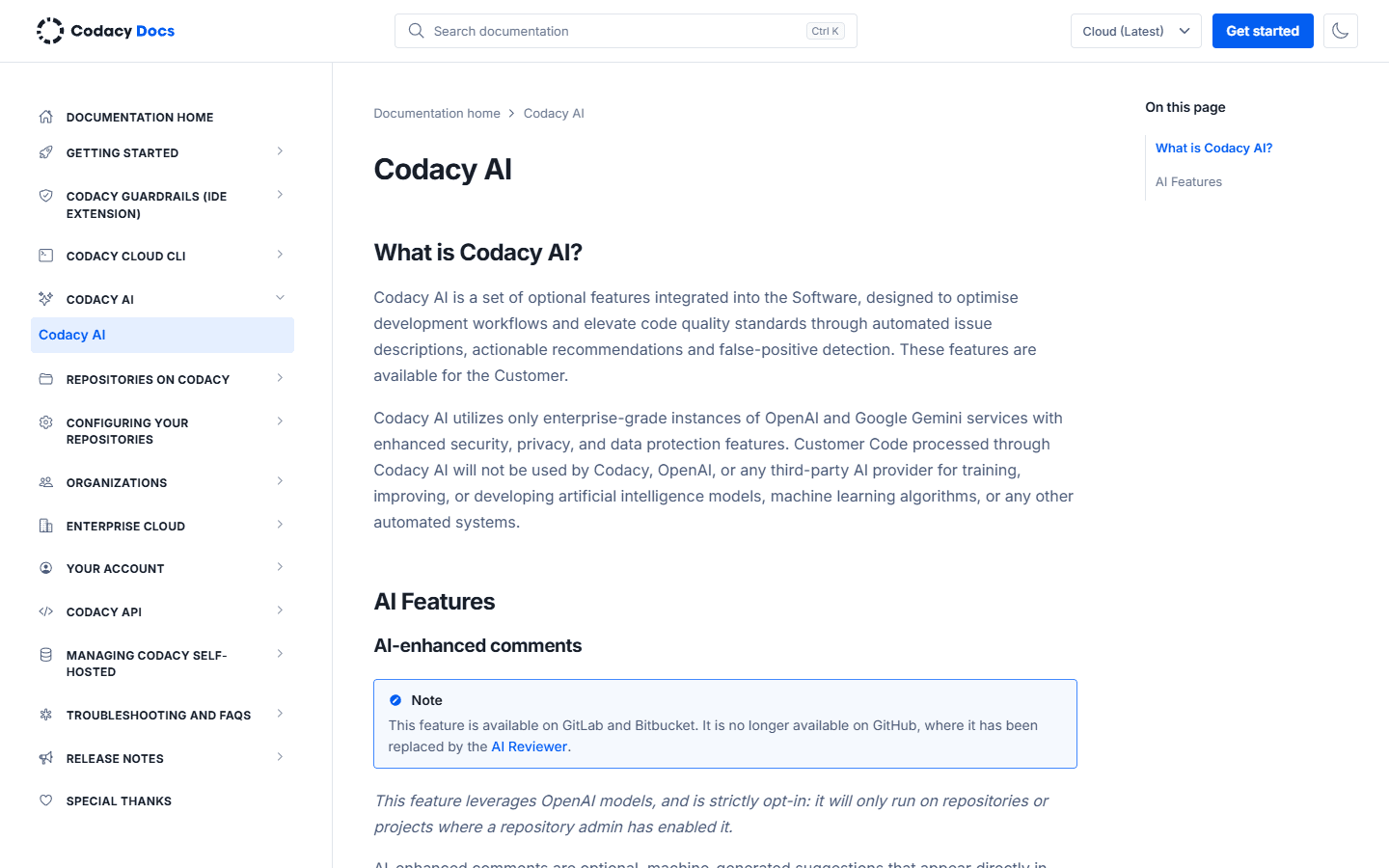
Codacy now has an AI Reviewer too, so the boundary is not perfectly tidy. On GitHub, it can use pull-request metadata, source code, Codacy findings, and a Jira ticket when connected. Teams can add repository instructions in .codacy/instructions/review.md. That makes Codacy more than a scanner, but the scanner remains the foundation.
My test is to remove the AI from the sales pitch. Codacy still leaves a coherent code-quality and security platform. Remove AI from Qodo and the main reason to buy it disappears. That tells me which budget each product should compete for.
At a glance
Qodo vs Codacy feature comparison
| Decision | Qodo | Codacy |
|---|---|---|
| Primary job | Context-aware, multi-agent pull-request review with centrally managed rules, severity, review effort, and governance. | Code quality and security analysis with quality gates, coverage checks, deterministic tools, and an optional AI Reviewer. |
| AI review | Core product. Reviews use repository context, history, standards, and requirements to explain what is wrong, why it matters, and how to fix it. | Available to Team and Business customers on GitHub. Combines pull-request context with Codacy's deterministic findings and optional Jira context. |
| Deterministic checks | Not the reason I would replace an established lint, SAST, dependency, or coverage pipeline. | Core strength across 49 languages, including code patterns, security checks, duplication, complexity, dependencies, secrets, and coverage. |
| Merge policy | Can prioritize and govern findings, but I still keep ordinary CI checks as the hard floor. | Can fail a Git status check when new issues, security findings, duplication, complexity, or coverage cross configured thresholds. |
| Git coverage | Supports major Git providers, with broader enterprise options and on-premises deployment paths. | Cloud supports GitHub, GitLab Cloud, and Bitbucket Cloud. The current pricing FAQ excludes self-hosted Git providers and Azure Repos. |
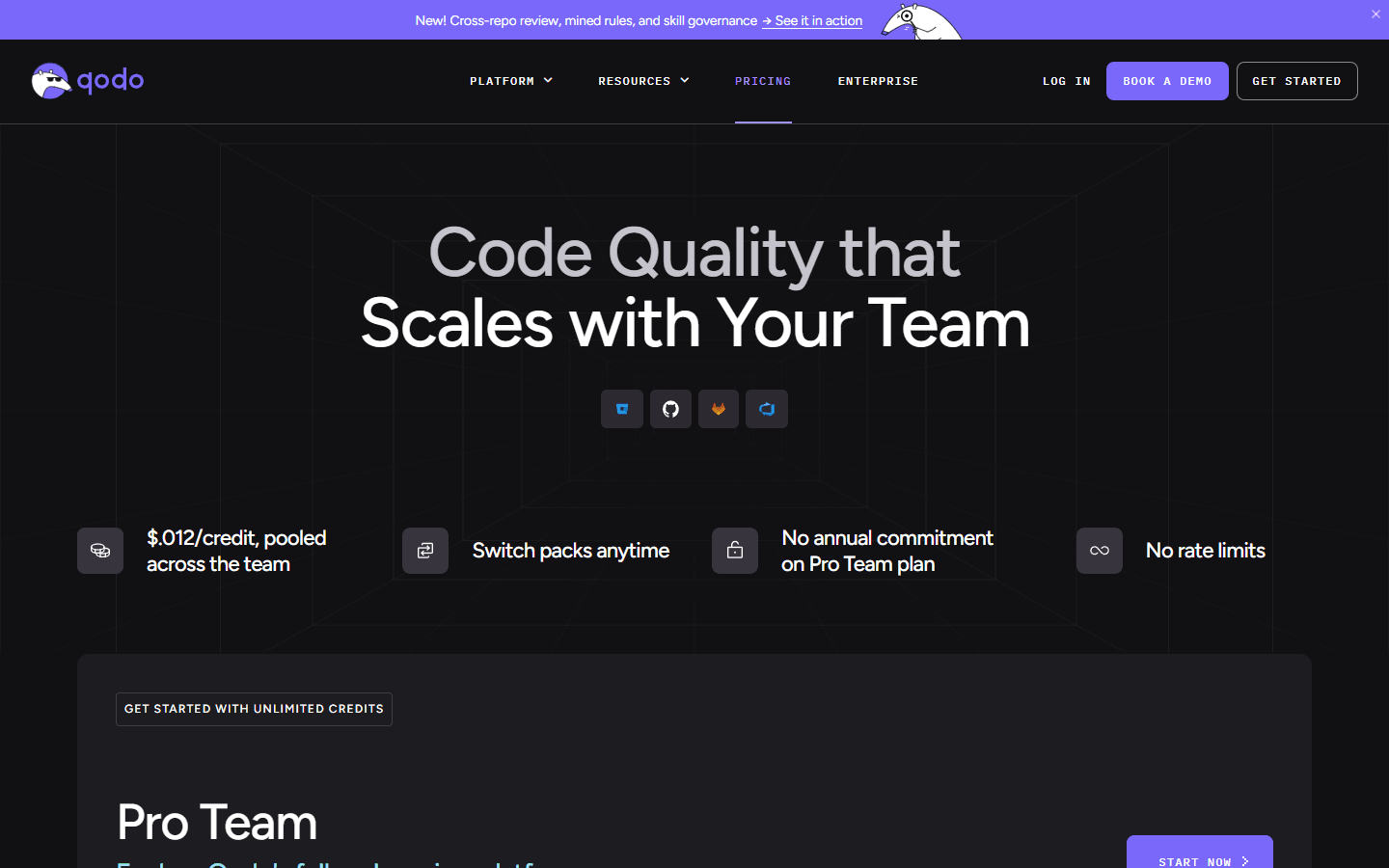
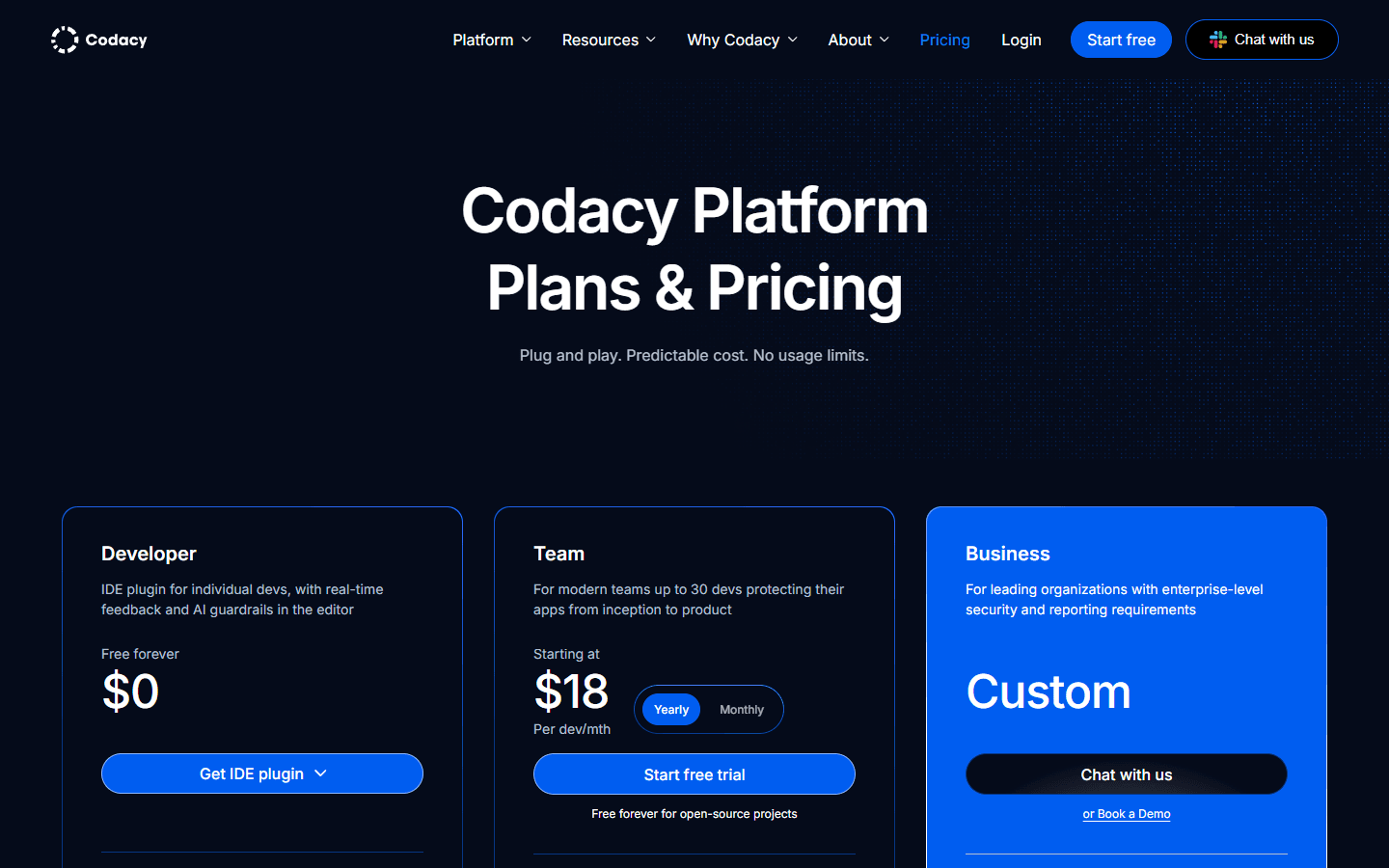
| Price shape | Pro Team lists a $30 starting price plus pooled usage credits at $0.012 each. A 14-day trial includes unlimited reviews and credits. | Team starts at $18 per developer monthly with annual billing, or $21 monthly. The IDE-only Developer plan is free. |
| Best fit | Teams that already trust their CI floor and want a more capable reviewer for intent, architecture, standards, and cross-file risk. | Teams that want one platform to make code quality, security, coverage, and merge policy visible and enforceable. |
A table can show scope, but it cannot show signal. I care about whether a finding changes code, adds a meaningful test, blocks a real risk, or saves review time. Comment count is a terrible success metric because the noisiest tool usually wins it.
I also separate prevention from investigation. A coverage threshold can prove that new lines were not exercised. It cannot prove that the test asserts the right business outcome. An AI reviewer can question the outcome, but it may also invent a concern. Each product is strongest when I ask it to do the job its evidence can support.
AI review
Qodo gives me more ways to shape review judgment.
Qodo's review flow is the more developed one for teams that want AI to behave like a consistent reviewer rather than a generic chat model attached to a diff. I can tune review effort, severity thresholds, verbosity, feedback location, visibility, ignored content, instructions, and how findings persist after new commits.
The repository context matters when a harmless-looking change breaks an internal contract in another file, contradicts a requirement, or repeats a failure that reviewers corrected in earlier pull requests. Qodo's newer rule system can mine standards from code and PR history, then centralize them for teams and repositories.
Codacy AI Reviewer is narrower but well placed. It can combine deterministic evidence with contextual review, and it can use Jira details to catch an implementation that drifts from the ticket. The catch is platform coverage: the current Codacy documentation limits AI Reviewer to GitHub on Team and Business plans. GitLab and Bitbucket use a different, older AI-enhanced-comment path.
I prefer Qodo when AI findings are the purchase. I prefer Codacy when AI comments are a useful second layer above a platform I already wanted. In either case, I require serious findings to point to a concrete behavior, line, relationship, or unmet requirement. A confident paragraph without a falsifiable claim is just extra reading.
Deterministic gates
Codacy wins when the rule must behave the same way every time.
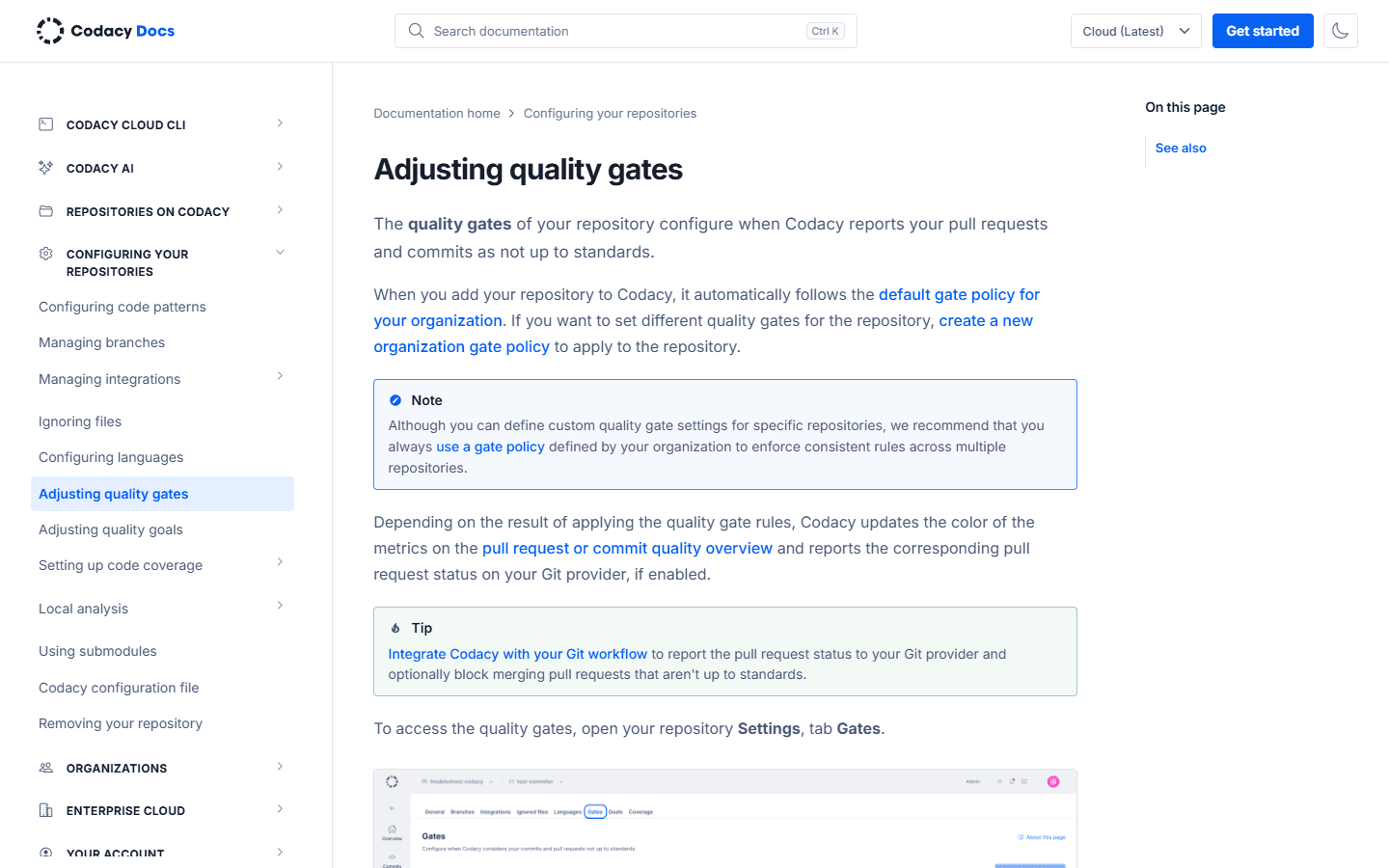
Codacy quality gates can evaluate new issues, security findings, complexity, duplication, overall coverage, coverage variation, and diff coverage. When the gate fails, Codacy can report that status to the Git provider and branch protection can block the merge.
That is less glamorous than an AI discovering a subtle race condition, but it is easier to govern. If a team says new code needs 80 percent diff coverage, the threshold should not change because a model interpreted the pull request differently on Tuesday. If a prohibited dependency appears, I want a repeatable failure with a named owner and remediation path.
The danger is turning every analyzer into a blocker. Legacy repositories already contain debt, generated files, accepted patterns, and language-specific oddities. I set gates on new code first, ignore generated and vendor paths, and promote a rule to blocking only after the team sees its false-positive rate.
Qodo can prioritize findings and enforce review policy, but I would not ask it to replace fast deterministic tools. I want Qodo spending model attention on behavior, intent, relationships, and missing tests. CI can settle formatting and known bad patterns without writing an essay.
Security and coverage
Codacy consolidates evidence. Qodo investigates what the evidence cannot encode.
Codacy's platform covers code quality, SAST, software-composition analysis, secrets, infrastructure-as-code issues, and coverage reporting. That makes it useful for a small platform team trying to replace a pile of overlapping checks with one visible policy surface.
Consolidation is not automatically safer. I compare language coverage, rule depth, supported package ecosystems, issue evidence, suppression workflow, export needs, and how the platform handles accepted risk. A bundled scanner that misses the team's main framework is still a weak control with a nicer invoice.
Qodo is more useful when the vulnerability depends on business logic or relationships that a pattern rule cannot see: an authorization check applied after data access, a migration that makes an older service unsafe, or a requirement that contradicts the implementation. Those are excellent pilot cases because they expose whether repository context produces real judgment or polished speculation.
Neither tool replaces a security review for high-risk changes. My desired stack is boring by design: deterministic checks establish the floor, AI investigates unusual behavior, and a human accepts the risk.
- Make new-code gates strict before trying to clean every historical issue.
- Keep one owner for rule tuning, suppressions, permissions, retention, and monthly spend.
- Require a reason and expiry date for security suppressions.
- Track accepted AI findings separately from deterministic gate failures.
- Audit duplicate comments across GitHub, Codacy, Qodo, and existing CI bots.
Pricing
Codacy sells seats. Qodo sells a base plan plus review activity.
Qodo's Pro Team page currently lists a $30 starting price and pooled credits at $0.012 each. Packs can be changed, and reviews can continue into an overage cap set by the customer. The 14-day trial includes unlimited reviews and credits without a card. Qodo says there is no permanent free tier, although qualified open-source projects can apply for access.
Codacy's Developer plan is free forever, but it is an IDE experience for individual developers rather than the full team platform. Codacy Team starts at $18 per developer per month with annual billing or $21 with monthly billing. It supports up to 30 developers and 100 private repositories, with unlimited lines of code and a 14-day trial. Public open-source projects can use the platform free.
A ten-developer Codacy Team account therefore starts at $180 monthly on annual terms. Qodo does not map cleanly to that arithmetic because usage changes with pull-request volume and complexity. I replay one ordinary month and one release month through both models, then include the tools each product can retire.
Codacy can be cheaper than a scattered stack if it replaces several paid scanners and reporting surfaces. Qodo can be cheaper than review delay if it consistently catches high-impact issues without creating cleanup work. Neither claim survives without a baseline.
Fit before features
Choose the product that closes the expensive gap in your current workflow.
- Choose Qodo
- I need deeper reasoning about behavior, requirements, architecture, repository history, and organization-specific review rules.
- Skip Qodo
- My first problem is missing SAST, dependency scanning, coverage gates, or a predictable quality floor rather than review depth.
- Choose Codacy
- I want static analysis, security checks, coverage, merge gates, standards across 49 languages, and AI review in one GitHub-centered platform.
- Skip Codacy
- I use a self-hosted Git provider or Azure Repos, need the same AI Reviewer on GitLab or Bitbucket, or already have a mature scanner stack with little appetite for overlap.
- Keep both
- I have a high-risk service where Codacy owns the deterministic gate and Qodo investigates intent, relationships, and requirements. I would do this only after removing duplicate comments.
- Keep human review
- The change touches authorization, payments, personal data, migrations, concurrency, compliance, or a business rule that exists outside the repository.
Qodo fits teams with mature CI and inconsistent review judgment. A central platform or quality lead can maintain review standards while individual repositories keep different effort and severity profiles.
Codacy fits teams that need to make quality policy concrete. It is especially sensible when coverage, security findings, duplication, and coding standards currently live in separate dashboards with different owners.
The awkward middle is a team that buys both before measuring either. If Qodo and Codacy comment on the same style or security pattern, developers will learn to scan past both. I decide which findings belong to deterministic gates, which deserve contextual AI review, and which remain human judgment.
Customer research
Reddit's recurring complaint is noise, whether it comes from a model or seven overlapping scanners.
The first complaint is false confidence. AI findings often sound plausible before someone checks the actual code path. Qodo's broader context is supposed to reduce that failure, so I measure how many serious findings survive a maintainer's attempt to disprove them.
The second complaint is alert duplication. A mature repository may already run ESLint, Semgrep, Dependabot, Snyk, coverage, and GitHub checks. Adding Codacy without retiring or narrowing anything can make the same pull request fail in four places. Consolidation requires deletion, not another dashboard.
The third complaint is that clean code can still solve the wrong problem. That is the best argument for keeping deterministic and contextual review separate. Codacy can prove the change meets configured standards. Qodo or a human still needs to ask whether the behavior matches the requirement.
Switching cost
Codacy migration is mostly pipeline work. Qodo migration is mostly policy and trust work.
| Move | What I migrate | Cost |
|---|---|---|
| Qodo to Codacy | Inventory existing linters, SAST, SCA, secret scanners, coverage jobs, and status checks. Disable duplicates before enabling Codacy gates. | Medium to high |
| Codacy to Qodo | Keep deterministic CI elsewhere, translate important coding standards into Qodo rules, and recalibrate severity and review effort. | Medium |
| Git integration | Review app permissions, repository scope, provider support, data retention, model routing, and branch protections. | Medium |
| Coverage and gates | Preserve historical coverage, map status-check names, set thresholds for new code, and test required-check behavior before rollout. | High |
| Rules and exclusions | Move only rules that prevent real defects. Exclude generated code, lockfiles, vendor folders, snapshots, and accepted legacy debt. | Medium |
| Budget model | Replace Qodo credit forecasting with Codacy seats, or estimate Qodo credits from one representative month of real pull requests. | Medium |
Moving to Codacy is expensive when the repository already has years of scanner configuration. I map each existing check to a Codacy capability, preserve the few specialist tools that find unique issues, upload coverage correctly, and test branch protection on a noncritical repository before changing required checks.
Moving to Qodo is lighter in CI but harder in judgment. I translate only the standards that matter, choose severity and effort by repository risk, exclude noisy content, and establish a budget. The team must label weak findings so the owner can tune the system instead of quietly ignoring it.
I never switch every repository at once. One active service with useful tests, a clear owner, and a month of representative pull requests tells me more than a company-wide trial where nobody has time to configure the product.
A practical pilot
Thirty pull requests reveal more than a feature demo.
I use ten historical pull requests with known defects, ten ordinary completed changes, and ten live pull requests. I include a logic bug, a repository-rule violation, a vulnerable dependency, a secret, an infrastructure issue, a coverage drop, a Jira requirement gap, generated code, and one cross-file contract break.
For historical work, I hide the final fix and let each product inspect the original change. For live work, I keep one product's output from influencing the other. A maintainer labels every result useful, duplicate, weak, wrong, or outside scope.
- Accepted AI findings that changed code or added a meaningful test.
- Deterministic failures that correctly blocked a merge.
- Known defects found, known defects missed, and time to first useful result.
- False positives, duplicate comments, suppressions, and human cleanup time.
- Coverage-gate accuracy and the time required to make a pull request green.
- Monthly cost under ordinary and release-heavy review volume.
- Developer trust after week one and again after week four.
I choose Qodo if its contextual findings catch real logic and requirements problems with a tolerable false-positive rate. I choose Codacy if its platform replaces scattered checks and creates a reliable merge floor without slowing ordinary work. I keep both only when each owns a different class of failure and the combined queue stays quiet.
FAQ
Qodo vs Codacy questions I would settle before buying
Which is better in Qodo vs Codacy?
I choose Qodo for context-rich AI review, requirements, severity, and governance. I choose Codacy when deterministic quality, security, coverage, and enforceable merge gates are the larger problem.
Can Codacy replace Qodo?
Codacy can replace Qodo for teams whose priority is a consolidated quality and security gate. Its AI Reviewer adds contextual feedback on GitHub, but Qodo remains more focused on deep AI review and organization-wide review rules.
Does Codacy AI Reviewer work with GitLab and Bitbucket?
Codacy's current documentation says AI Reviewer is available on GitHub for Team and Business plans. GitLab and Bitbucket can use Codacy analysis and the older AI-enhanced comments, but not the same AI Reviewer workflow.
Is Codacy cheaper than Qodo?
The billing models are different. Codacy Team starts at $18 per developer monthly with annual billing, while Qodo Pro Team lists a $30 starting price plus pooled usage credits. I price both against one month of real repositories and pull requests.
Can Qodo or Codacy replace human code review?
No. Codacy can enforce a deterministic floor and Qodo can investigate context, but humans still own product intent, architecture, risk acceptance, and the final merge decision.
How should I test Qodo against Codacy?
Run both on the same 30 pull requests with seeded logic, security, dependency, coverage, and requirements failures. Measure accepted findings, false positives, gate accuracy, cleanup time, missed defects, and total monthly cost.
Official references
Product, documentation, and pricing pages checked for this comparison
Read related articles
Keep reading practical SwitchMyTool guides after this one.
Qodo vs Graphite Agent in 2026: Better Review Governance or a Better PR Workflow?
I compare Qodo and Graphite Agent by review quality, stacked pull-request workflow, pricing, team fit, migration cost, and common Reddit complaints.
Read more
Qodo vs Bito in 2026: Better Review Governance or Broader Developer Coverage?
I compare Qodo and Bito by review governance, Git and IDE coverage, repository rules, pricing, team fit, migration cost, and Reddit complaints.
Read more
Qodo vs Cursor Bugbot in 2026: Better Review Governance or a Faster Cursor Loop?
I compare Qodo and Cursor Bugbot by review depth, pre-push workflow, repository rules, usage pricing, team fit, migration cost, and Reddit complaints.
Read more