 SwitchMyTool

My verdict
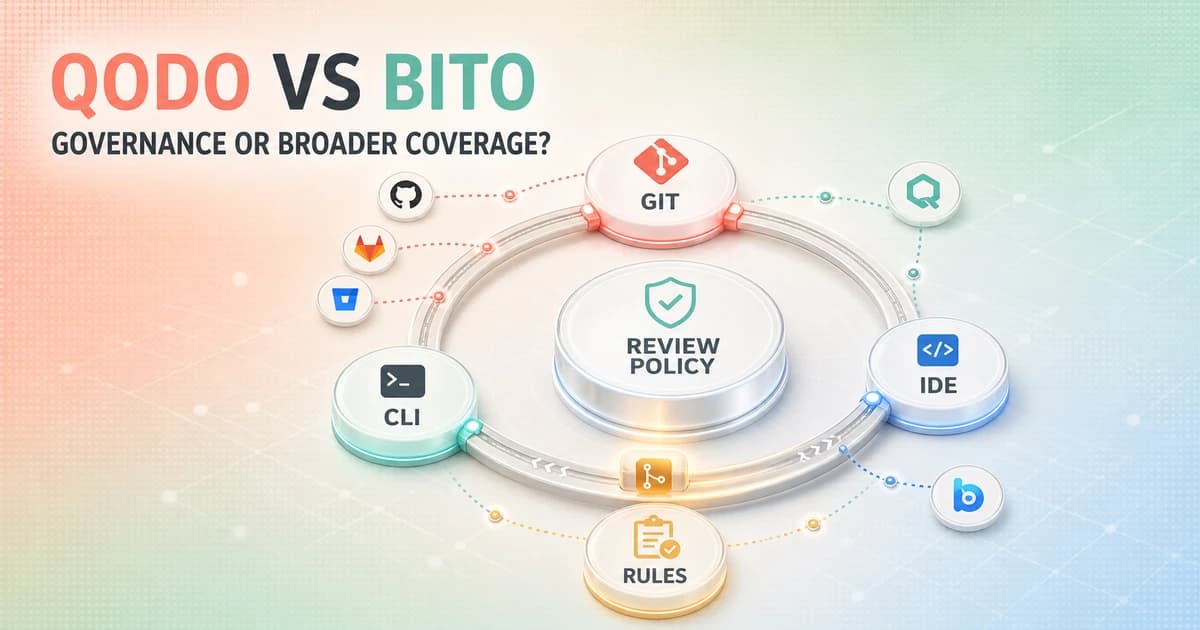
Qodo is the better governor. Bito reaches more of the developer's day.
I choose Qodo when code review has become an organization problem. Its stronger argument is not another clever comment. It is the ability to rank findings, tune review effort, apply standards, use specialized agents, and carry policy across repositories and teams.
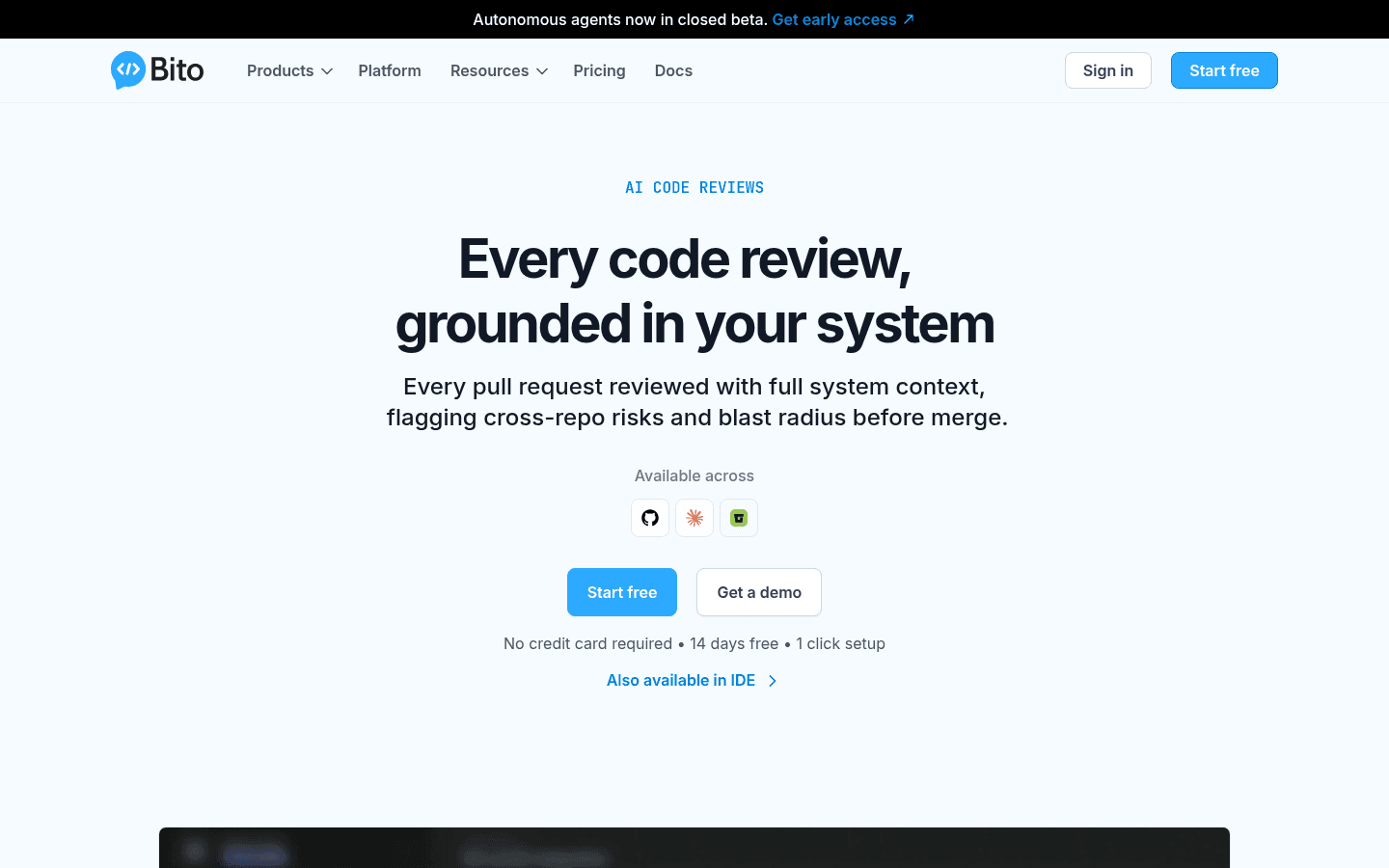
I choose Bito when the team is spread across GitHub, GitLab, or Bitbucket and wants one reviewer in pull requests, common IDEs, AI coding editors, and the terminal. Bito covers more surfaces at a lower starting seat price. That is practical for a mixed toolchain.
The uncomfortable answer in Qodo vs Bito is that neither wins on features alone. Qodo can be expensive if pooled credit use is poorly governed. Bito can become expensive when large changes burn through reviewed-line allowances. Both can train developers to ignore automation if they publish too many plausible but weak findings.
My default is Qodo for multi-team governance and Bito for multi-host, multi-surface coverage. I keep deterministic CI and human approval in both workflows. An AI reviewer earns a place by reducing review work, not by adding a second inbox full of opinions.
If neither model fits, my guide to Qodo alternatives compares seven review approaches, including Bito, CodeRabbit, Greptile, Bugbot, Graphite, Copilot, and Codacy.
The real difference
Qodo standardizes judgment. Bito distributes it.
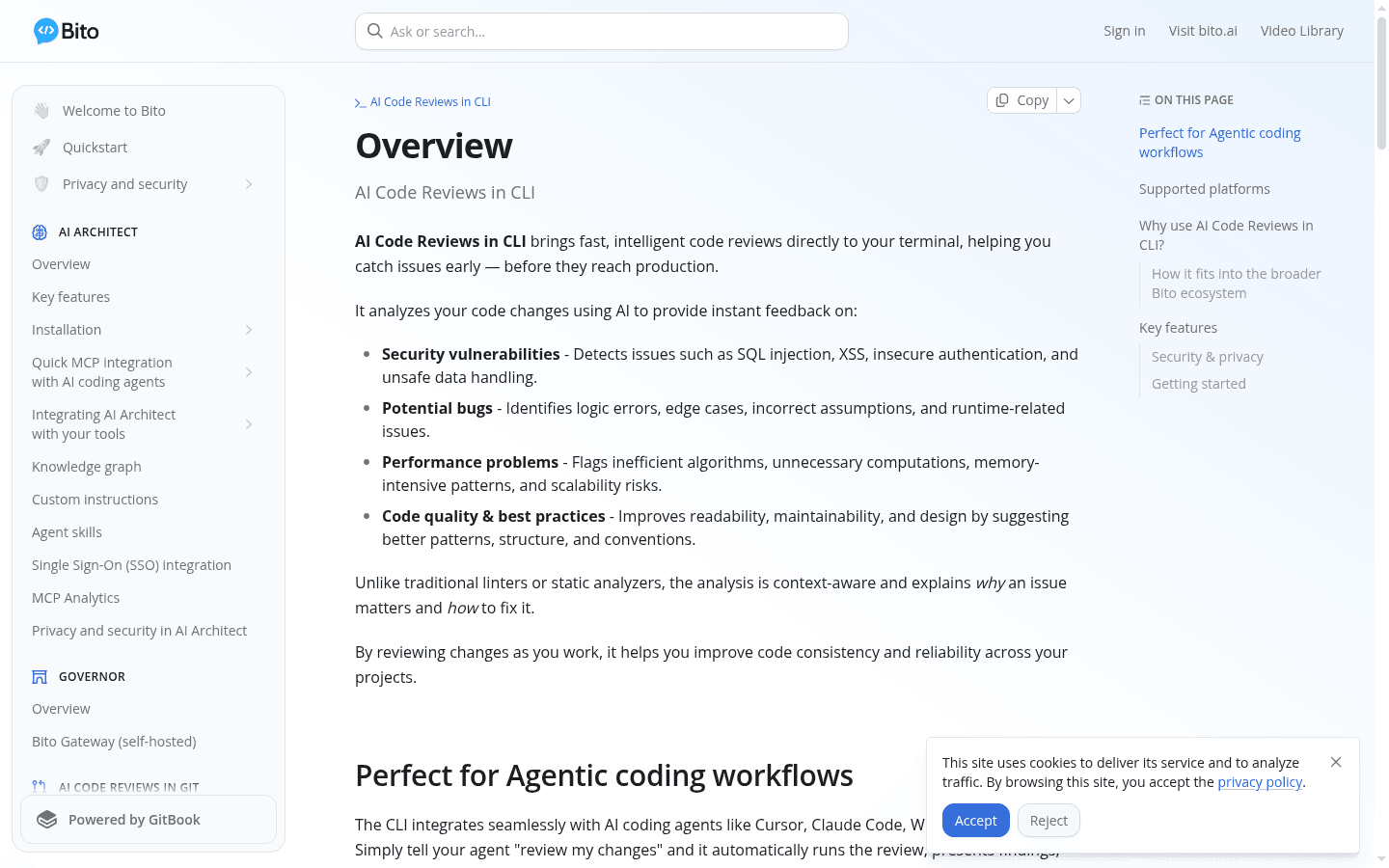
Qodo treats the pull request as the shared quality checkpoint. Its documentation describes a multi-agent review that uses repository context, history, standards, and architecture, then ranks findings so the team can discuss, dismiss, or remediate them. The controls are useful when one platform lead needs to answer, 'What does good review mean here?'
Bito treats review as a service that follows the developer. It can comment in Git, run in VS Code and JetBrains products, work alongside Cursor and Windsurf, and review local changes through the CLI. That removes the excuse that feedback arrived after the developer had already switched tasks.
This distinction changes ownership. Qodo needs somebody to own review policy, severity, and credit use. Bito needs somebody to decide which surface is authoritative, who receives a paid seat, and when an IDE or CLI finding should also appear in the pull request.
I look at the incident log before choosing. If teams repeatedly interpret the same rule differently, I lean Qodo. If obvious issues survive until the shared queue because local checks are weak, I lean Bito.
At a glance
Qodo vs Bito feature comparison
| Decision | Qodo | Bito |
|---|---|---|
| Core job | Turns pull-request review into a governed quality process with specialized agents, severity, review effort, standards, and cross-repository context. | Runs context-aware reviews in Git, IDEs, and the CLI, with inline findings, follow-up chat, incremental review, and custom rules. |
| Review surfaces | Pull requests, IDE workflows, and CLI-oriented team processes, with the strongest emphasis on the shared review queue. | GitHub, GitLab, Bitbucket, VS Code, JetBrains IDEs, Cursor, Windsurf, and the bitoreview CLI. |
| Repository context | Full repository, history, standards, architecture, and optional context across repositories. | Repository-wide context, changelist summaries, custom guidelines, static analysis, security checks, and feedback on new commits. |
| Rules | Organization and repository guidelines, severity thresholds, review effort, output location, visibility, and ignored content. | .bito.yaml, general and language-specific guideline files, plus existing instruction files such as AGENTS.md and CLAUDE.md. |
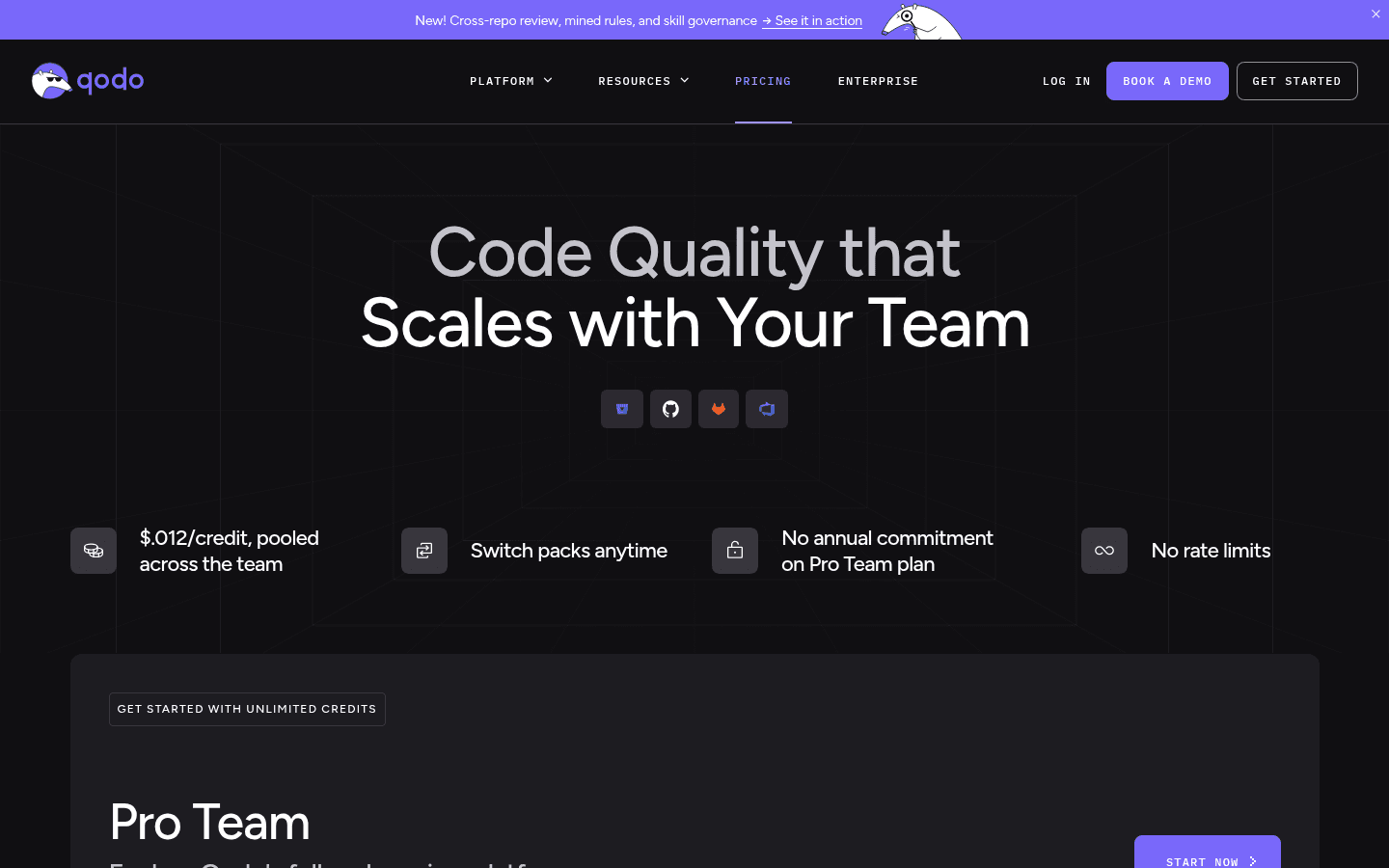
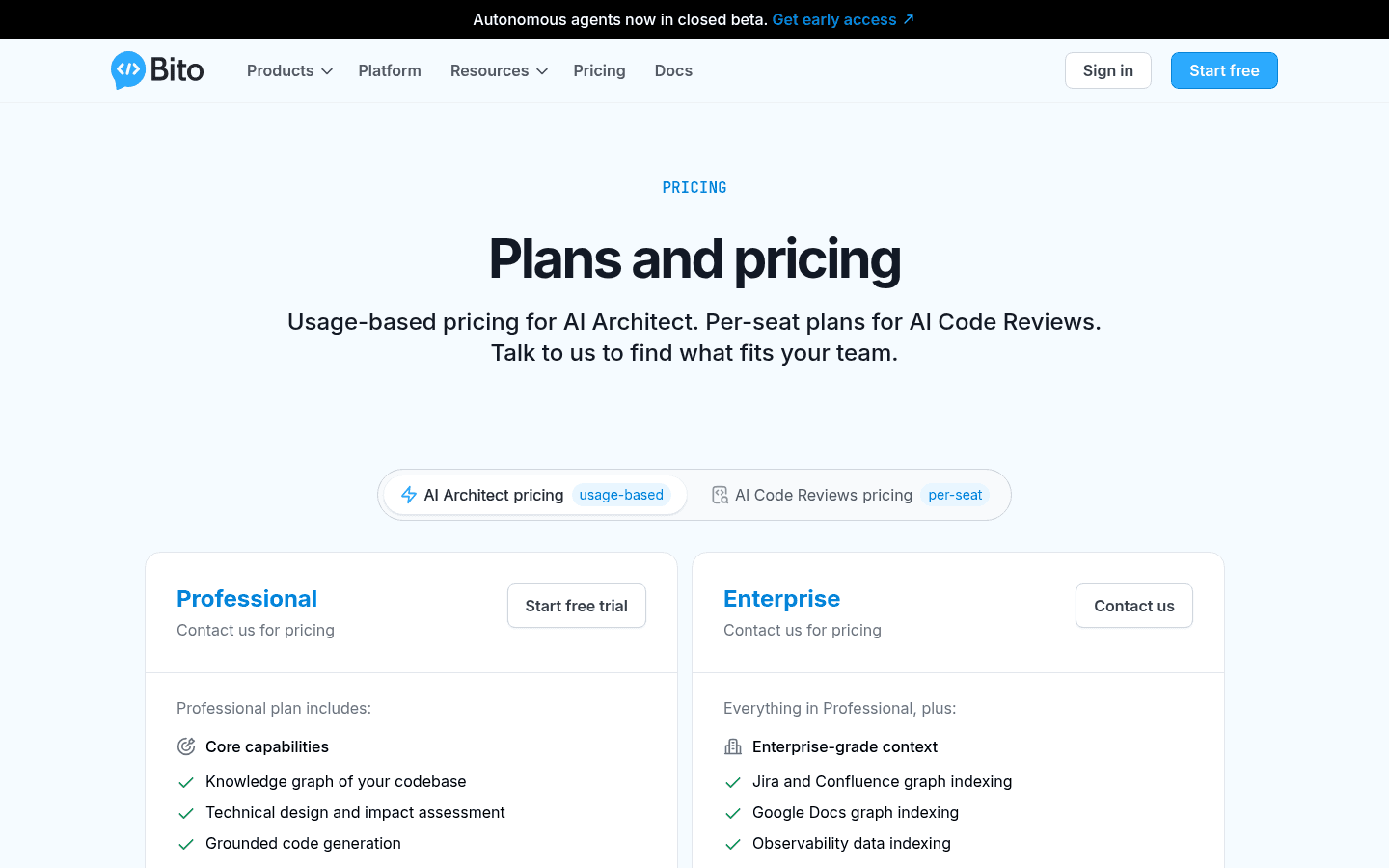
| Budget shape | Pro Team starts at $30 and uses pooled credits at $0.012 each. Qodo says there are no repository or review rate limits. | Per-developer seats plus a reviewed-line allowance. Team and Professional include 5,000 lines per seat each month, then charge for overage. |
| Best fit | Organizations that need one review policy, explicit risk ranking, and deeper governance across teams and repositories. | Mixed-host teams that want one reviewer available in Git, the editor, and the terminal at a lower starting seat price. |
The table makes Bito look broader and Qodo look deeper. That is directionally right, but the useful unit is still an accepted finding. A comment counts only when it changes code, adds a useful test, prevents a known regression, or records a decision the team needed.
I do not reward summaries, compliments, or issues a linter already reported. Those make the reviewer look busy while giving the human more work. Precision matters because developer attention is the scarce resource.
Review workflow
Bito can meet the change before the pull request. Qodo makes the shared queue easier to govern.
With Qodo, I expect the main review to begin when a pull request is published or updated. Findings explain what needs attention, why it matters, and how to fix it. Review effort, severity, visibility, and output controls let me make a risky migration look different from a documentation edit.
Bito supports automatic and manual reviews in Git, incremental review for new commits, and follow-up chat on feedback. The CLI is the interesting part for me. It can inspect working changes for bugs, security, performance, and maintainability before a pull request becomes the first serious checkpoint.
That early loop helps only if the team avoids duplicate work. I decide whether the IDE or CLI is private preparation and Git is the official record. If every finding appears in three places, broader coverage becomes broader clutter.
I keep formatters, type checks, dependency policy, tests, secret scanning, and known security rules in deterministic tooling. I spend AI review on logic, missing cases, architectural mismatches, and cross-file impact. Asking an LLM to rediscover ESLint is an expensive way to feel modern.
Context and rules
Repository context is valuable. Written truth is more valuable.
Qodo says its agents can use the full repository, history, standards, architecture, and cross-repository context. I value that when a schema, SDK, or shared service change can break a caller outside the current diff. Explicit severity also helps separate a release blocker from a suggestion.
Bito supports repository-level settings through .bito.yaml, with file exclusions, branch filters, suggestion modes, and general or language-specific guideline files. Its newer workflow can also use instruction files such as AGENTS.md and CLAUDE.md. That reduces migration work for teams that already maintain agent rules.
Neither product can recover a business rule that exists only in somebody's memory. I move expensive invariants into tests, short architecture notes, rule files, or comments beside intentionally strange code. Then I ask the reviewer to cite the file or contract behind a finding.
Rules also rot. I assign an owner and review them every quarter. Otherwise an old migration constraint keeps producing confident nonsense long after the migration ended.
- Write rules as observable constraints with a clear scope.
- Exclude generated files, vendor code, snapshots, and lockfiles unless they are the purpose of the change.
- Require findings to explain impact and point to repository evidence.
- Test one cross-file regression and one shared-contract change.
- Keep security-sensitive changes under independent human review.
Pricing and limits
Qodo meters pooled credits. Bito meters seats and reviewed lines.
Qodo Pro Team currently starts at $30. Its pricing page lists pooled credits at $0.012 each, no repository or review rate limits, flexible packs, and a customer-set overage cap. Credits expire at the end of the monthly cycle, and Pro Team supports up to 30 users.
A shared pool suits uneven usage. One developer can have a busy week without wasting capacity assigned to somebody else. Forecasting is still work because deeper review, larger diffs, and repeated updates can consume more credits than a quiet demo suggests.
Bito Team is $12 per seat per month with annual billing or $15 monthly. Professional is $20 annually or $25 monthly. Both currently include 5,000 reviewed lines per seat each month, followed by $5 for every additional 1,000 lines. The Professional plan has a 14-day trial.
Bito can assign seats automatically when an eligible developer joins or submits a first pull request reviewed by Bito, or an administrator can manage seats manually. That makes Git identity part of cost control. A forgotten service account or occasional contributor can change the bill if assignment policy is careless.
Reviewed lines are easy to understand until a monorepo refactor lands. I model a normal month, a release month, and one unusually large change. Then I compare total cost per accepted finding. The cheaper sticker price can lose if weak comments and overages pile up.
Fit before features
Choose based on who owns quality and where developers work.
- Choose Qodo
- I need visible severity, consistent review policy across several teams, cross-repository context, and a reviewer whose controls are owned above any single editor.
- Skip Qodo
- I want a permanent free team tier, dislike forecasting pooled credits, or have a small repository where tests and deterministic checks already catch the expensive mistakes.
- Choose Bito
- My developers span GitHub, GitLab, or Bitbucket and want the same review system in pull requests, VS Code or JetBrains, Cursor or Windsurf, and the terminal.
- Skip Bito
- Large refactors make line-based overages hard to predict, or my main problem is organization-wide review governance rather than getting review into more developer surfaces.
- Keep human review
- The change touches authorization, payments, personal data, concurrency, migrations, compliance, or a business rule that is not fully represented in code.
Bito is the easier shortlist for a budget-conscious team with mixed Git hosts and mixed editors. Its coverage reduces the pressure to standardize everybody on one development environment just to get automated review.
Qodo makes more sense when the buyer is a platform, security, or quality lead who needs review behavior to remain consistent as repositories and teams multiply. Its value appears in policy and prioritization, not merely in adding comments.
I would not buy either for a tiny codebase with weak tests. I would first improve deterministic checks and make pull requests smaller. An AI reviewer cannot rescue a process that hides intent inside 4,000 changed lines.
Customer research
Reddit complaints turn into acceptance tests, not verdicts.
The first complaint I test is noise. One commenter described Qodo as producing many wrong or low-value findings, while other endorsements in the same thread were accused of looking promotional. I do not treat either side as representative. I use the disagreement to measure false positives and trust decay over four weeks.
The second complaint is shallow review. Several developers argue that most tools catch obvious issues and differ only when the change spans files, tests, or hidden contracts. I seed those cases deliberately. A reviewer that finds a typo and misses a broken authorization path has not helped.
The third issue is evidence quality. Independent Bito discussion was sparse compared with Bito-authored comparison material. That does not make Bito weak. It means I require my own historical benchmark before believing performance claims.
I also watch developer behavior. If people stop opening comments, dismiss everything in batches, or rerun review until it agrees with them, the product has failed even if the dashboard reports more findings.
Switching cost
Installation is the short part. Rebuilding review habits is the migration.
| Work | What I migrate | Cost |
|---|---|---|
| Git identity and seats | Map Git handles, choose automatic or manual seat assignment, and confirm which contributors should trigger paid review. | Medium |
| Rules | Translate Qodo guidelines into .bito.yaml and guideline files, or move Bito rules into Qodo standards. Remove formatting rules that belong in CI. | Medium |
| Review ownership | Decide whether Git, IDE, or CLI is the canonical Bito result, or how Qodo findings move from the shared queue into local remediation. | High |
| Budget model | Replay a normal month against Qodo credits or Bito seats, included reviewed lines, and overages. Include bots and one large refactor. | Medium to high |
| Trust baseline | Measure accepted findings, false positives, duplicates, known misses, review latency, and cleanup time before switching the default reviewer. | High |
Moving from Qodo to Bito means translating policy into repository configuration and deciding which of Git, IDE, or CLI owns the final result. The team may gain earlier feedback, but it can lose a clean centralized view if every surface develops a different habit.
Moving from Bito to Qodo means consolidating review around shared policy. I map Bito guidelines to Qodo standards, preserve useful exclusions, and decide which severity and review-effort levels match the old workflow. Developers may lose some local convenience, so remediation needs a clear path.
I keep branch protection, human approvals, tests, static analysis, dependency checks, and secret scanning unchanged during the pilot. The challenger runs beside the incumbent until it proves that its comments are better, not merely different.
A practical pilot
Thirty pull requests reveal the real budget and the real noise.
I use ten historical pull requests with known defects, ten normal completed pull requests, and ten live pull requests. The set includes a logic bug, dependency update, configuration change, data migration, generated files, a cross-file contract change, a security-sensitive edit, and one large refactor.
For historical work, I hide the final fix and run each reviewer against the original change. For live work, I keep one tool's feedback from influencing the other. A maintainer labels every finding useful, duplicate, weak, wrong, or outside scope.
- Accepted findings that changed code or added a useful test.
- Known regressions found and known regressions missed.
- False positives and duplicate comments per pull request.
- Time to first useful finding and total review latency.
- Developer minutes spent verifying and dismissing findings.
- Qodo credits and Bito reviewed lines per accepted finding.
- Trust after week one and again after week four.
I choose Qodo if severity, standards, and cross-repository context create a cleaner queue across teams. I choose Bito if Git, IDE, and CLI coverage catches the same meaningful problems earlier with a lower operating cost. If neither beats the human-plus-CI baseline, I keep the money.
FAQ
Qodo vs Bito questions I would answer before buying
Which is better in Qodo vs Bito?
I choose Qodo for organization-wide review governance, risk ranking, and cross-repository standards. I choose Bito for a mixed Git and editor environment that wants review in pull requests, IDEs, and the CLI at a lower starting seat price.
What is the main difference between Qodo and Bito?
Qodo emphasizes how teams govern review through severity, effort, specialized agents, and repository standards. Bito emphasizes where developers can run review, including GitHub, GitLab, Bitbucket, IDEs, AI coding editors, and the terminal.
How much does Bito AI Code Review cost?
Bito Team is currently $12 per seat per month with annual billing or $15 monthly. Professional is $20 annually or $25 monthly. Both include 5,000 reviewed lines per seat each month, followed by $5 for each additional 1,000 lines.
How much does Qodo code review cost?
Qodo Pro Team currently starts at $30 and uses pooled credits priced at $0.012 each. Qodo says there are no repository or review rate limits, and teams can set an overage cap.
Does Bito support GitLab and Bitbucket?
Yes. Bito supports GitHub, GitLab, and Bitbucket, including cloud and enterprise or self-managed options documented for its code-review product.
Can Qodo or Bito replace human code review?
No. I use either as a first reviewer for regressions, risky patterns, missing tests, and cross-file impact. Humans still own architecture, product behavior, security, policy, and final merge approval.
Official references
Product, documentation, and pricing pages checked for this guide
Read related articles
Keep reading practical SwitchMyTool guides after this one.

Qodo vs Codacy in 2026: Better AI Review or Stronger Merge Gates?
I compare Qodo and Codacy by AI review, static analysis, security gates, pricing, migration cost, team fit, and common Reddit complaints.
Read more
Qodo vs Graphite Agent in 2026: Better Review Governance or a Better PR Workflow?
I compare Qodo and Graphite Agent by review quality, stacked pull-request workflow, pricing, team fit, migration cost, and common Reddit complaints.
Read more
Qodo vs Cursor Bugbot in 2026: Better Review Governance or a Faster Cursor Loop?
I compare Qodo and Cursor Bugbot by review depth, pre-push workflow, repository rules, usage pricing, team fit, migration cost, and Reddit complaints.
Read more