 SwitchMyTool

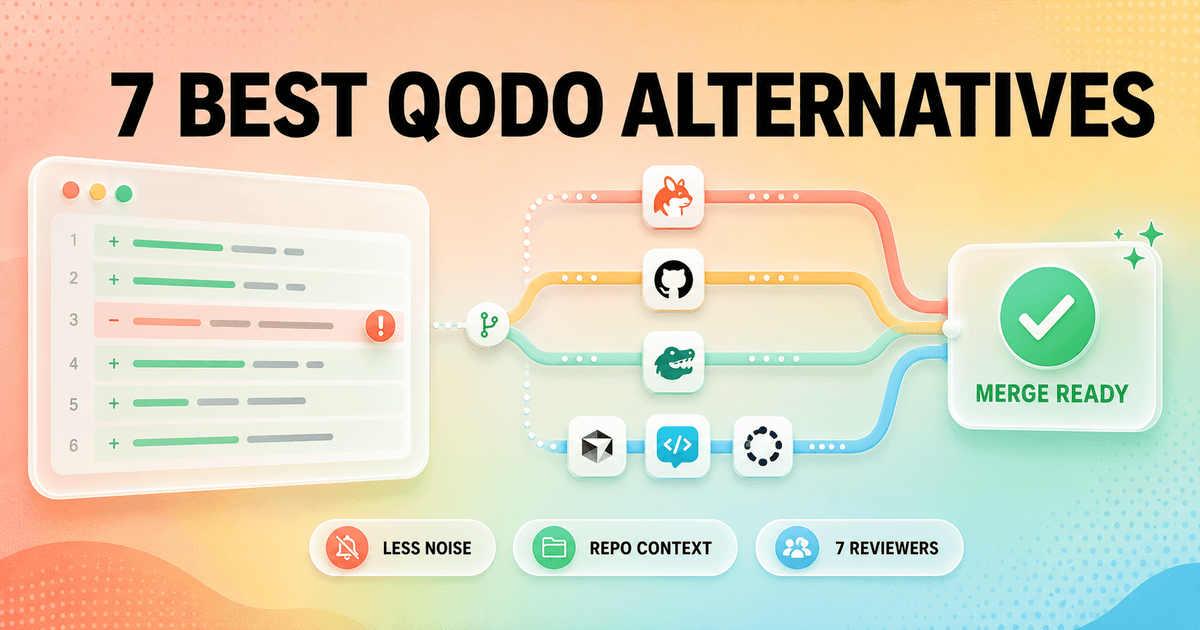
An AI code reviewer can save an hour and still waste a morning. The bad version leaves twelve comments, repeats the linter, misses the broken authorization path, and congratulates itself for noticing a variable name. The pull request is no closer to merge.
That is the real reason I compare qodo alternatives. Qodo covers a lot of ground across IDE, pull request, CLI, and repository context. A team rarely leaves because the feature list is short. It leaves because pricing no longer matches review volume, comments feel noisy, the code host is wrong, or the workflow has become wider than the problem.
I judge these tools by one practical outcome: does a review put a pull request on a credible path to merge? That means finding consequential defects, using repository rules, respecting the scope of the change, and making the next action obvious. A review count is not a quality metric. Neither is a wall of green checks.
My verdict
CodeRabbit is the closest general replacement. Greptile is the context specialist.
I would start with CodeRabbit when a team wants to replace Qodo without redesigning code review around a new platform. The product covers multiple code hosts, publishes a useful free plan, and keeps summaries, line comments, chat, static checks, integrations, and analytics in one review surface. It is not magically quiet, but the migration shape is familiar.
I would choose Greptile when the failure is context. Its pitch is simple: index the codebase, reason across repository boundaries, and review the pull request with more than the visible diff. That matters in service-heavy systems where a small API change can violate a contract three directories away. The tradeoff is a $30 developer price, included-review limits, and more trust placed in repository indexing.
GitHub Copilot is the lowest-friction consolidation choice for a team already paying for Copilot. Cursor Bugbot makes more sense when implementation and review already live in Cursor. Bito is the value pick for GitHub, GitLab, and Bitbucket teams. Graphite Agent is compelling when stacked pull requests and merge queues are part of the operating model. Codacy is my choice when deterministic security, quality, and coverage gates matter more than conversational charm.
I would not remove Qodo on the strength of a demo. Run the replacement beside it, use the same thirty pull requests, label useful and useless findings, and compare what developers actually fix. The winner is the reviewer whose comments survive contact with the codebase.
Closest replacement
CodeRabbit for a broad, familiar pull-request reviewer across several code hosts.
Best context
Greptile for repositories where the dangerous bug lives outside the visible diff.
Lowest friction
GitHub Copilot for teams already standardized on GitHub and paid Copilot plans.
Best guardrails
Codacy when static analysis, security, coverage, and policy must enforce the floor.
Start with the job
Decide which part of Qodo you are actually replacing.
Qodo is not one small bot. Its public plans span Git reviews, IDE review, CLI workflows, rules, analytics, and broader codebase context. If the team uses only pull-request comments, moving is straightforward. If developers rely on pre-PR checks and repository instructions, a new GitHub app alone will feel like a downgrade even when its comments are better.
I split the replacement job into four layers. The first is diff review: defects, security issues, edge cases, tests, and suggested fixes. The second is context: repository rules, linked issues, related files, architecture, and cross-repository impact. The third is enforcement: required checks, severity thresholds, static analysis, coverage, and merge blocking. The fourth is developer flow: IDE, CLI, chat, autofix, and the route from comment to commit.
Most teams need two or three layers, not every layer. Buying the broadest suite because it wins a grid usually recreates the same complexity they were trying to leave. I would write down the five findings that matter, the repositories that matter, and the one workflow that must get faster before opening another pricing page.
Side-by-side
Seven Qodo alternatives compared by the tradeoff I would budget for.
| Tool | Best for | Current price shape | Platform fit | Main tradeoff |
|---|---|---|---|---|
| CodeRabbit | Best overall replacement | $24/user/month annually | GitHub, GitLab, Azure DevOps, Bitbucket | Broad feature set can still create review noise |
| GitHub Copilot | Best for GitHub-native teams | Available on paid Copilot plans; metered usage applies | GitHub plus supported IDE and CLI surfaces | Comments do not approve, request changes, or block merge |
| Greptile | Best for repository context | $30/developer/month, 50 reviews included | GitHub and GitLab | Overage pricing and heavier onboarding |
| Cursor Bugbot | Best for Cursor-heavy teams | Usage based; roughly $1-$1.50 per average run | GitHub, GitLab, Cursor, and web agents | Variable spend and strongest fit inside Cursor |
| Bito | Best multi-host value | $12 annually or $15 monthly per seat | GitHub, GitLab, Bitbucket, IDE, and CLI | 5K reviewed lines per seat before overage |
| Graphite Agent | Best for stacked PR workflows | Free Hobby; $20 Starter; $40 Team | GitHub and the Graphite review workflow | Switching means adopting more than a reviewer |
| Codacy | Best for deterministic guardrails | $15 annually or $18 monthly per user | Cloud-hosted repositories and IDE guardrails | Less conversational than a pure AI reviewer |
These prices are not directly interchangeable. CodeRabbit and Bito bill seats, Greptile combines seats with review limits, Bugbot bills usage, and Copilot review draws from a wider AI budget. Graphite prices an entire review workflow. Codacy sells an enforcement platform that includes much more than an LLM comment.
I forecast with real pull-request volume, not the cheapest card. Count active authors, monthly reviews, average diff size, private-repository Actions use, overages, and the engineering time spent dismissing noise. A cheap reviewer that creates ten minutes of cleanup on every pull request is an expensive subscription with excellent camouflage.
Best overall Qodo alternative
1. CodeRabbit gives me the easiest like-for-like pilot.
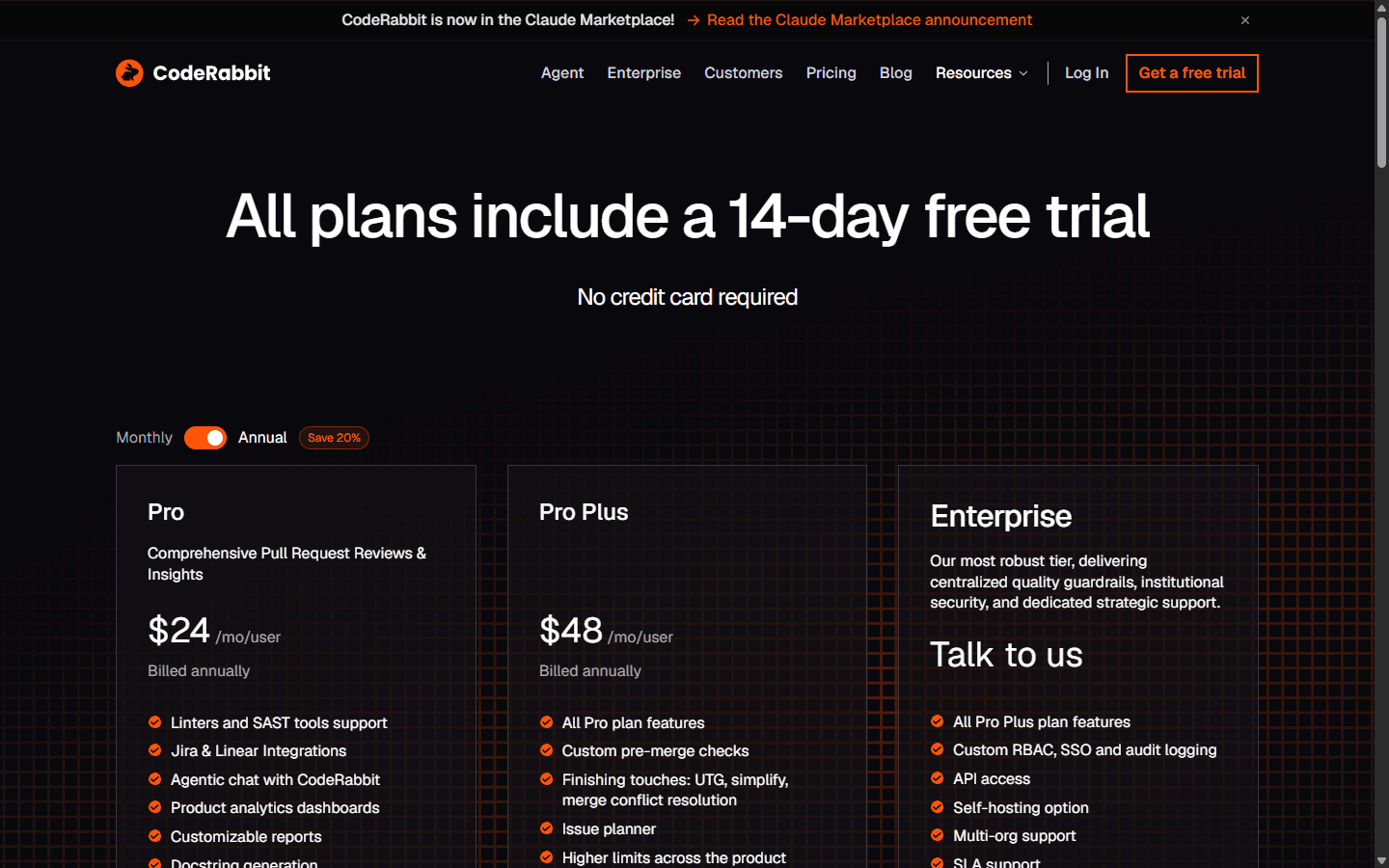
CodeRabbit is where I would begin because the trial does not force an architecture decision. It can summarize a pull request, leave line-level findings, run linters and security checks, chat about the diff, connect Jira or Linear, and work across the main hosted code platforms. A team can install it on two repositories and learn something useful before procurement arrives with a spreadsheet.
The free plan is unusually practical for evaluation: the current pricing page lists unlimited public and private repositories, PR summaries, and IDE or CLI reviews, followed by a fourteen-day Pro Plus trial. Pro is $24 per user per month when billed annually. Pro Plus is $48 and adds heavier agent work such as test generation, simplification, merge-conflict handling, and custom pre-merge checks.
That breadth is also the warning. Turning on every review dimension can reproduce the comment volume that made the team search for Qodo alternatives in the first place. I would begin with bugs, security, changed behavior, and missing tests. Style belongs to deterministic tooling. Architecture comments should require enough evidence to justify widening the pull request.
CodeRabbit fits teams that want familiar PR comments, multiple code hosts, and a clear path from free evaluation to paid rollout. I would skip it when the actual requirement is self-hosted repository intelligence, a full merge workflow, or strict deterministic governance. Its migration cost is low to medium: install the app, translate rules, tune severity, and compare dismissals for ten reviews before expanding.
For the direct workflow, pricing, and noise comparison, read my Qodo vs CodeRabbit guide.
Best GitHub-native choice
2. GitHub Copilot removes a vendor, not the need for review policy.
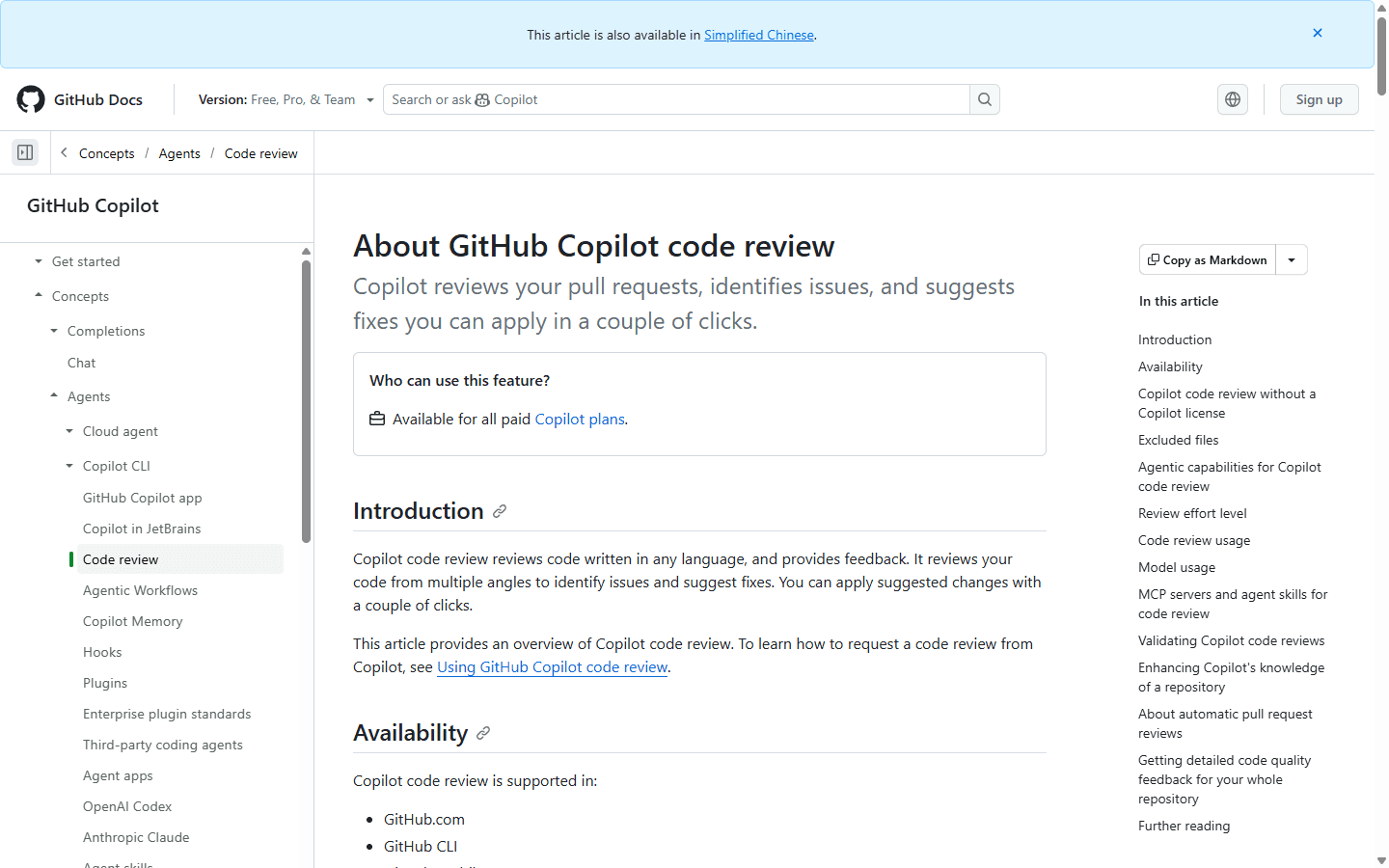
Copilot code review is attractive for one boring reason: it is already where many teams work. GitHub documents support on GitHub.com, the CLI, several IDEs, mobile, and an Azure DevOps preview. Automatic review can be configured, suggested fixes can be applied, and agentic project context can be enabled through GitHub Actions.
The caveats matter. GitHub says the review leaves a Comment rather than Approve or Request changes, so it does not block a merge by itself. Without the project-context workflow, agentic capabilities are limited. Review consumes AI credits, and private-repository agentic work can also consume Actions minutes. That makes the marginal cost harder to isolate from chat, coding agents, and the rest of Copilot.
I would choose it for a GitHub-only organization that already has Copilot Business or Enterprise, wants fewer apps with repository access, and can enforce merge quality through existing branch protection and CI. The setup burden is low because identity, repositories, and review live in one platform.
I would not choose it as the sole gate for a team that needs a reviewer to stop a merge, uses GitLab or Bitbucket, or wants a dedicated review budget. It also excludes some file types and does not let the reviewer choose a model. Migration is low for the app, medium for governance: the team still has to decide what Copilot comments mean and which separate checks can fail the build.
For the direct review-depth, workflow, usage, and migration comparison, read my Qodo vs GitHub Copilot guide.
Best repository context
3. Greptile is for bugs that do not live inside the diff.
Greptile makes the strongest case when a reviewer keeps missing relationships. It indexes the repository, reviews pull requests with broader context, and supports GitHub and GitLab. The company also offers self-hosting in a customer's AWS environment and a bring-your-own-model path for that deployment, which puts it in a different conversation from a simple marketplace bot.
Greptile now has a free Starter plan for one active developer with unlimited repositories and fifty monthly credits. Pro is $30 per seat each month with fifty credits per seat. A standard review uses one credit, a TREX review uses three, and each additional credit costs $1. I would model bots, dependency updates, generated changes, and stacked work before calling the price predictable.
Greptile fits a service-oriented codebase, a monorepo with cross-cutting contracts, or a team whose most costly review misses require understanding code beyond the changed lines. It is also worth a look when GitLab or self-hosting matters. I would skip it for a tiny repository where a strong diff review and CI already cover the risk.
The migration cost is medium. Repository indexing and permissions deserve a security review, custom instructions need deliberate tuning, and the team should test whether cross-file findings are genuinely useful or merely broader. I would use ten historical regressions as a benchmark, then compare live review precision on new work.
For the direct repository-context, governance, pricing, and migration comparison, read my Qodo vs Greptile guide.
Best for Cursor teams
4. Cursor Bugbot shortens the path from finding to fix.
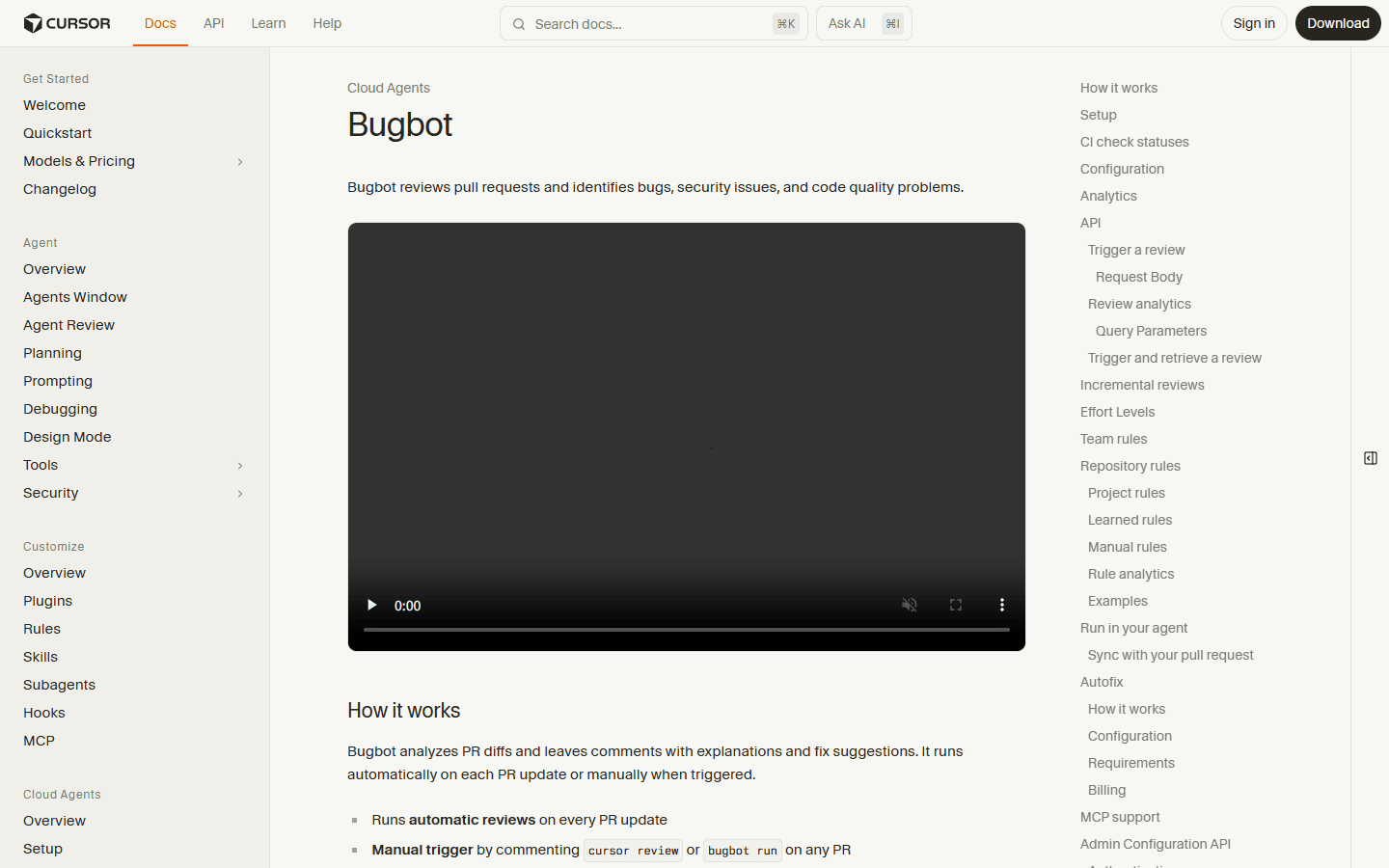
Bugbot is most convincing when Cursor already writes a meaningful share of the code. It can review pull requests automatically or on demand, use repository and project rules, learn from review feedback, and hand a finding into Cursor or a web agent for a fix. Cursor also supports pre-push review commands, which moves detection earlier than the pull-request queue.
Cursor changed Bugbot from a $40 seat subscription to usage-based billing for renewals after June 8, 2026. Its current announcement puts an average run around $1 to $1.50, depending on pull-request size and complexity. Teams pay from on-demand spend, while individuals use included usage. Effort levels let administrators trade cost for deeper review.
I would choose Bugbot for a Cursor-first team that wants review, rules, and remediation in one loop. The product is especially appealing when developers already understand Cursor privacy mode, spend caps, agents, and repository configuration. Adding one more Cursor surface is easier than teaching another portal.
I would skip it when spending must be flat, the team is not committed to Cursor, or review needs to stand apart from the tool that generated the code. That separation can be healthy. Migration is low for a small Cursor team and medium for a larger one because effort levels, spend limits, learned rules, and merge behavior all need an owner.
For a direct workflow, pricing, and migration comparison, read my Qodo vs Cursor Bugbot guide.
Best multi-host value
5. Bito covers Git, IDE, and CLI without Qodo's current price.
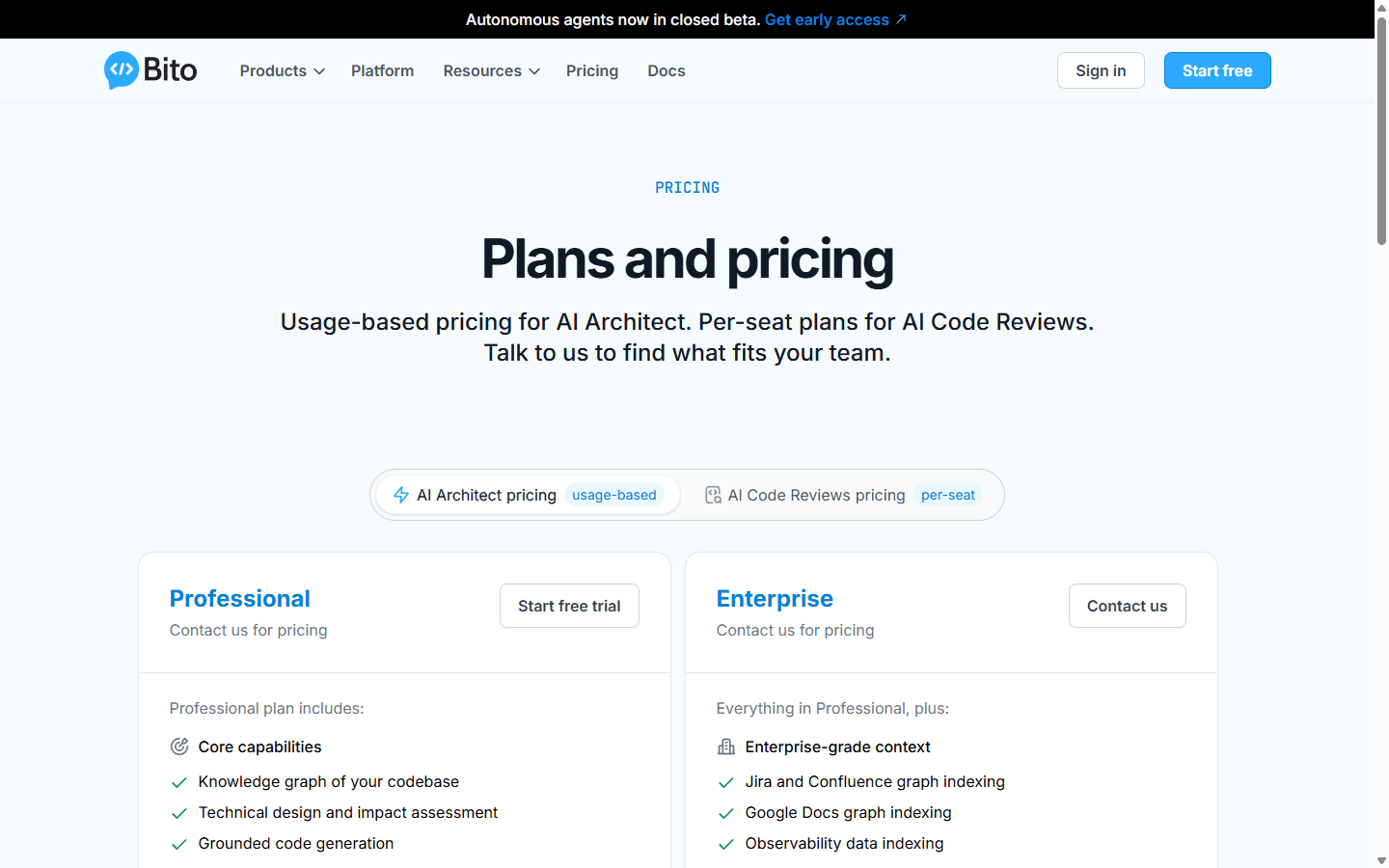
Bito is the value option I would test when the organization spans GitHub, GitLab, and Bitbucket. Its code-review plans cover Git, IDE, and CLI, support VS Code, JetBrains, Cursor, and Windsurf, and use repository guideline files including AGENTS.md, CLAUDE.md, and Cursor or Windsurf rules. That makes existing agent instructions useful instead of decorative.
The Team plan is $12 per seat per month annually or $15 monthly. Professional is $20 annually or $25 monthly and adds a broader feature set and trial path. Both currently include 5,000 reviewed lines per seat each month, followed by $5 for each additional 1,000 lines. Seats are assigned to Git handles whose pull requests receive review, which is better than billing every account but still requires administration.
Bito fits a mixed-host organization, a team that wants review before and after the pull request, or a budget-conscious buyer who can forecast reviewed lines. It also deserves attention when self-managed Git hosting or enterprise self-hosting enters the requirement list.
I would avoid it if line-based overages make a large monorepo hard to budget or if the team wants the simplest possible reviewer. Bito's surrounding AI Architect product, integrations, and deployment options are useful, but they widen the buying decision. Migration is medium: map rule files, decide seat assignment, cap overages, and test the same finding in IDE, CLI, and Git so developers know which surface owns the answer.
For the direct governance, workflow coverage, pricing, and migration comparison, read my Qodo vs Bito guide.
Best review workflow
6. Graphite Agent changes how the team ships, not just who comments.
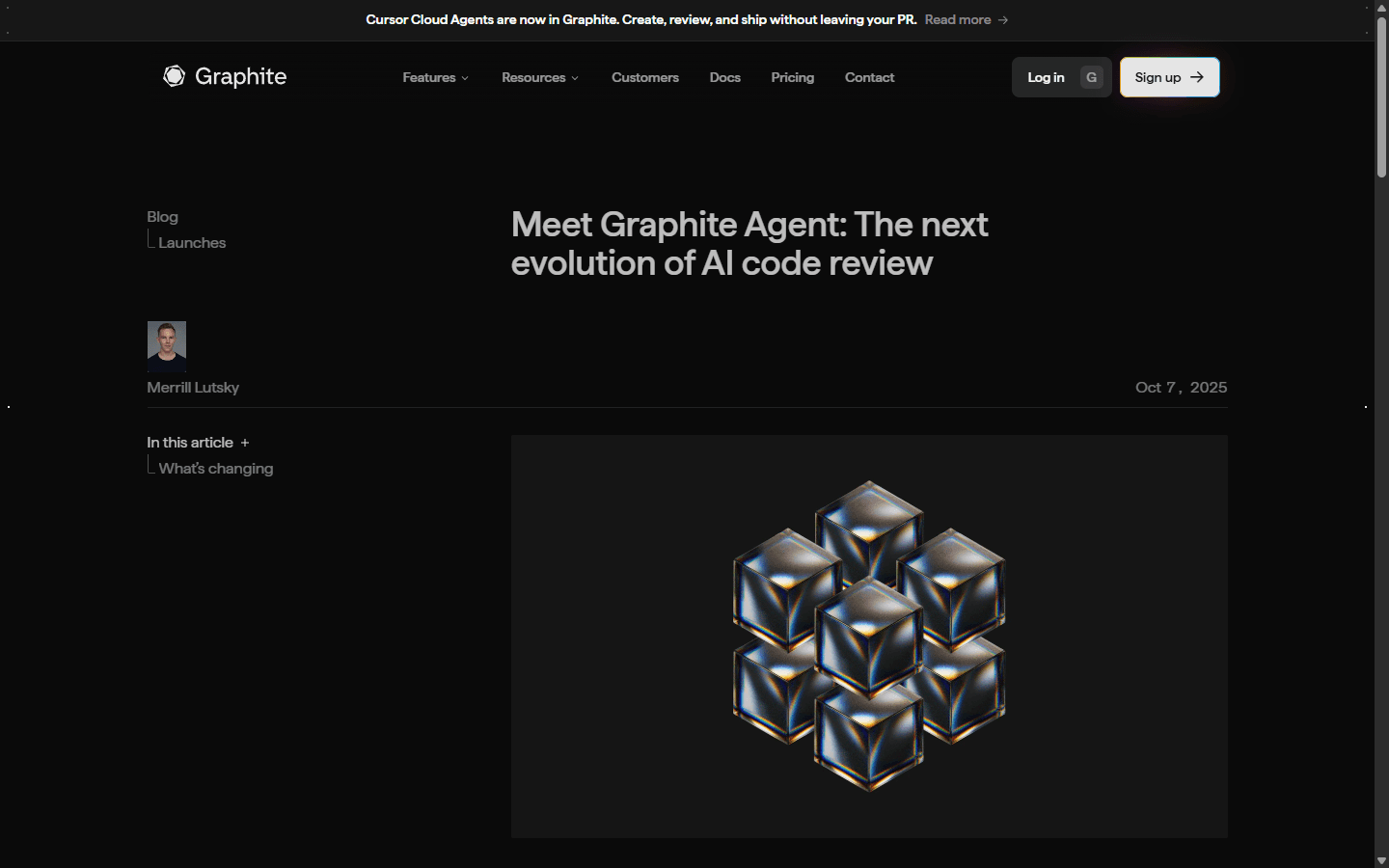
Graphite retired the Diamond name and combined AI review with pull-request chat as Graphite Agent. The larger product includes stacked pull requests, a redesigned PR page, merge queue, inbox, and developer metrics. The point is not merely to find a defect. It is to move a change from creation through review and merge inside one operating system for pull requests.
The current packaging starts with a free Hobby plan for personal repositories. Starter is $20 with stacking and limited Agent interactions. Team is $40 with unlimited AI reviews and chat, stacking, merge queue, and advanced team features.
I would choose Graphite for a GitHub team already interested in smaller stacked changes and a managed merge queue. AI review becomes more valuable when pull requests are intentionally small, dependent changes stay organized, and the reviewer can discuss and apply a fix in the same place.
I would skip it when the team only wants to replace Qodo comments. Adopting Graphite introduces a new PR page, CLI habits, stacking vocabulary, merge behavior, and team process. That can be an upgrade, but calling it a reviewer migration understates the work. Migration is high compared with the other choices because the best value appears only after the workflow changes too.
For the direct comparison of review governance, stacked PRs, pricing, migration cost, and comment quality, read my Qodo vs Graphite Agent guide.
Best deterministic guardrails
7. Codacy gives AI a stricter floor.
Codacy is the option I would bring to a security or platform team. Its AI Reviewer sits beside static analysis, software-composition analysis, infrastructure-as-code checks, coverage tracking, malicious-package detection, and IDE guardrails. The AI can reason about intent, while deterministic tools keep checking the things an LLM should not improvise.
The Team plan starts at $18 per developer per month with annual billing or $21 monthly. The current pricing page lists up to 100 private repositories, unlimited lines of code, shared standards across 49 languages, a 14-day trial, and free use for public open-source projects. That is easier to forecast than usage meters when review volume is high.
I would choose Codacy when the requirement is not 'write nicer comments.' It is 'keep quality and security policy consistent while AI increases code volume.' Coverage, dependency, IaC, and static rules can create a merge floor even when the conversational reviewer misses intent.
I would skip it when developers mainly want a chatty repository expert or a lightweight second opinion. The experience is broader and more policy-driven than a pure review bot. Migration is medium to high because existing linters, security scans, coverage providers, and branch checks can overlap. Inventory those first or the team will pay for duplicate red marks.
For the direct decision on contextual AI review, static analysis, security, coverage, pricing, and migration cost, read my Qodo vs Codacy guide.
Fit before features
Who should switch from Qodo, and who should leave it alone?
Switch to CodeRabbit
You want the nearest general replacement, several hosted code platforms, and a useful free pilot.
Switch to Copilot
You already pay for Copilot, live in GitHub, and prefer vendor consolidation over a specialist reviewer.
Switch to Greptile
Your costly defects require repository context, cross-file reasoning, GitLab, or a self-hosted path.
Switch to Bugbot
Cursor already generates and repairs much of the code, and usage-based review fits the budget.
Switch to Bito
You need GitHub, GitLab, Bitbucket, IDE, and CLI review at a lower seat price.
Switch to Graphite
You are ready to adopt stacked PRs, a merge queue, and a new review operating model.
Switch to Codacy
Deterministic quality, security, dependency, coverage, and policy checks must back the AI.
Keep Qodo
Its IDE, PR, CLI, rules, and analytics already fit, developers act on the comments, and a pilot cannot beat its precision.
The poor-fit signal is the same across all seven: nobody owns the reviewer. An unowned bot accumulates defaults, comments on the wrong things, and becomes background noise. Give one engineering owner permission to change rules, suppress categories, inspect spending, and remove the tool if useful-finding rate does not improve.
I also keep human review. AI is good at tireless first-pass inspection and bad at carrying organizational responsibility. Architecture, product intent, threat modeling, rollout risk, and the decision to merge still need a person who understands what failure costs.
Customer research
Reddit's recurring complaint is noise without accountability.
Across code-review discussions on Reddit, developers keep returning to context. A tool can read every changed line and still miss why the change exists, what contract must remain stable, or which ugly legacy behavior is intentional. That is why repository instructions and linked issue context matter more than another generic 'AI-powered' badge.
The second complaint is scope. Reviewers suggest broad refactors, new abstractions, and cleanup unrelated to the pull request. The comment may be technically defensible and operationally useless. I want a reviewer to separate 'must fix before merge' from 'worth a follow-up issue' and then stop talking.
Noise is the third complaint. Nitpicks, repeated linter findings, false positives, and the same observation phrased three ways teach developers to dismiss the bot. The proper response is not to ask the model to be smarter in the abstract. Narrow the review policy, move deterministic style checks to CI, and measure which comments produce changes.
There is also distrust around recommendation threads. Developers notice vendor accounts and marketing posts that appear to be independent advice. I do not use Reddit popularity as a ranking signal. I use it to find failure modes worth testing: latency, irrelevant comments, missing context, confusing pricing, and whether a human still has to redo the review.
Finally, senior engineers do not believe accountability can be automated away. The useful mental model is a fast junior reviewer: inspect the suggestion, verify the evidence, run the tests, and keep source control clean. A confident comment is not a merge approval.
Switching cost
Installing the app is easy. Rebuilding trust is the migration.
| Workstream | What I would move | Effort |
|---|---|---|
| Review rules | Copy Qodo rules into the new tool's repository instructions and remove vague style preferences. | Medium |
| Repository access | Install the new app beside Qodo, restrict it to pilot repositories, then remove the old app last. | Low |
| Merge checks | Rebuild required checks, branch protection, severity thresholds, and failure behavior. | Medium to high |
| Developer habits | Teach one trigger, one dismiss reason, and one escalation path instead of every feature. | Medium |
| Review history | Export the useful Qodo findings and keep a small labeled benchmark set for future evaluations. | Low |
| Security review | Recheck code retention, training policy, subprocessors, data region, SSO, and self-hosting requirements. | High for regulated teams |
I would run Qodo and the candidate in parallel, but I would not let both comment freely on every repository. Pick two representative repositories: one familiar service and one awkward codebase with cross-file behavior. Limit the new app to those repositories and keep its checks non-blocking during the pilot.
Translate rules as policy, not prose. 'Prefer clean code' is useless. 'Flag a new unauthenticated route,' 'require a regression test for parser changes,' and 'do not recommend renaming public JSON fields' are reviewable instructions. Repository-specific rules beat a global manifesto.
Keep a small labeled set of past defects. Include a missed authorization check, an off-by-one boundary, a broken migration, a performance regression, and a harmless pattern that reviewers often flag incorrectly. Historical cases do not prove live quality, but they expose whether a tool understands the kinds of mistakes your team actually makes.
Do not remove Qodo until branch protection, required checks, fallback behavior, billing caps, and access removal have been verified. A clean uninstall is part of migration. Revoke the GitHub or GitLab app, remove unused secrets, delete obsolete configuration, and document which system now owns review policy.
A practical evaluation
Use thirty pull requests and count actions, not comments.
PRs 1-10
Run defaults. Label every finding useful, duplicate, wrong, out of scope, or unclear.
Tune once
Disable style chatter, add repository rules, define severity, and set one spending cap.
PRs 11-20
Compare useful findings, missed known risks, review latency, and developer dismissals.
PRs 21-30
Test large diffs, tiny fixes, generated code, dependency updates, and one incident-prone area.
Decision
Keep the tool only if it changes more consequential code with less cleanup and predictable cost.
My primary metric is useful findings per pull request: a finding is useful only when it causes a code change, a test, a clarified requirement, or a deliberate risk acceptance. Comment volume is a vanity metric. So is the vendor's self-reported bug count unless I can inspect the evaluation method.
I also track false-positive dismissals, median time to the first useful finding, total review spend, and how often a human catches something the bot missed. The last number prevents the pilot from becoming a sales exercise. The goal is not to prove AI can review code. It is to decide whether this reviewer improves this team's merge decisions.
At the end, I ask developers one blunt question: would you notice if the bot disappeared tomorrow? If the answer is no, the integration has already failed, however impressive the dashboard looks.
FAQ
Questions teams ask before replacing Qodo.
What is the best Qodo alternative?
CodeRabbit is my best general Qodo alternative because it covers the familiar pull-request workflow, publishes clear pricing, supports several code hosts, and offers a useful free starting point. Greptile is stronger when repository context is the main problem, while Codacy is better when deterministic security and quality gates matter more than conversational feedback.
Is there a free Qodo alternative?
CodeRabbit has a free plan for public and private repositories, Graphite has a free Hobby plan, and Codacy is free for open-source teams. GitHub Copilot code review is available on paid Copilot plans rather than as a standalone free reviewer. Always check current usage and repository limits before moving a private team.
Which Qodo alternative works with GitLab or Bitbucket?
CodeRabbit and Bito support GitLab and Bitbucket in addition to GitHub. Greptile supports GitHub and GitLab. Graphite is primarily a GitHub workflow. Platform support can differ between cloud and self-managed installations, so verify the exact deployment before a pilot.
Can GitHub Copilot replace Qodo code review?
It can for a GitHub-centered team that already pays for Copilot and wants fewer vendors. It is less suitable when the review must block a merge, when the team uses several code hosts, or when review spending needs its own predictable budget because Copilot review uses shared AI credits and may consume Actions minutes.
How long does it take to migrate away from Qodo?
Installing another reviewer is fast. Rebuilding useful rules, merge checks, security approvals, and developer habits is the real work. I would run both tools on 30 pull requests, tune the replacement after the first ten, and disconnect Qodo only after required checks and fallback behavior are proven.
Should an AI code reviewer replace human review?
No. I use an AI reviewer as a first pass for defects, missing tests, risky edge cases, and policy checks. A human still owns architecture, product intent, security judgment, and the decision to merge. The useful tool reduces mechanical review work without pretending responsibility disappeared.
First-party references
Product details I checked before making the comparison.
GitHub Copilot code review documentation
Greptile V4 pricing and product update
Graphite Agent pricing announcement
Read related articles
Keep reading practical SwitchMyTool guides after this one.
Qodo vs Codacy in 2026: Better AI Review or Stronger Merge Gates?
I compare Qodo and Codacy by AI review, static analysis, security gates, pricing, migration cost, team fit, and common Reddit complaints.
Read more
Qodo vs Graphite Agent in 2026: Better Review Governance or a Better PR Workflow?
I compare Qodo and Graphite Agent by review quality, stacked pull-request workflow, pricing, team fit, migration cost, and common Reddit complaints.
Read more
Qodo vs Bito in 2026: Better Review Governance or Broader Developer Coverage?
I compare Qodo and Bito by review governance, Git and IDE coverage, repository rules, pricing, team fit, migration cost, and Reddit complaints.
Read more