SwitchMyTool

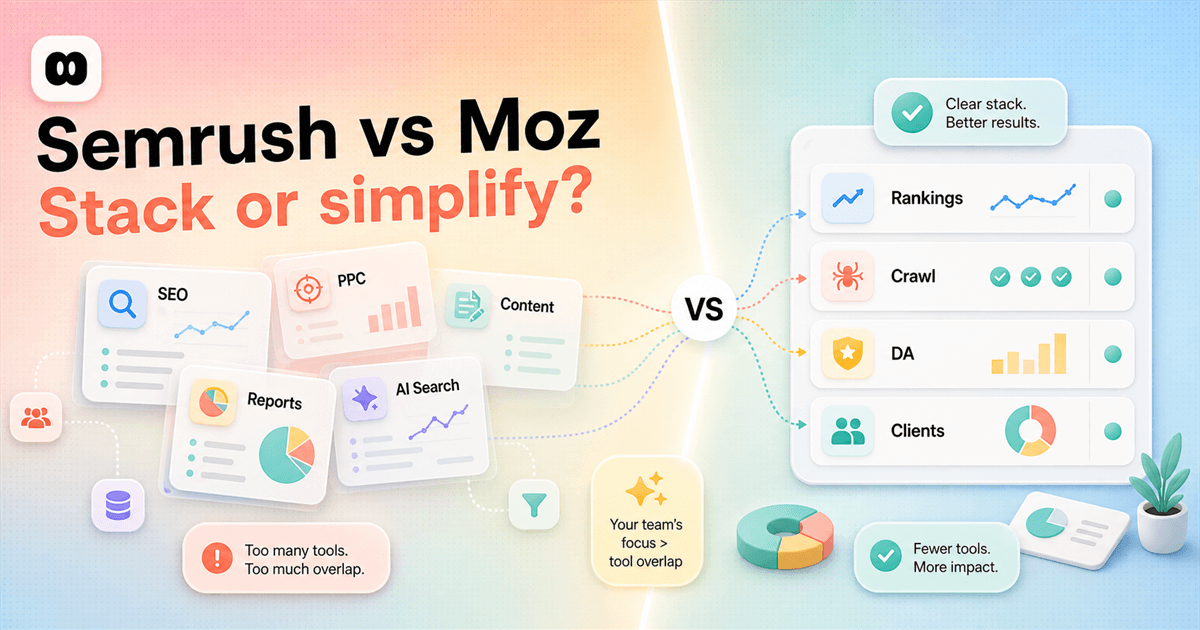
The semrush vs moz decision is not really about which SEO tool has more features. It is about whether your team needs a bigger stack or a cleaner one.
I do not trust SEO tool comparisons that pretend buyers live in a blank spreadsheet. Real teams already have tools. They have Google Search Console, spreadsheets, old Moz campaigns, a Semrush trial someone started, Screaming Frog on one laptop, maybe Ahrefs for link work, and three reports nobody wants to rebuild. That is why Semrush vs Moz gets messy fast.
Semrush and Moz can both be good choices, but they solve different stack problems. Semrush is the broad platform. It wants to pull SEO, AI search visibility, competitor research, content, PPC context, audits, and reporting into one place. Moz is the cleaner SEO suite. It is easier to explain, easier to hand to a junior marketer, and still useful when Domain Authority, rank tracking, crawl basics, and client reports matter.
The wrong move is buying Semrush because Moz feels small, then keeping Moz because Semrush feels heavy. That is how teams turn a tool decision into a monthly tax. This guide uses current official Semrush and Moz pages for product and pricing context, plus customer-research patterns from Reddit. The goal is not to crown a universal winner. The goal is to help you decide what you can stop paying for.
My buying rule
- Choose Semrush when SEO is tied to PPC, content operations, competitive research, local, reports, and AI search visibility. It is the broader operating system.
- Choose Moz when you want cleaner SEO tracking, familiar authority metrics, easier client conversations, and a platform that does not ask every user to become a dashboard mechanic.
- Do not buy either tool because the feature list looks responsible. Buy the one that removes overlap from your weekly stack.
- If the team already uses Screaming Frog, Google Search Console, and another rank tracker, the semrush vs moz decision should start with consolidation, not brand preference.
The real split
Semrush is for consolidation. Moz is for clarity.
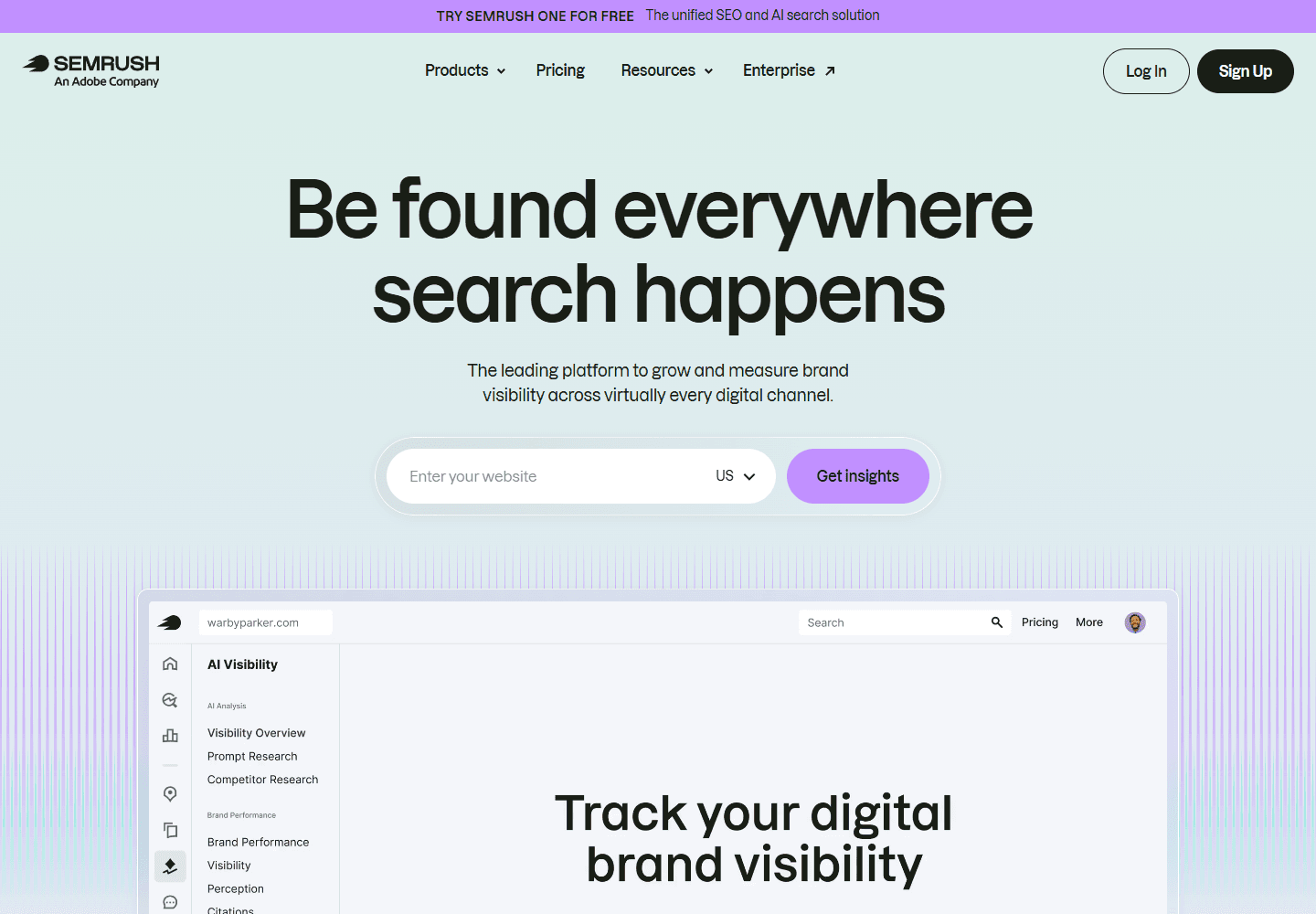
The current Semrush homepage says the platform helps brands be found wherever search happens. That is a broad claim, and it fits the product. Semrush is not just trying to be a rank tracker. It wants to be the place where a marketer checks search visibility, competitors, content opportunities, AI search signals, paid search context, and performance reports.
This breadth is useful when the team has a stack problem. If you use one tool for keyword research, another for site audit, another for competitor work, another for reports, and another for AI visibility, Semrush can make sense. The value is not one magical metric. The value is fewer handoffs and fewer exports.
That same breadth is the reason some people bounce off Semrush. A broad platform demands an owner. Someone has to decide which modules matter, which reports get sent, which projects stay current, and which old tools get canceled. Without that owner, Semrush becomes a very impressive place to click around while the actual SEO work waits.
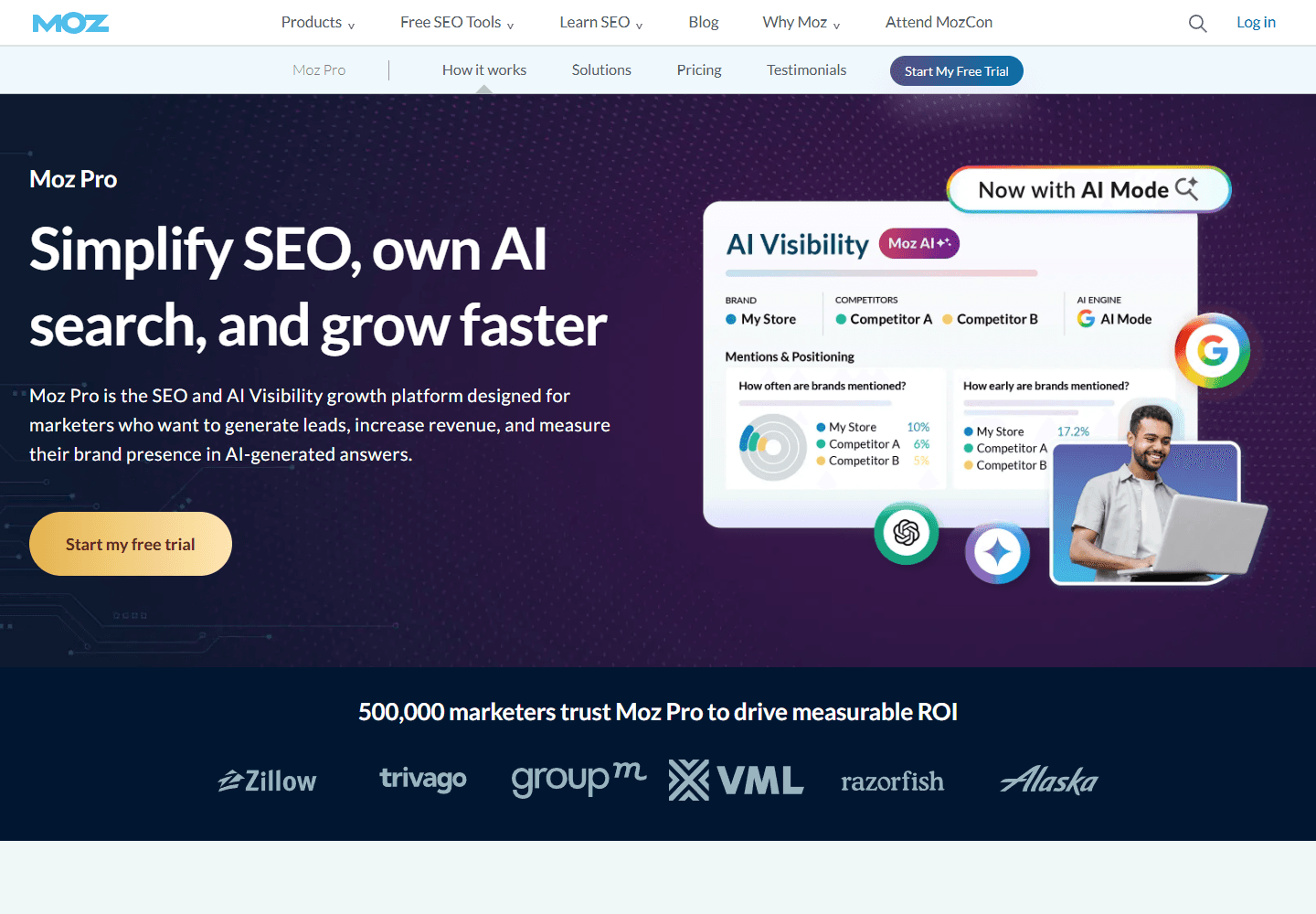
Moz Pro speaks in a different rhythm. The official page talks about simplifying SEO, growing faster, and measuring AI search presence. The product still feels built around approachable SEO work: campaigns, rankings, crawl basics, authority metrics, and reports that a non-specialist can understand without a private glossary.
That clarity can be worth real money. A founder who understands the report can approve the next sprint. A client who understands why rankings moved will stop asking for random keyword updates. A junior marketer can learn the basics without getting buried in a platform built for every channel at once.
The tradeoff is depth and breadth. Moz can feel too light when a team wants serious competitive research, paid-search overlap, content workflow, AI visibility reports across many domains, or a broader marketing operating system. If that is your work, cleaner UI will not be enough.
Plain decision table
Which one fits your stack?
| Situation | Better first pick | Why |
|---|---|---|
| You need SEO plus PPC plus content planning | Semrush | Semrush is built for a wider marketing workflow. The value shows up when one team needs search, paid, content, competitor, and reporting context together. |
| You mostly need rankings, crawl basics, and readable reports | Moz | Moz is easier to explain. It can be enough when the work is tracking, simple audits, authority conversations, and client-friendly reporting. |
| Your current stack already feels expensive and overlapping | Audit the stack before buying either | A Reddit thread about SEO stacks made the right point: many teams mix tools because each does one job well, then pay for overlap they barely use. |
| You manage several channels or a small agency | Semrush | The broader suite can replace more separate tools if someone owns setup, reports, and recurring workflows. |
| You work with non-SEO stakeholders | Moz | Moz can be easier for founders, content leads, and clients who need enough SEO signal without living inside a huge platform. |
| You need deep technical crawling | Use Screaming Frog alongside either | Neither Semrush nor Moz replaces a serious desktop crawler for technical audit work. They can flag issues, but they are not the same job. |
The table has one hidden assumption: you know what the current stack is supposed to do. Many teams do not. They keep adding tools because each new trial promises to answer a slightly different question. Then the stack becomes expensive and overlapping. The Reddit thread you shared is useful because the original poster was not asking for a feature comparison. They were asking what people actually run.
That is the better question. If you choose Semrush, which tools disappear? If you choose Moz, which reports get simpler? If the answer is none, you are not choosing a tool. You are collecting one.
Pricing and limits
Semrush can replace more tools, but only if you use the breadth.
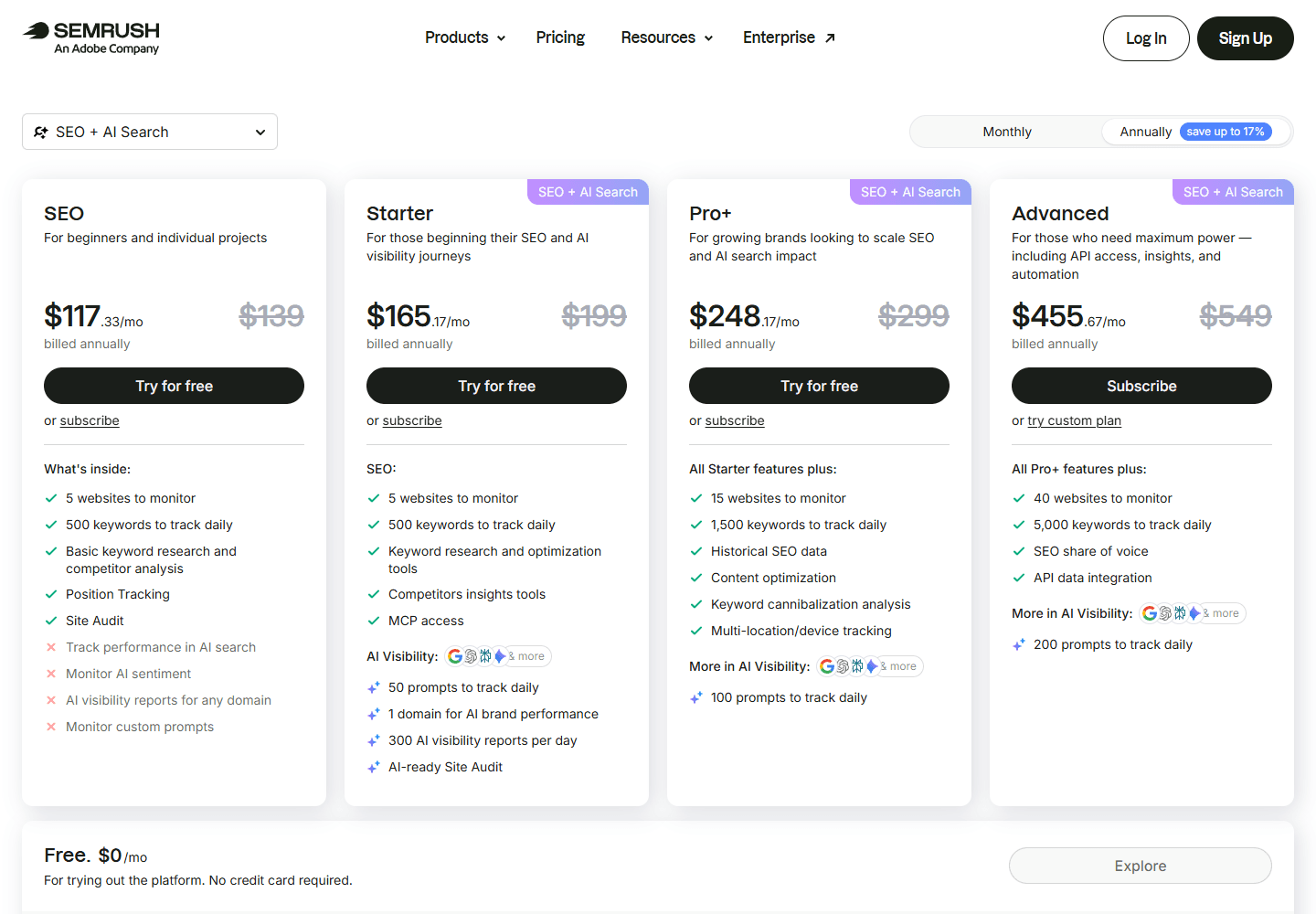
At the time I captured the official Semrush pricing page, the SEO + AI Search view showed annual-billed prices for SEO, Starter, Pro+, and Advanced plans. The visible cards included websites to monitor, keywords to track daily, keyword research, competitor analysis, Position Tracking, Site Audit, AI visibility prompts, content optimization, and higher-tier automation paths.
The exact numbers can change, so check the official page before buying. The important part is the shape. Semrush prices around a broad set of jobs. That can be smart if you cancel other tools or run a team that uses several modules. It can be wasteful if you mostly wanted a rank tracker with a nicer chart.
This is why the common Reddit complaint about Semrush being heavy is useful. Heavy is not always bad. A van is heavy because it carries more than a bicycle. But if you only need to cross the street, the van is ridiculous. Semrush needs enough work to carry.
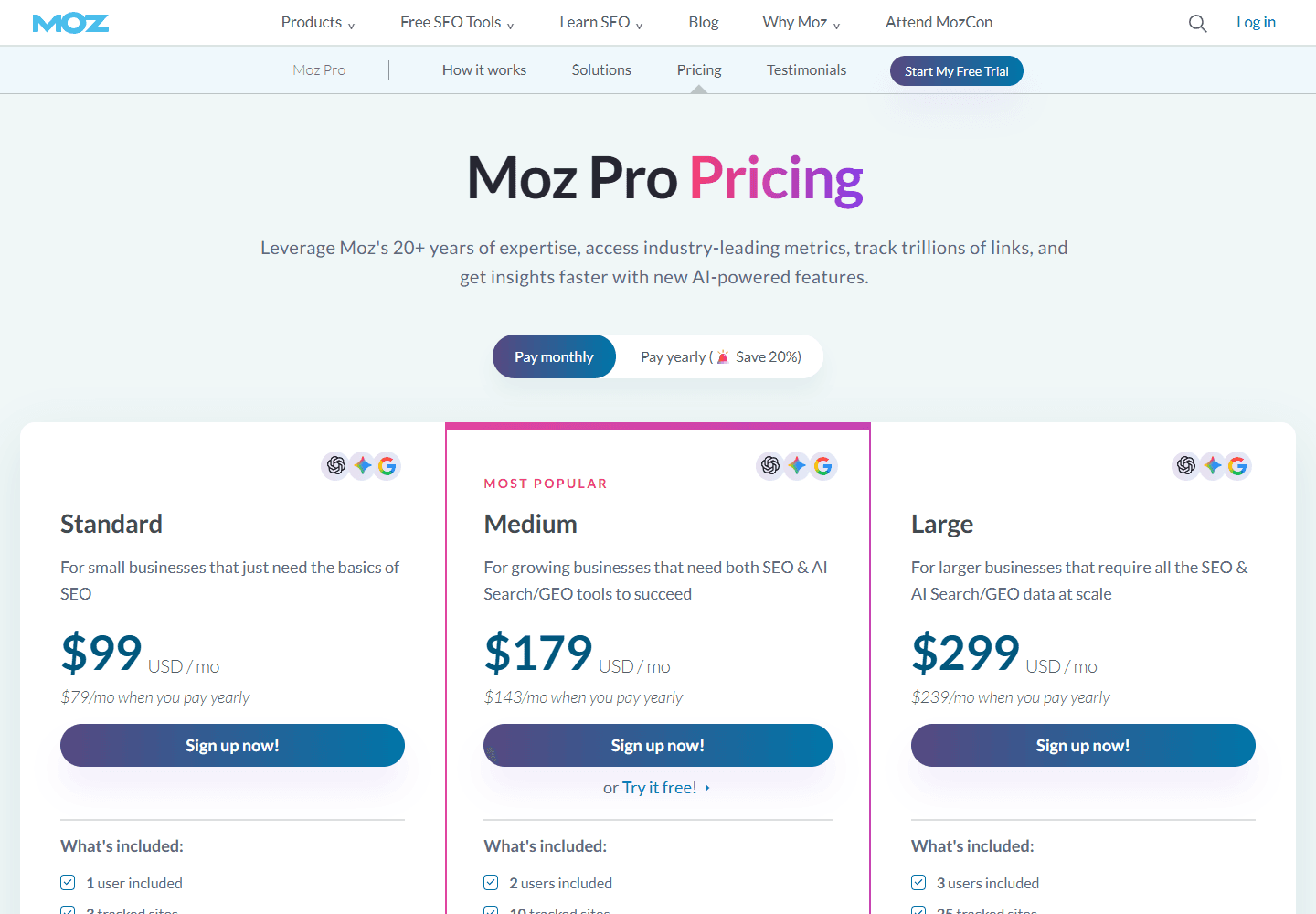
The Moz Pro pricing page I captured showed Standard, Medium, and Large plan cards, with monthly and yearly options. The page positions the plans around small businesses, growing businesses, and larger businesses that require SEO and AI Search or GEO data at scale.
Moz is easier to buy mentally. That does not mean it is cheaper for every team, and it does not mean it is the better tool. It means the purchase maps to a simpler job: run SEO campaigns, track movement, monitor crawl issues, use authority metrics, and keep reporting readable.
The common Moz complaint is almost the mirror image of Semrush. Moz can feel pleasant and clean, but some people worry the data is lighter. If you are running aggressive competitor research or stitching SEO into PPC and content operations, that concern matters. If your job is steady tracking and client explanation, lighter may be fine.
| Question | Semrush | Moz |
|---|---|---|
| Core job | Broad SEO and marketing suite for visibility, competitive research, keyword work, site audit, rank tracking, content, PPC context, and AI search visibility. | Approachable SEO suite for campaigns, rankings, keyword research, crawl basics, link metrics, Domain Authority, and client-friendly progress reporting. |
| Best first user | Agency owner, growth marketer, in-house SEO lead, or team that needs SEO to connect with paid search, content, and competitive intelligence. | Founder, content manager, junior SEO, consultant, or small agency that wants a clearer SEO cockpit and less training time. |
| Pricing feel | More powerful, but easier to overbuy. The current SEO + AI Search pricing page shows several tiers with websites, tracked keywords, AI visibility prompts, and add-on paths. | Simpler to explain. The captured Moz Pro pricing page shows Standard, Medium, and Large plans around business size, users, sites, keywords, and SEO plus AI search needs. |
| Where it disappoints | It can feel heavy. Teams pay for modules they do not own, reports they do not read, and data they never turn into work. | It can feel light. Power users may want deeper data, broader workflows, or more flexible research than Moz gives them. |
| Best proof before paying | Replace or consolidate at least two current tools during a 30-day trial. If it cannot reduce overlap, the broad suite is not doing its job. | Build one campaign, run one crawl, track one priority keyword set, and show the report to a client or founder. If they understand it faster, Moz has a job. |
Choose Semrush
Pick Semrush when the bigger suite will shrink the rest of the stack.
Semrush is the better first pick when the team wants one place for search visibility, competitor research, site audit, rank tracking, content direction, PPC context, and reporting. The decision gets stronger if the current stack is already a patchwork. If Semrush can replace two or three recurring tools, the broad platform starts to make sense.
The best Semrush buyer is not just someone who wants more data. It is someone who can operationalize the data. That person sets projects up cleanly, defines reporting templates, decides which competitors matter, turns site-audit issues into tickets, and uses keyword and content workflows to choose actual work. Without that person, the suite gets noisy.
I would not buy Semrush just to feel covered. That is dashboard insurance, and it gets expensive. Buy Semrush if you can name what leaves the stack after the trial. Maybe it replaces a separate rank tracker, a competitor research workflow, and a reporting tool. Maybe it gives the content and paid teams a shared workspace. If it does none of that, the broad suite may become another tab in the pile.
Best for
Teams that want one large workspace for SEO, AI search visibility, competitor research, site audits, rank tracking, content, PPC context, and recurring reports.
Not for
Solo operators who only check rankings and basic crawl issues, or teams that already feel tired from too many tabs and unused subscriptions.
Reddit common complaint
People often describe Semrush as strong and broad, but heavy. The complaint is not always quality. It is that the tool can become a stack inside the stack.
Best 90-day test
Use it to replace a keyword tool, a competitor research workflow, and one reporting habit. If you still need the same old stack, Semrush did not simplify enough.
Choose Moz
Pick Moz when readable SEO reporting beats platform sprawl.
Moz is the better first pick when the team wants an SEO suite that people will actually use. That sounds modest, but adoption is often the whole game. A perfect platform that nobody opens loses to a simpler tool that changes weekly behavior.
Moz makes sense for teams that need rankings, campaign tracking, crawl basics, keyword research, link metrics, Domain Authority, and clean reporting. It also makes sense for consultants who need to explain SEO progress to clients without turning every meeting into a tool tutorial.
The reason to skip Moz is specific: you need breadth it does not own. If you want SEO plus PPC plus content operations plus broad competitive intelligence, Moz may feel too narrow. If your team already complains that Moz data feels lighter, do not ignore the complaint. Run a test against the work, not against nostalgia.
Best for
Small teams, client-facing consultants, founders, and marketers who want rankings, crawl basics, authority metrics, and reports that non-specialists can read.
Not for
Teams that need a broad all-in-one marketing suite, PPC context, advanced competitive research, deep exports, or a platform that covers several departments.
Reddit common complaint
Moz is often described as cleaner and easier, but users question whether the data feels deep enough compared with Semrush, Ahrefs, or a crawler-led stack.
Best 90-day test
Use Moz to run one campaign, report to one stakeholder, and decide whether simpler reporting helps the team act faster.
Community research
Reddit complaints point to overlap, not a simple winner.
The Reddit screenshot you shared is a good buyer prompt because it does not ask which tool is best in theory. It asks what people actually use. The poster listed Ahrefs as strong for backlinks and competitor research, Semrush as a solid all-in-one for SEO, PPC, and content but a bit heavy, Screaming Frog as a technical audit workhorse, and Moz Pro as cleaner with decent tracking but lighter data.
That is the most honest version of Semrush vs Moz. These tools often sit inside a stack, not alone. A commenter in the screenshot mentioned Semrush plus Screaming Frog plus Google and Bing webmaster tools plus Lighthouse audits. That is not a weird setup. It is the normal mess of modern SEO. One tool rarely owns every job.
Stack overlap
The Reddit pattern is clear: teams often mix Semrush, Ahrefs, Screaming Frog, Moz, Google Search Console, and webmaster tools because each one solves a different job.
Heavy all-in-one tools
Semrush gets praised as a broad suite, then criticized for feeling heavy when the buyer only uses a few modules.
Lighter data concern
Moz gets credit for cleaner UX and tracking, then gets questioned when users want deeper competitor and data workflows.
Real setups over feature grids
The strongest buyer signal is not a perfect comparison table. It is whether a team can name the tools it would cancel after switching.
The practical takeaway is simple: use Reddit complaints as buying questions. If people say Semrush is heavy, ask who will own it. If people say Moz data feels lighter, ask whether your work needs deeper data or just clearer reporting. If people keep stacking tools, ask what each tool owns and which one you are brave enough to cancel.
The worst stack is not the expensive one. The worst stack is the one where every tool feels necessary because nobody has defined the workflow. Semrush can help with consolidation. Moz can help with clarity. Neither can fix a team that refuses to choose.
90-day test
Run the test around cancellation, not curiosity.
In week one, list the current SEO stack. Include free tools, paid tools, spreadsheets, crawler workflows, client reports, and one-off exports. Then write the job next to each item. If you cannot name the job, mark it as suspicious.
In month one, trial Semrush against consolidation. Use it for keyword research, competitor analysis, site audit, position tracking, and one recurring report. At the end of the month, decide which existing tools it can replace. If the answer is none, Semrush is probably too much for your current stack.
In month two, trial Moz against clarity. Build a campaign, track a priority keyword set, use crawl findings in one sprint, and show the report to a stakeholder or client. If the report shortens the meeting and gets the next action approved faster, Moz is doing work.
In month three, choose one primary owner. Semrush can own the broad suite. Moz can own the simpler SEO reporting layer. Screaming Frog can still own deep crawling if technical SEO matters. Google Search Console should stay because it is first party search data. Everything else needs to defend its seat.
My recommendation
Pick Semrush for breadth. Pick Moz for adoption.
If I ran a small agency that needed SEO reports, competitor research, content planning, PPC context, and visibility tracking in one workspace, I would test Semrush first. I would also set a cancellation target before the trial starts. The point of a broad suite is not to add another bill. It is to remove overlap.
If I ran a smaller content team, founder-led site, or consultant workflow where the biggest pain was explaining SEO clearly, I would test Moz first. Moz may not satisfy every power user, but it can make the work easier to understand. That matters more than people admit.
For a solo blogger, I would be careful with both. Start with Google Search Console, a clear publishing plan, and one paid tool only when it changes decisions. Semrush can be worth it if it replaces several jobs. Moz can be worth it if it keeps you focused and helps you spot movement. Neither tool is a substitute for publishing useful pages and updating the ones that already have search demand.
The best semrush vs moz answer is not a brand verdict. It is a stack verdict. If the team needs breadth and has someone to own it, choose Semrush. If the team needs cleaner SEO reporting and lower training friction, choose Moz. If you cannot name what changes next Monday, do not buy either yet.
FAQ
Questions people ask before choosing Semrush or Moz.
Is Semrush better than Moz?
Semrush is usually better when you need a broader SEO and marketing suite with competitive research, content, PPC context, site audit, rank tracking, and AI search visibility. Moz can be better when you need simpler SEO tracking, authority metrics, and reports that are easier to explain.
Is Moz still worth using instead of Semrush?
Moz is still worth using when the team wants a cleaner SEO workflow, familiar Domain Authority language, campaign tracking, crawl basics, and lower training friction. It is weaker if the team needs Semrush-level breadth.
Why do people compare Semrush vs Moz with Ahrefs and Screaming Frog?
Real SEO stacks rarely have one tool. Ahrefs is often used for backlinks and competitor research, Screaming Frog for technical audits, Semrush for broad marketing workflows, and Moz for cleaner tracking and authority reporting.
Which tool should a solo blogger choose?
A solo blogger should choose Moz if simple tracking and reports are enough. Choose Semrush only if the extra modules will replace other tools or directly support publishing, content refreshes, competitive research, and reporting.
Can Semrush replace Moz?
Semrush can replace Moz for many teams if they want a broader platform and are willing to set up reports and workflows. It may not replace the simplicity of Moz for teams that rely on DA language and lightweight campaign reporting.
Sources