 SwitchMyTool

My verdict
Peec is my best overall choice, but the cheapest useful answer is often a spreadsheet
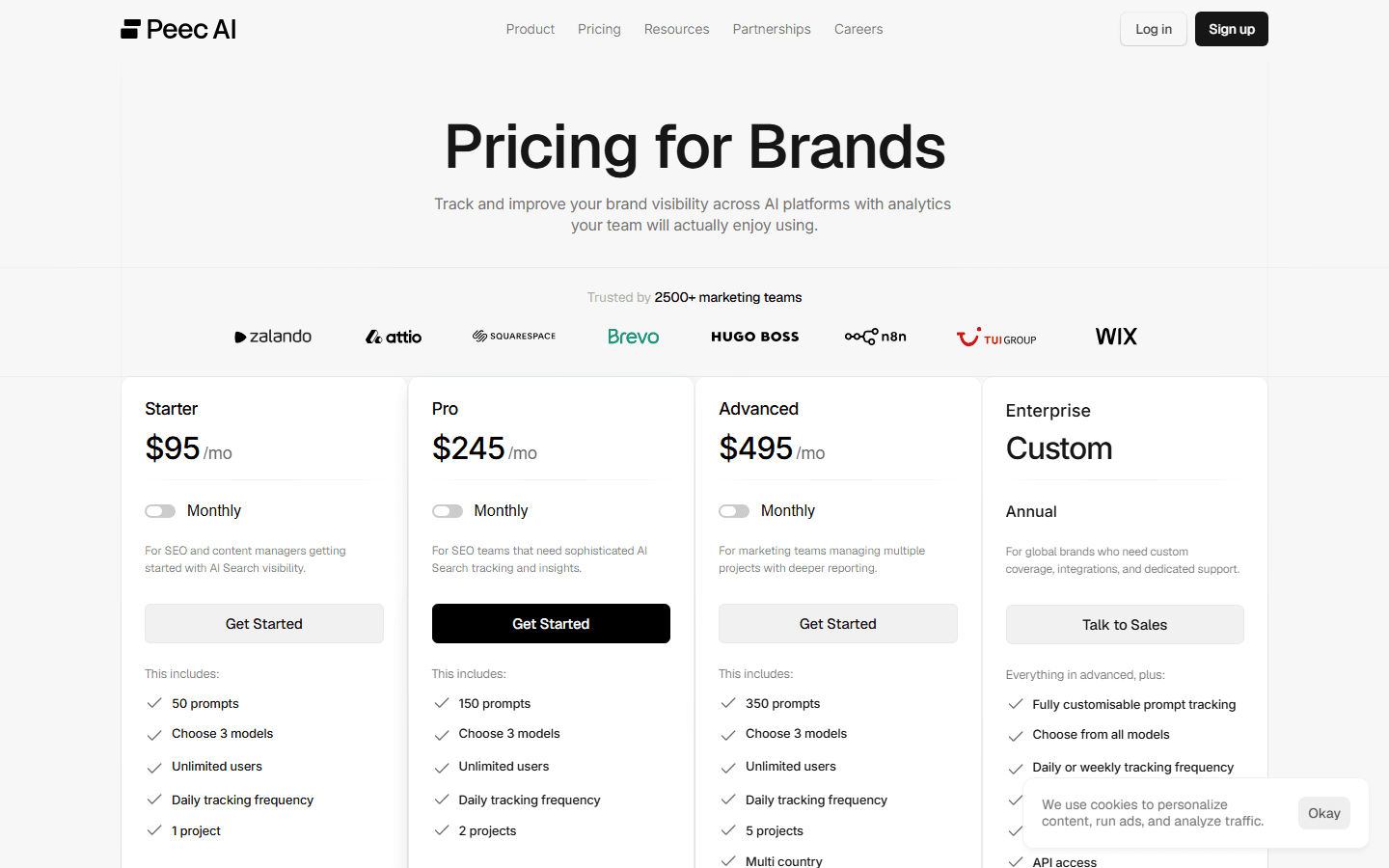
Peec AI is the best ChatGPT rank tracker for the typical in-house SEO or content team I advise. The Starter plan gives me enough prompts to build a real buyer-question set, daily checks, three selected models, unlimited users, and a dashboard that does not demand an enterprise procurement ceremony.
Otterly.AI is where I would start with my own card and an unproven budget. Its $29 monthly entry point is easier to justify when the first job is answering one question: does this channel produce a signal worth funding? Profound is my enterprise pick. Semrush, Ahrefs, and SE Ranking make more sense when the team already lives in the corresponding SEO ecosystem. Scrunch is for a broader AI customer-experience program, not someone who wants a cheap weekly graph.
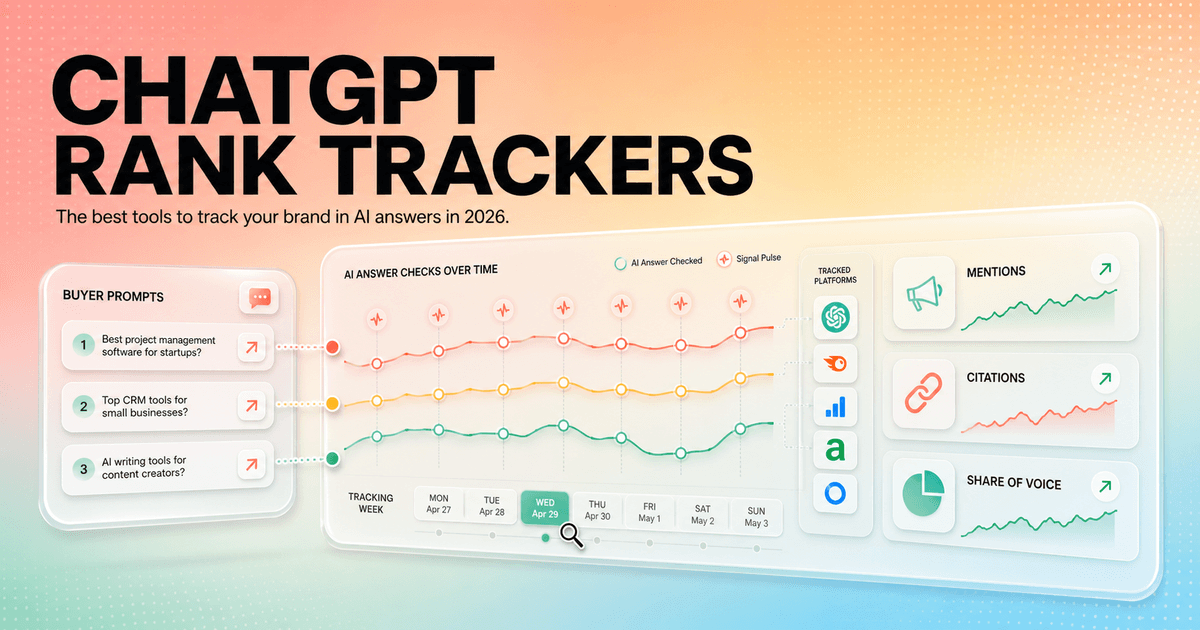
There is an important catch. None of these products tracks a stable ChatGPT rank in the way a classic tracker records position four on a Google results page. ChatGPT can return a different list, source set, order, or wording when the same prompt runs again. What the tools can measure is repeated visibility: mentions, citations, share of voice, answer position, sentiment, and source patterns across a controlled library of prompts.
If I had fewer than 20 important prompts, one market, and no client reporting burden, I would run the list manually for four weeks before subscribing. That small amount of boredom is useful. It teaches me which answers matter, which metrics wobble, and which dashboard features I would actually pay to automate.
Start with the metric
ChatGPT does not have one clean ranking position to track
The phrase best ChatGPT rank tracker software borrows a familiar SEO idea, then quietly changes what rank means. A Google rank tracker requests a known keyword, reads an ordered result set, and records a position. An AI answer can mention five brands in prose, recommend three in a table, cite different publishers, or skip links entirely. Personalization, geography, model updates, search retrieval, and normal generation variance can change the answer.
I therefore judge a tracker by its sampling discipline. It should preserve the raw answer, record the engine and location, identify brand aliases, capture links, compare named competitors, and repeat the check on a known cadence. A single green score without the underlying answers is a mood, not evidence.
The useful mental model is brand monitoring with controlled prompts. I want to know whether my brand enters the answer, whether it is cited, how it is framed, which competitors appear instead, and which external pages shape the response. I then pair that with GA4 referrals, conversions, sales-call notes, branded search, and GSC. A visibility increase without a business response may still be interesting, but it is not automatically valuable.
| Metric | What it measures | How I use it |
|---|---|---|
| Mention coverage | The share of tracked answers that mention the brand | Useful as a trend when the prompt set and collection method stay stable |
| Citation coverage | How often an answer links to or cites the brand's site | Separates vague brand awareness from a source that can plausibly send traffic |
| Share of voice | Brand mentions relative to named competitors in the same answer set | More meaningful than a lonely visibility score when a category is competitive |
| Answer position | Where the brand appears inside a generated list or narrative | Directional only because answer order can change between repeated runs |
| Source influence | Domains and pages repeatedly cited across answers | Turns monitoring into an outreach, content, digital PR, or documentation task |
| AI referral outcomes | Visits, sign-ups, assisted conversions, and sales notes attributed to AI discovery | The business layer that prevents the tracker from becoming an expensive mood ring |
The shortlist
The seven best ChatGPT rank tracker tools I would evaluate
I compared products that can repeatedly monitor ChatGPT or broader AI-answer visibility, not ordinary keyword trackers with one AI badge. Prices below are the public US-dollar figures I could verify on July 14, 2026. Annual commitments, eligible base subscriptions, domains, users, prompts, models, locations, and check frequency can change the real invoice.
My ranking is based on buyer fit rather than maximum feature count. I care about prompt economics, platform coverage, raw-answer access, citations, competitor analysis, exports, reporting, and the amount of operational work required after setup. A beautiful dashboard that cannot explain its sample loses points quickly.
| Tool | Public entry point | Useful limit | Best for | Watch before buying |
|---|---|---|---|---|
| Peec AI | $95/mo | 50 prompts, 3 selected models, daily tracking | In-house SEO and content teams that want a clean self-serve workflow | Model selection is capped on self-serve plans |
| Otterly.AI | $29/mo | ChatGPT and broader AI search monitoring with prompt-based plans | Solo consultants and small teams proving the channel before scaling | The inexpensive tier is a starting point, not an agency reporting system |
| Profound | $99/mo billed yearly | 50 prompts and ChatGPT-only tracking on Starter | Brands that expect to grow into enterprise answer-engine operations | Broader engine coverage starts on a much more expensive plan |
| Semrush AI Visibility | $99/mo per domain billed yearly | 25 custom prompts plus research, competitor, and site-readiness reports | Teams already using Semrush for SEO and stakeholder reporting | Per-domain and per-user economics become expensive quickly |
| Ahrefs Brand Radar | Paid plans include limited checks; add-ons start at $50/mo | Custom prompt tracking plus a large discovery index across AI and web channels | Ahrefs customers who want prompt monitoring beside SEO and citation research | The broad Brand Radar indexes and custom checks are separate buying decisions |
| SE Ranking | $89/mo add-on, or $71.20/mo annually | 200 monthly checks across supported AI platforms at the entry add-on level | Agencies that need traditional SEO, AI tracking, exports, and client workflows | The add-on requires an eligible SE Ranking subscription |
| Scrunch | Plan-based; confirm current quote | Prompt monitoring, citations, insights, trends, and agent-experience tooling | Larger brands connecting visibility monitoring to site and agent operations | It is broader than a lightweight rank tracker and can be more platform than a small team needs |
Best overall
1. Peec AI: the cleanest self-serve balance for a serious team
Peec is the tool I would put in front of an SEO lead who needs useful data next week, not a six-month analytics transformation. Its Starter plan is $95 per month and includes 50 prompts, a choice of three models, one project, one country, daily tracking, and unlimited users. The current model list includes ChatGPT, Google AI Mode, AI Overviews, Copilot, Perplexity, and Gemini.
The product's strength is a sensible operating model. I can organize a focused prompt library, monitor daily movement, compare competitors, inspect citations, and share the work without paying for each colleague. Fifty prompts is enough for several intent clusters if I resist the urge to track every keyword as a question.
The main limitation is model selection. Three models will cover many teams, but a brand that genuinely needs all supported surfaces must buy an add-on or move up. I would choose ChatGPT plus the two engines that already appear in referral data or customer research, not the three with the loudest conference booths.
Best for
In-house SEO, content, and brand teams that want daily tracking, clear prompt economics, collaboration, and a self-serve purchase.
Not for
A one-person experiment that has not defined 20 useful prompts, or an enterprise that needs every model, SSO, API access, and many projects immediately.
First test
Load 25 commercial prompts, five branded-risk prompts, and the same competitors your sales team hears. Check whether the citation view produces an actionable publishing or outreach list.
Best budget pilot
2. Otterly.AI: the easiest paid way to stop checking manually
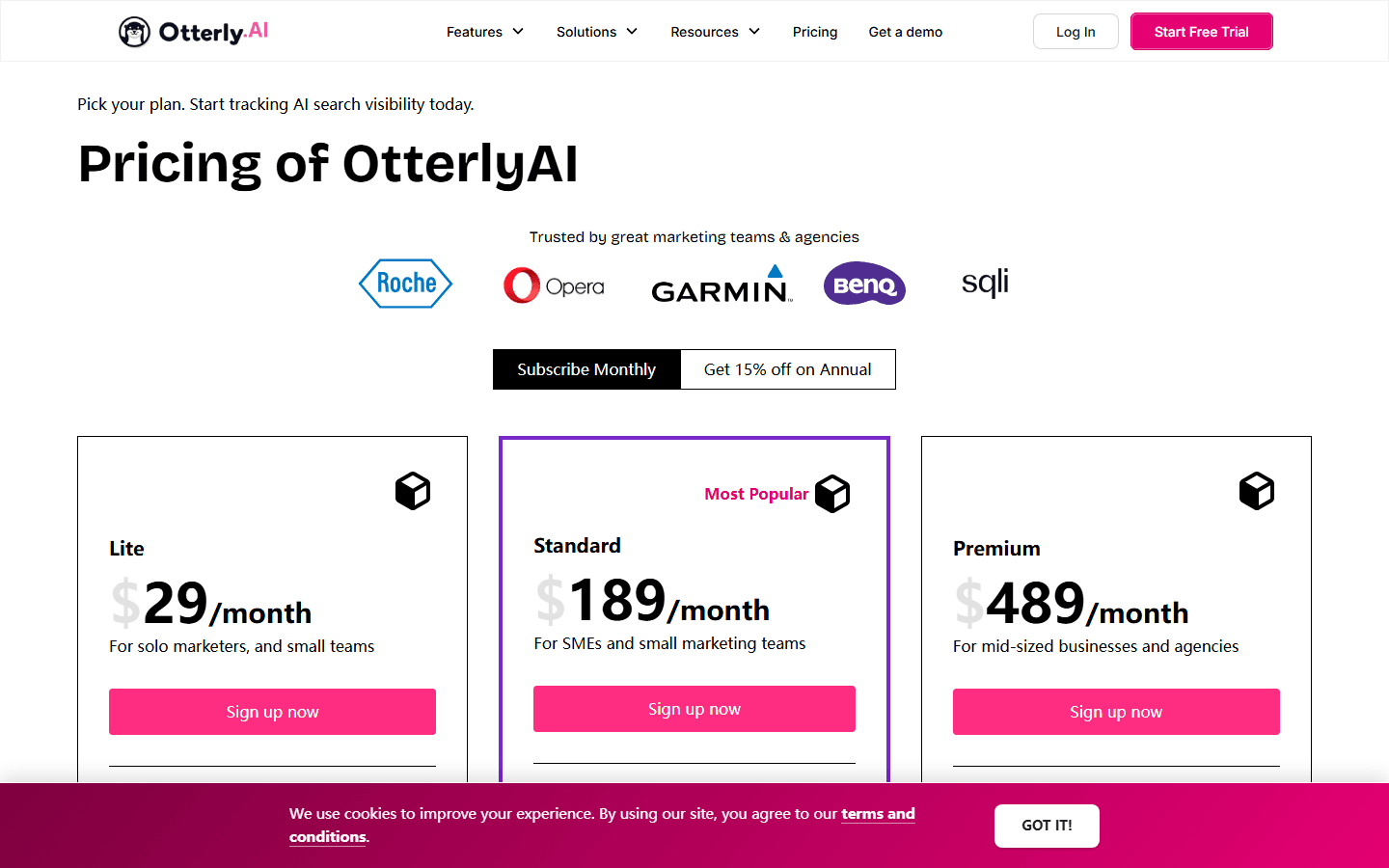
Otterly is my budget recommendation because the $29 monthly Lite plan lowers the cost of learning. The platform monitors AI search prompts, brand mentions, ranking or position signals, sentiment, and links. Its public material covers ChatGPT alongside Google AI experiences and Perplexity, with broader engine options reflected in current plans and add-ons.
I like Otterly for a consultant, founder, or small SEO team with a narrow category. Ten carefully chosen prompts can still answer useful questions: do we appear, who appears instead, which sources get cited, and does the pattern change after a content or PR push? The plan becomes poor value only when I treat prompt capacity as a collection hobby.
The migration risk is growth. The next public tiers are materially more expensive, and model coverage can affect the real plan cost. Before I build client reports around Otterly, I would calculate prompts multiplied by engines, brands, locations, and cadence for the next year. Cheap entry should not hide an expensive destination.
Best for
Solo SEOs, founders, consultants, and small teams that need a credible paid pilot without a $100-plus starting bill.
Not for
An agency with many clients, a large prompt taxonomy, daily multi-market reporting, or strict data-pipeline requirements.
First test
Track one category cluster weekly for a month and compare the trend with manual checks, cited pages, branded search, and AI referrals.
Best enterprise path
3. Profound: the platform I would choose when AI visibility has an executive audience
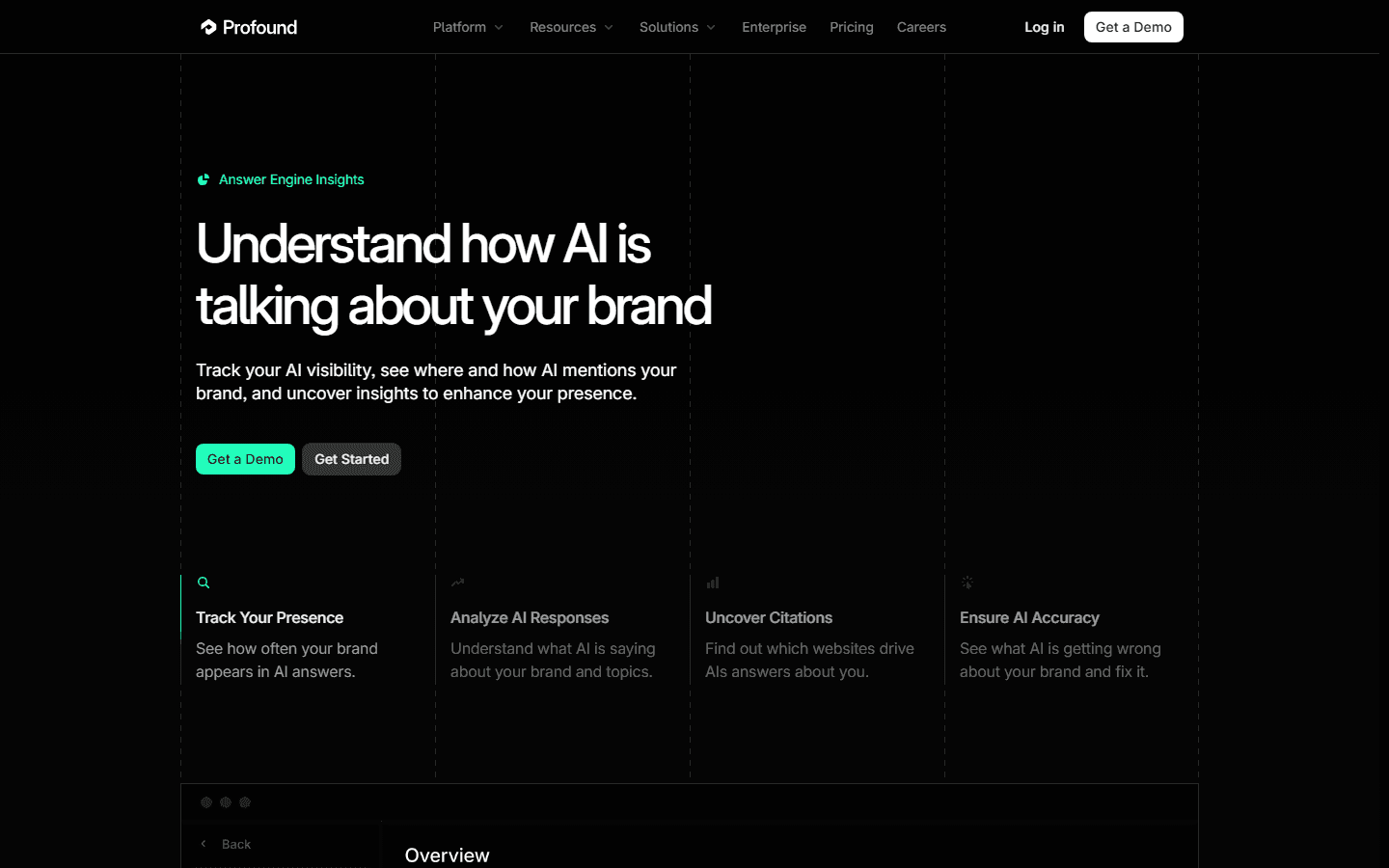
Profound has become the reference point for enterprise answer-engine analytics. Answer Engine Insights covers visibility, share of voice, citations, sentiment, positioning, competitor comparisons, regions, languages, and raw-answer exports. Its wider platform adds conversation research, agent analytics, shopping visibility, and content workflows.
The $99 Starter plan is more approachable than Profound's enterprise reputation suggests, but it is intentionally narrow: 50 prompts and ChatGPT-only tracking, billed yearly. Growth is $399 per month billed yearly for 100 prompts and three answer engines. That jump makes sense when several teams act on the data. It is difficult to defend if one marketer only needs a monthly slide.
I would buy Profound for governance, scale, methodology, and the path from visibility to action. I would not buy it simply because an executive asked for a GEO score. The team needs an owner for prompt design, analysis, content, digital PR, technical fixes, and revenue attribution. Otherwise the platform becomes an expensive screen saver in a quarterly meeting.
Best for
Enterprise brands with several markets, formal reporting, security requirements, many prompts, and teams that can act on citations and narrative gaps.
Not for
Small businesses that only need a few ChatGPT checks and have no dedicated SEO, communications, content, or analytics owner.
First test
Ask whether the platform changes the next 90 days of content, PR, documentation, and measurement work. If the answer is only 'we get a score,' pause.
Best for Semrush teams
4. Semrush AI Visibility: familiar reporting with a domain tax
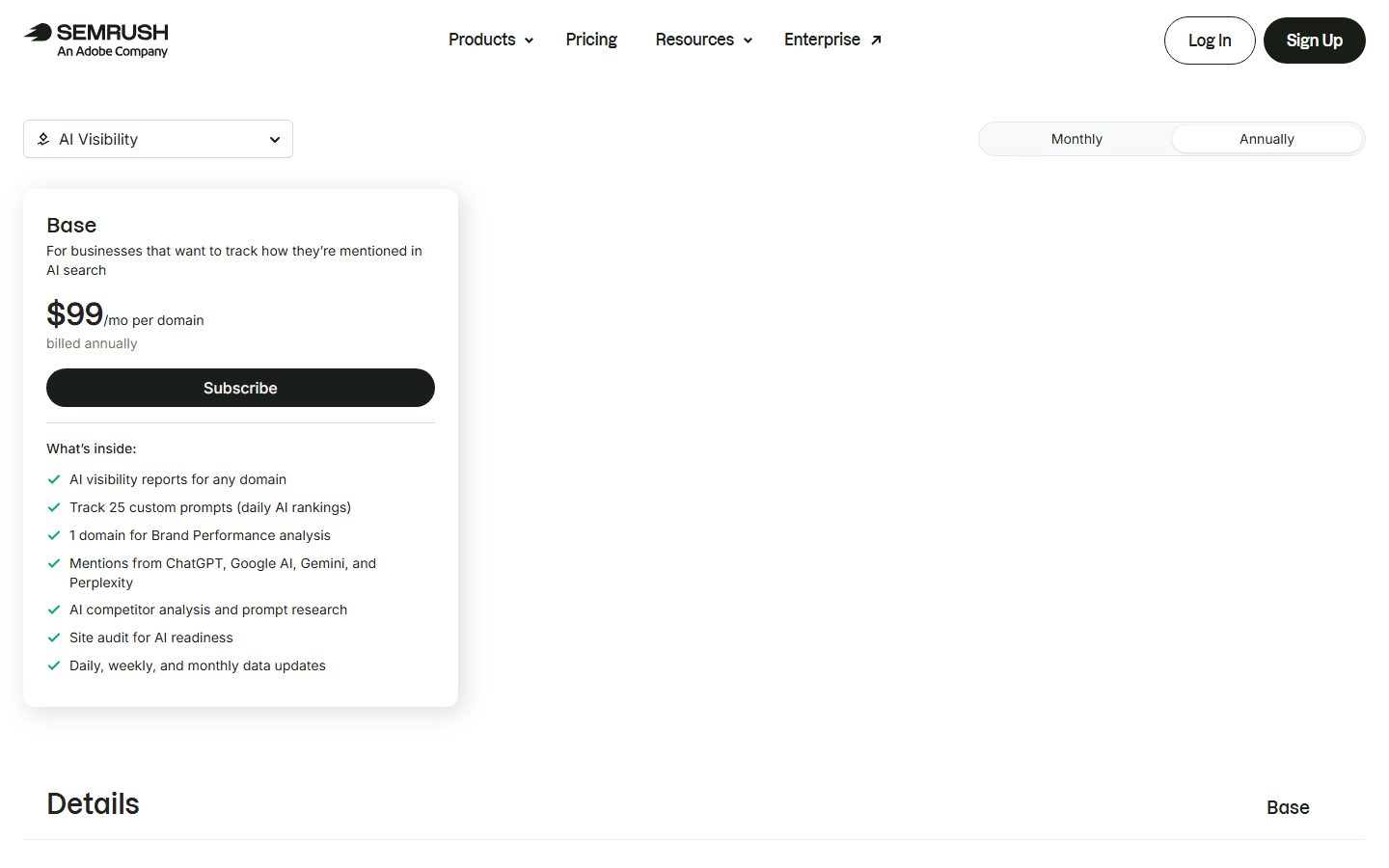
Semrush is the practical choice when traditional SEO and AI visibility must sit in the same account. The AI Visibility Base plan is $99 per month per domain when billed annually. It includes 25 custom prompts with daily AI rankings, one domain for Brand Performance, mentions from ChatGPT, Google AI, Gemini, and Perplexity, competitor research, prompt research, and an AI-readiness site audit.
Twenty-five prompts is enough for a focused executive dashboard or one product line. The wider Semrush ecosystem helps connect the findings to keyword research, technical audits, competitors, and reporting. That continuity matters for a team already trained on Semrush. It matters much less to a new buyer who only wants ChatGPT monitoring.
The pricing unit is the issue. Additional domains, prompts, users, and reports can compound. An agency or multi-brand company should model the actual account before moving its process. I would rather discover a per-domain tax in a spreadsheet than after rebuilding the monthly report.
Best for
Existing Semrush customers that want AI visibility beside SEO research, site auditing, competitors, and stakeholder reports.
Not for
Multi-domain organizations that only need prompt tracking, or budget buyers who would be paying for ecosystem familiarity they do not use.
First test
Use 25 prompts across one important product line. Confirm that Prompt Tracking and Brand Performance answer different questions your team will act on.
Best research depth
5. Ahrefs Brand Radar: best when citations and the wider web matter as much as prompts
Ahrefs gives me two distinct lenses. Custom prompts monitor a focused list across ChatGPT, Gemini, Perplexity, Copilot, Google AI Overviews, and AI Mode. Brand Radar's broader indexes research brand visibility across a much larger prompt dataset and connect AI answers with the web, Reddit, YouTube, and TikTok sources that can influence them.
That separation is smart. Micro tracking asks whether the brand appears for 30 buyer questions this week. Macro research asks where the brand appears across a large market and which sources shape that presence. I do not expect one tiny tracked list to answer both.
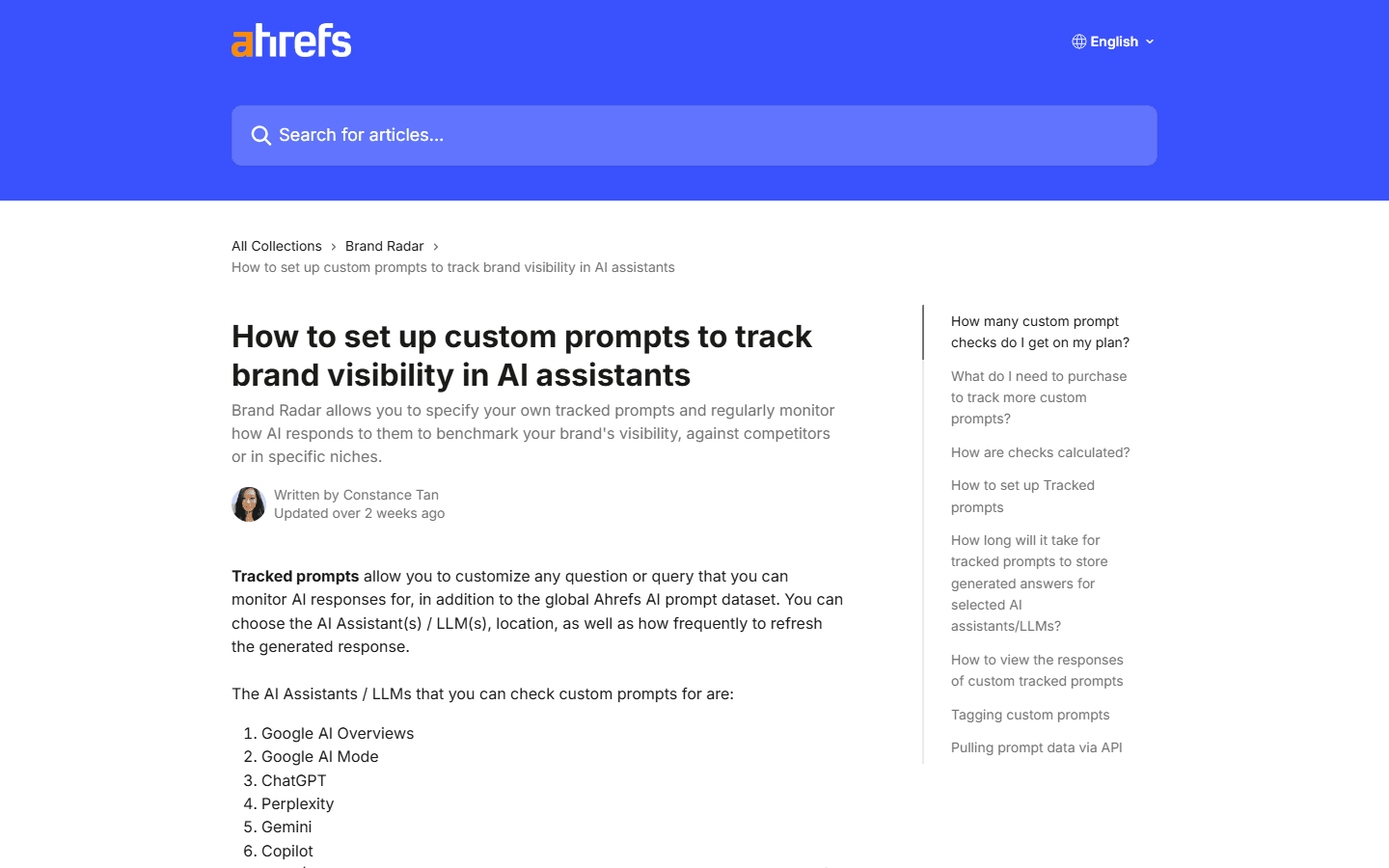
Current paid Ahrefs plans from Lite upward include a small custom-prompt allowance. Standalone custom-prompt packages start at $50 per month for 2,500 checks, where one check equals one prompt execution multiplied by one LLM and one location. Broad Brand Radar AI access starts at $199 per month for one platform index. I would buy the custom checks first unless the research index has a named use case.
Best for
Ahrefs users, digital PR teams, and SEO researchers who want to connect tracked prompts with citations, web visibility, and large-scale discovery.
Not for
A buyer who expects one simple flat plan to include every AI index, unlimited prompts, daily checks, and a full SEO suite.
First test
Spend the included allowance on the ten questions closest to revenue, then decide whether broad discovery or more recurring checks would change a decision.
Best agency workflow
6. SE Ranking: the strongest bridge between client SEO and AI visibility
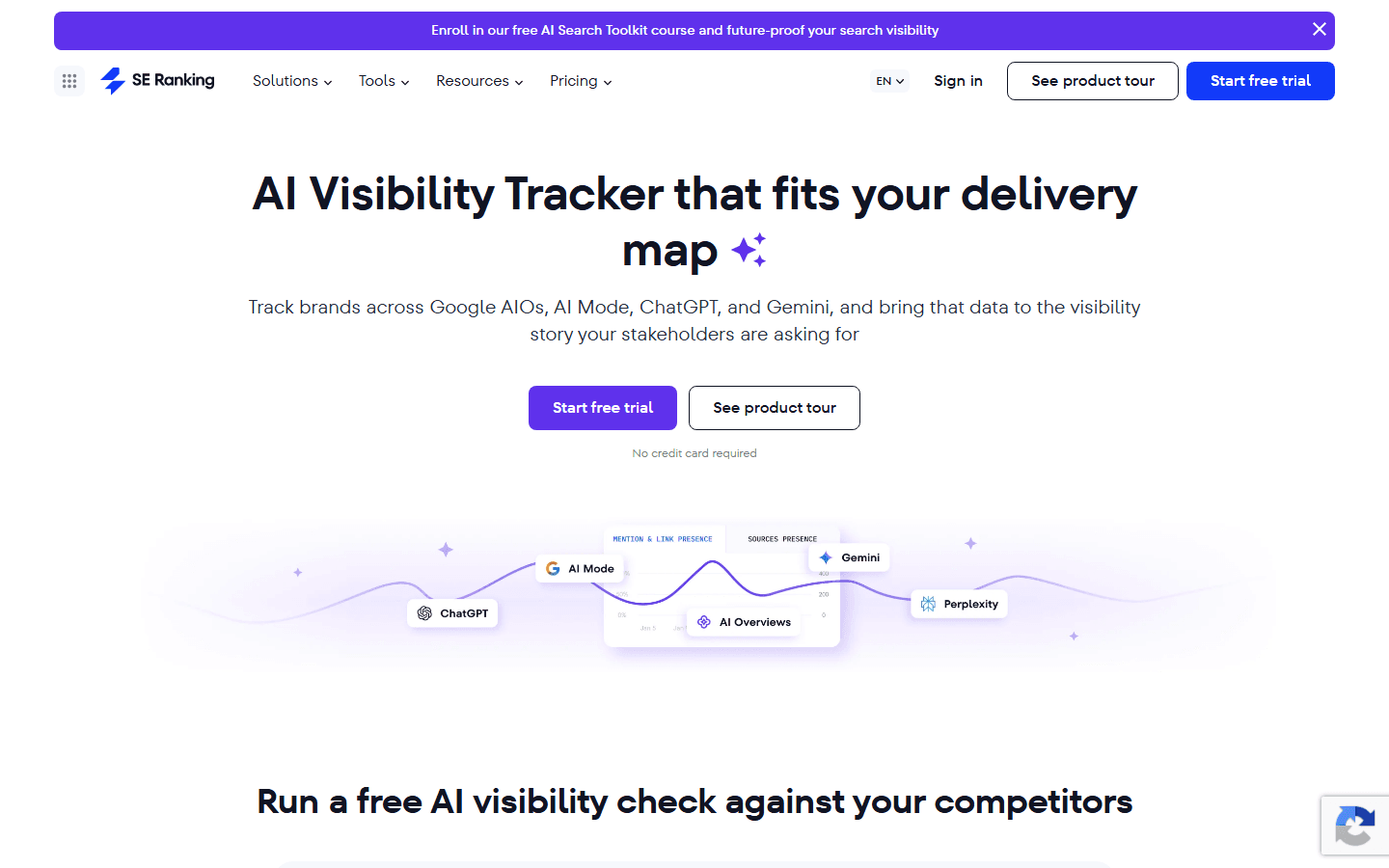
SE Ranking is my agency pick because it treats AI visibility as part of a delivery system. Its AI Results Tracker covers ChatGPT, Perplexity, Gemini, Google AI Overviews, and AI Mode. The wider toolkit adds competitive research, sources, historical trends, exports, SE Visible, API access, automation, and reporting alongside familiar SEO work.
The AI Search add-on starts at $89 per month for 200 checks, or $71.20 per month with annual billing. One check is one prompt on one AI platform. The add-on is available on eligible Core, Growth, and Enterprise plans, so the headline price is not the whole subscription cost.
I would use SE Ranking when one team needs to explain classic rankings, AI mentions, citations, and competitors without maintaining two disconnected reporting stacks. I would skip it when the buyer already has a deeply embedded SEO platform and only needs a small specialist tracker. Consolidation saves work only when it replaces something.
Best for
Agencies and in-house teams that want client projects, SEO data, AI-answer tracking, sources, exports, and reporting in one workflow.
Not for
A new buyer evaluating only ChatGPT visibility who does not need the underlying SE Ranking subscription or agency features.
First test
Build one client report that connects AI mentions to cited pages and existing SEO work. Count how many manual joins and explanation slides disappear.
Best broader platform
7. Scrunch: for teams ready to manage the AI customer experience, not just watch it
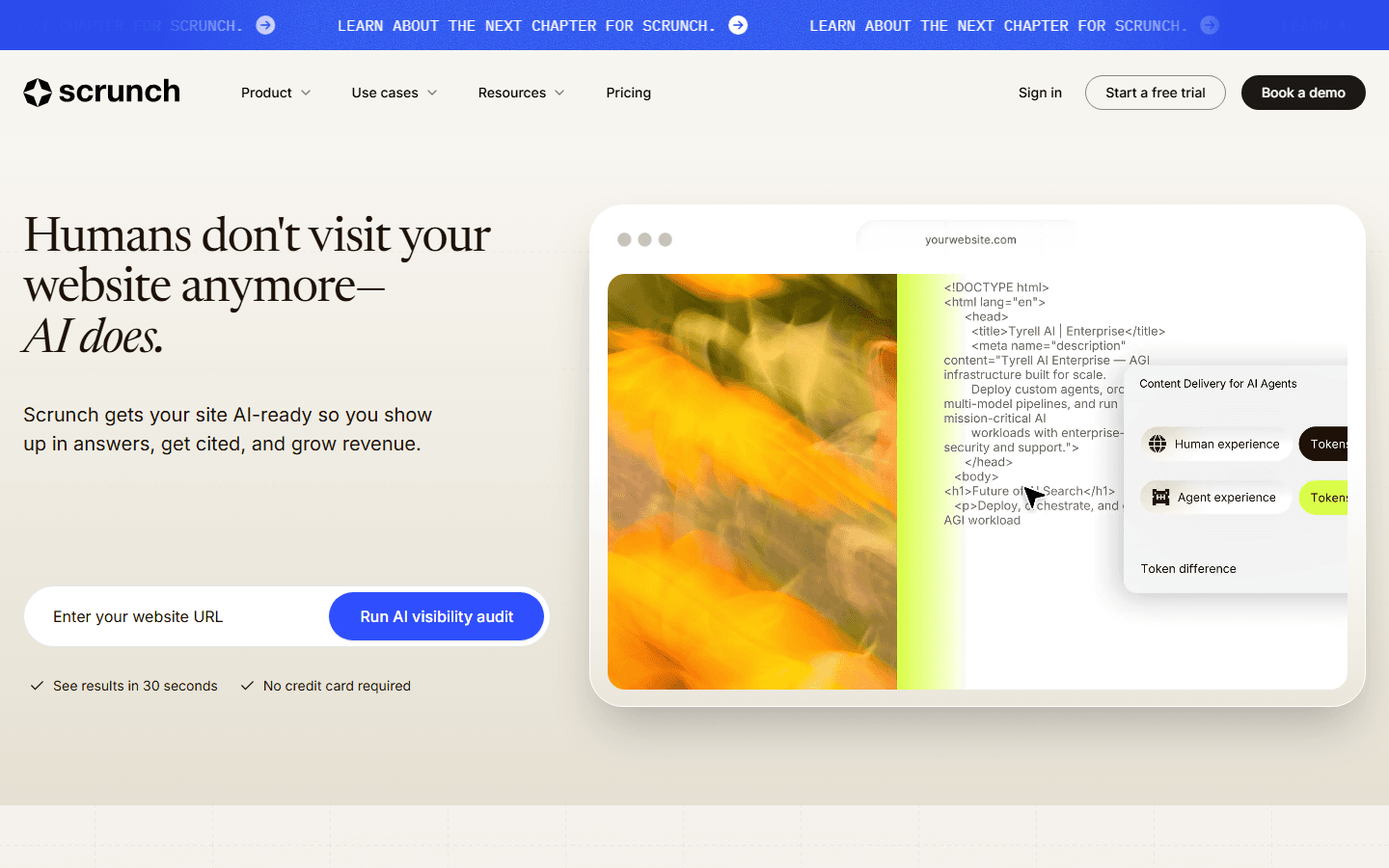
Scrunch combines prompt monitoring, citations, competitive gaps, trends, and AI-search insights with a broader Agent Experience Platform. The company says it monitors millions of prompts and citations weekly, supports enterprise controls, and helps teams understand both how brands appear in answers and how AI agents interact with their sites.
That makes Scrunch interesting after monitoring has exposed an operating problem. A team may need to correct inaccurate product descriptions, improve cited sources, identify content gaps, understand agent traffic, or serve machine-readable experiences without disrupting the human site. A pure tracker can identify the gap but not necessarily manage the response.
The same breadth is the buying risk. A small SEO team can end up funding platform capability it is not staffed to use. Scrunch publishes plan options and a free-trial path, but I would confirm the current quote, prompt variant accounting, engine coverage, regions, exports, and API needs directly before budgeting.
Best for
Larger brands and agencies connecting prompt monitoring, citations, trend research, AI-agent traffic, and site experience into one program.
Not for
A small team that only needs a weekly ChatGPT mention check and has no owner for technical or content changes.
First test
Separate the features required now from the platform story. Buy only if monitoring, citations, and agent operations share owners and a measurable 90-day plan.
The setup that matters
A bad prompt library makes every tracker look precise and wrong
The tool is rarely the first failure. Teams import SEO keywords, add 'best' to the front, and call the result an AI-search strategy. Real buyers ask longer, messier questions. They include constraints, company size, location, current tool, risk, and intended outcome. I build prompts from sales calls, support tickets, site search, comparison pages, reviews, Reddit, and customer interviews before I ask a model to expand anything.
I start with 20 to 40 prompts across six intent groups. I tag each prompt by funnel stage, product, market, persona, and owner. Half stay stable as a baseline. The rest can rotate for launches, seasonal needs, or new objections. Changing every prompt each month produces activity but destroys the trend.
I also separate monitoring from experiments. The baseline library tells me whether the category is moving. An experiment set tests a content update, documentation change, PR placement, or product launch. That distinction stops the team from celebrating a visibility increase caused by replacing difficult prompts with easy branded ones.
| Prompt type | Example | What I learn |
|---|---|---|
| Category discovery | What are the best payroll tools for a 40-person company? | Whether the brand enters the initial consideration set |
| Use-case fit | Which payroll platform handles contractors in the US and UK? | Whether the model connects the product to a valuable, specific workflow |
| Comparison | Brand A vs Brand B for a finance team without an HR specialist | Positioning, objections, and competitor framing |
| Risk and trust | Is Brand A reliable for payroll tax filing? | Accuracy, sentiment, missing proof, and third-party sources |
| Branded evaluation | What are the limitations of Brand A? | Whether the answer reflects the current product rather than stale reviews |
| Problem-first | How do I stop payroll errors when contractors work in several countries? | Visibility before a buyer knows which vendors to compare |
Community reality
Reddit complaints focus on volatility, opaque methods, and invoices that arrive before proof
The most common Reddit objection is conceptual: people do not believe an AI answer has a rank worth tracking. They are partly right. Repeated prompts can produce different brand lists and sources, so one captured answer should never become a board-level fact. Practitioners who still find value usually describe the metric as visibility or share of voice, not a fixed position.
The second complaint is prompt-volume theater. There is no public Search Console that tells marketers every question real users ask ChatGPT and its true volume. Platforms can infer or model demand, but Reddit users repeatedly warn that those numbers are directional. I agree. I would rather track 30 questions taken from actual customer conversations than 3,000 synthetic prompts with impressive decimal places.
Price is the third complaint. Users describe a young category full of expensive dashboards, per-domain charges, model add-ons, and uncertain revenue attribution. Several say a spreadsheet or lightweight automation can perform the basic collection. That is true. Paid tools earn their fee through consistent sampling, history, competitor parsing, citations, exports, alerts, collaboration, and scale. If I do not need those, I do not need the subscription.
The useful counterpoint is action. People who track recurring prompts say competitor share and source gaps can guide content, outreach, and reporting. The complaint is not that all monitoring is worthless. It is that visibility without raw answers, a stable method, and business outcomes is easy to oversell.
Migration cost
Moving trackers is cheap until I try to preserve the baseline
Copying prompt text into a new platform is easy. Preserving the meaning of the old trend is not. Vendors use different engine access, sampling schedules, locations, brand-matching rules, citation logic, sentiment models, and visibility formulas. A graph can jump on migration even when ChatGPT changed nothing.
I run the old and new tools in parallel for four weeks. I keep the prompts, cadence, engines, market, aliases, and competitors as close as possible. Then I compare raw answers, not just top-line scores. If the tools disagree, I want to know whether the cause is collection, parsing, brand rules, or metric definition before I retire the old baseline.
The larger cost is reporting. Data Studio connectors, client templates, alerts, executive definitions, APIs, and warehouse jobs can turn a simple software switch into a small analytics project. I inventory those dependencies before negotiating the annual contract.
| Move | What I preserve | Why it matters |
|---|---|---|
| Prompt library | Prompt text, intent, funnel stage, market, language, cadence, and owner | Losing this taxonomy makes historical comparisons nearly useless |
| Brand rules | Brand aliases, product names, domains, competitors, excluded terms, and sub-brands | A loose alias can inflate mentions; a missing product name can hide real visibility |
| Historical baseline | Raw answers, dates, engines, locations, mentions, citations, sentiment, and exports | Most platforms cannot import another vendor's trend line cleanly |
| Reporting | Client dashboards, scheduled exports, stakeholder definitions, and metric formulas | The same label can be calculated differently by two tools |
| Integrations | GA4, GSC, Looker Studio, API, MCP, CRM, data warehouse, and alerting workflows | Rebuilding the last 20 percent of reporting often costs more than moving the prompts |
My buying test
I make the tracker earn renewal in 30 days
Week one is manual. I choose 20 buyer prompts, three competitors, one market, and one primary engine. I record the raw answer, mention, citation, order, and source. This prevents a vendor's onboarding wizard from defining my strategy for me.
Week two is automation. I load the same prompts into the candidate tool and check matching, exports, engine details, location controls, and raw-answer access. I deliberately include ambiguous brand names and product aliases. If the parser cannot handle them, the dashboard is measuring its own confusion.
Week three is action. I choose one citation gap, one inaccurate description, and one high-value missing prompt. The content, PR, product-marketing, or documentation owner must be able to turn the finding into work without a two-hour analyst translation session.
Week four is economics. I calculate prompts multiplied by engines, locations, brands, frequency, users, exports, and the eligible base plan. I also ask whether the team used the data and whether any lead, referral, branded search, or sales note supports the channel. I renew when the tool changes decisions, not when the chart is attractive.
Choose Peec AI
You want the strongest self-serve balance of daily tracking, prompt capacity, collaboration, and current model choice.
Choose Otterly.AI
You need a low-cost pilot and can keep the prompt set small and focused.
Choose Profound
You have enterprise scale, executive reporting, security requirements, and several teams ready to act.
Choose Semrush or Ahrefs
Your existing SEO workflow and data ecosystem matter more than buying the cheapest standalone tracker.
Choose SE Ranking
Agency delivery, client projects, exports, and combined SEO plus AI reporting are the operating priority.
Choose Scrunch
You are building a broader AI customer-experience program that connects visibility, citations, trends, and agent interactions.
Choose a spreadsheet
You have fewer than 20 prompts, no baseline, and no evidence that anyone will act on the data yet.
FAQ
Questions people ask before buying a ChatGPT tracker
What is the best ChatGPT rank tracker in 2026?
Peec AI is my best overall self-serve choice for an in-house SEO or content team. Otterly.AI is the easier budget pilot, Profound is the stronger enterprise path, Semrush and Ahrefs make sense for teams already paying for those SEO ecosystems, SE Ranking fits agencies, and Scrunch suits larger AI-search programs that want more than monitoring.
Can a tool show my exact ChatGPT ranking?
Not in the stable Google position-tracking sense. ChatGPT answers can change across time, location, model, browsing state, and repeated runs. Good trackers measure mention frequency, citation frequency, share of voice, answer position, sentiment, and trends across a controlled prompt set.
What should the best ChatGPT rank tracker software measure?
At minimum, it should preserve the raw answer, identify brand and competitor mentions, capture cited URLs, track repeated prompts on a clear cadence, segment by engine and location, and export the underlying data. Useful products also connect changes to source gaps and business outcomes.
Is there a free ChatGPT rank tracker?
A manual spreadsheet is the most honest free starting point. Run 10 to 20 fixed buyer prompts in a clean, repeatable setup each week and record mentions, citations, competitors, and answer notes. Several paid tools offer trials or limited checks, but current terms change frequently.
How many prompts should I track?
I start with 20 to 40 high-value prompts spread across category discovery, use cases, comparisons, objections, branded evaluation, and problem-first research. A small, stable library tied to real sales questions beats hundreds of synthetic prompts nobody asks.
How often should I check ChatGPT visibility?
Weekly is enough for many small teams. Daily tracking is useful during a launch, a reputation issue, or a controlled content experiment. The important rule is consistency: keep the prompt, engine, market, and collection method stable enough to interpret movement.
Current sources
Where I checked the product claims and buyer concerns
- Peec AI pricing and model limits
- Otterly.AI pricing and plan structure
- Profound pricing and Answer Engine Insights documentation
- Semrush AI Visibility pricing and toolkit limits
- Ahrefs custom-prompt documentation and Brand Radar pricing and coverage
- SE Ranking AI Search add-on pricing and AI Visibility Tracker coverage
- Scrunch platform overview and visibility-metrics API documentation
- Reddit discussion about whether AI rankings are measurable
- Reddit discussion about price, methodology, and actionability
- Reddit discussion about prompt tracking and share of voice
Read related articles
Keep reading practical SwitchMyTool guides after this one.
Qodo vs Codacy in 2026: Better AI Review or Stronger Merge Gates?
I compare Qodo and Codacy by AI review, static analysis, security gates, pricing, migration cost, team fit, and common Reddit complaints.
Read more
Qodo vs Graphite Agent in 2026: Better Review Governance or a Better PR Workflow?
I compare Qodo and Graphite Agent by review quality, stacked pull-request workflow, pricing, team fit, migration cost, and common Reddit complaints.
Read more
Qodo vs Bito in 2026: Better Review Governance or Broader Developer Coverage?
I compare Qodo and Bito by review governance, Git and IDE coverage, repository rules, pricing, team fit, migration cost, and Reddit complaints.
Read more