SwitchMyTool

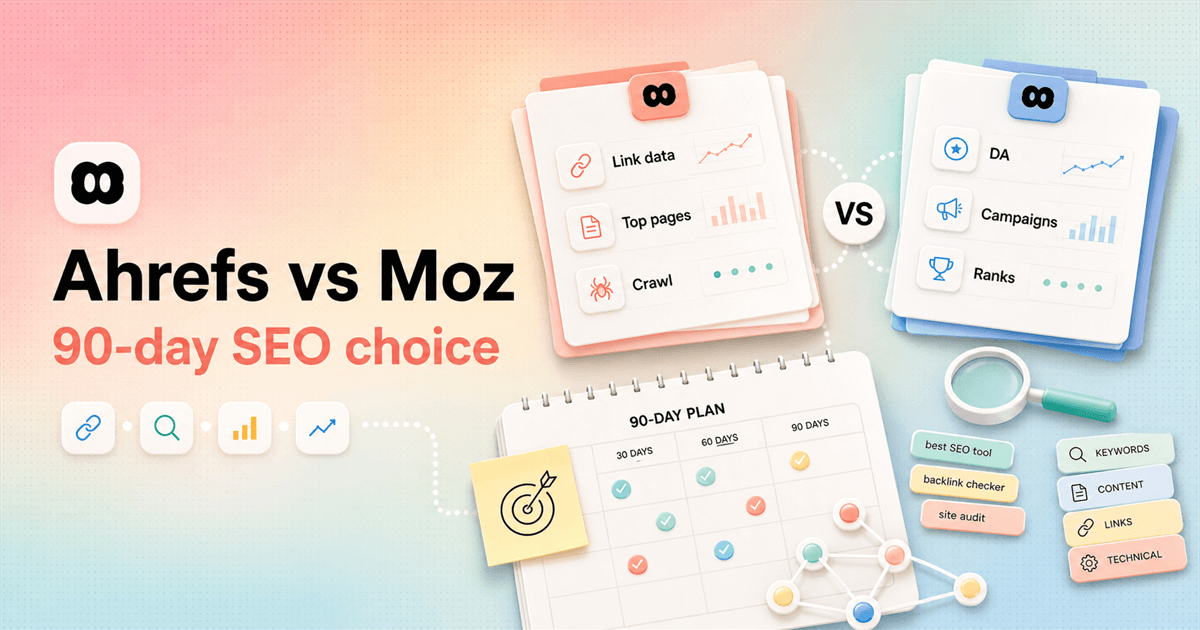
The ahrefs vs moz decision is not a purity test for SEO nerds. It is a 90-day workflow choice: do you need deeper evidence before you act, or do you need clearer reporting so the work keeps moving?
I would not pick an SEO tool by asking which brand has the loudest fan base. That is how you end up renting a dashboard instead of improving a site. Ahrefs and Moz both sit in the serious SEO-tool bucket, but they reward different habits. Ahrefs rewards people who dig through competitors, links, top pages, keyword gaps, historical data, and crawl issues before they decide what to do next. Moz rewards people who need a friendlier way to track campaigns, talk about authority, explain SEO progress, and keep non-specialists inside the conversation.
That difference matters more than a feature checklist. A solo blogger comparing ahrefs vs moz may only need to know whether one month of research can reveal the next twenty article ideas. A small agency may care more about whether a client understands the report without a thirty-minute translation call. An in-house SEO may want proof that the next sprint should focus on technical fixes, content gaps, or links. Same tools, different pain.
This guide uses the official Ahrefs and Moz pages I captured for product and pricing context, then folds in customer-research patterns from Reddit discussions. The Reddit section is not a scientific survey. It is a useful temperature check. People are blunt there, sometimes too blunt, but recurring complaints about credits, trust, data depth, and pricing are worth hearing before you hand over a card.
My buying rule
- Choose Ahrefs when competitor research, backlinks, top pages, content gaps, crawl credits, and keyword depth shape your weekly SEO decisions.
- Choose Moz when you need a friendlier SEO suite, recognizable authority metrics, easier stakeholder reporting, and a tool that new SEO users can understand quickly.
- Do not compare the tools only by price. Compare the next 90 days of work: what decisions will the tool change, and who will use it every week?
- For many small teams, the right answer is not forever. Run one month of focused testing, export what matters, and keep the tool that changes decisions rather than decorates reports.
The real split
Ahrefs helps you decide what deserves work. Moz helps you make SEO easier to explain.
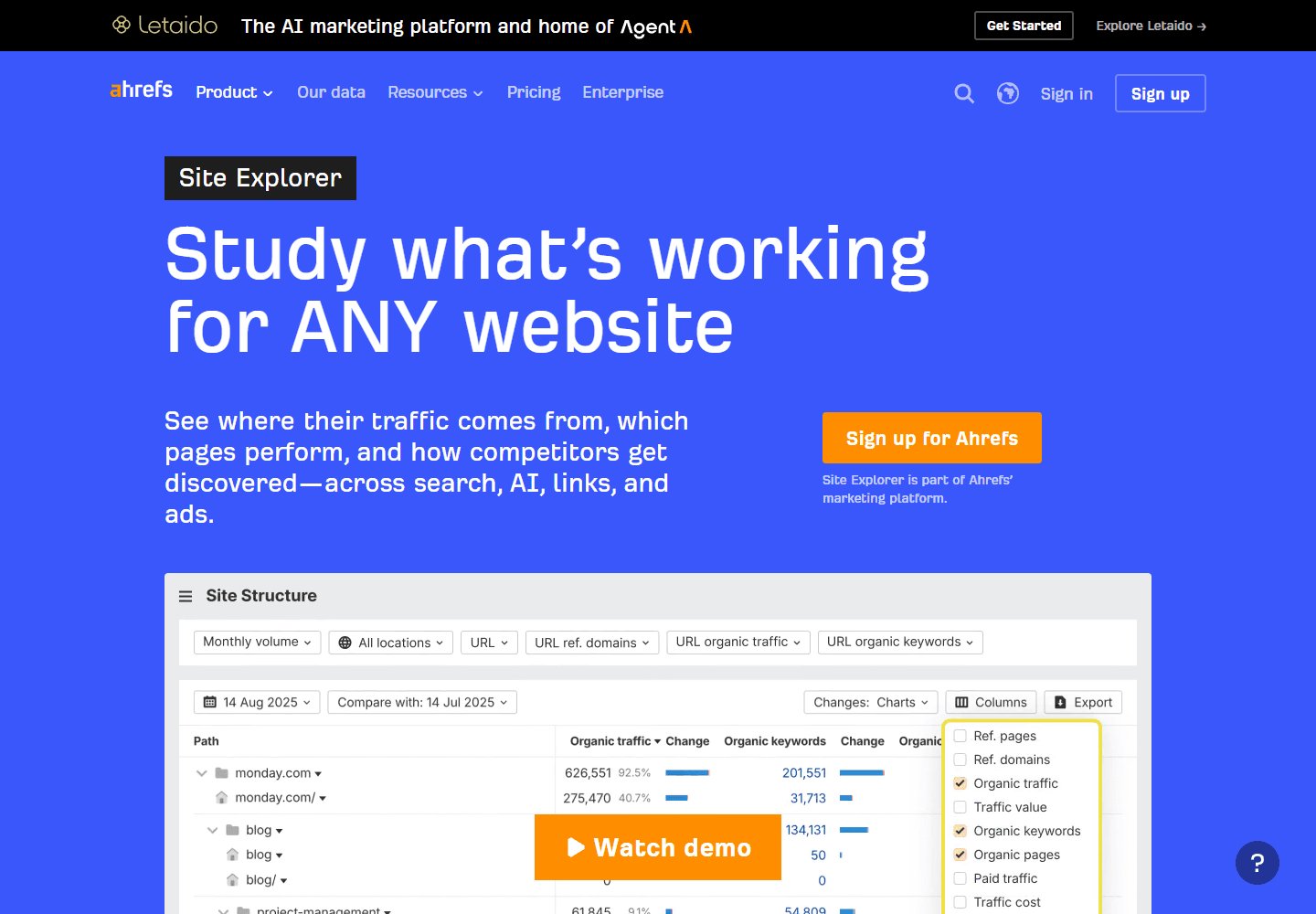
Ahrefs Site Explorer is the easiest way to see the product philosophy. The official page leads with studying what is working for any website, including where traffic comes from, which pages perform, and how competitors get discovered across search, AI, links, and ads. That is not a light reporting promise. It is a research promise.
That makes Ahrefs valuable when the team has real questions. Why does a competitor keep winning the topic cluster? Which pages attract links? Which sections of a site carry organic traffic? Which keywords deserve a brief and which ones should be left alone? If those questions show up every week, Ahrefs can pay for itself by killing bad ideas before they become mediocre pages.
Moz starts from a different emotional place. It has always been easier to introduce to people who do not live in SEO tools. That is not a small advantage. A tool can have better data and still lose inside a team if nobody except one specialist understands what the numbers mean.
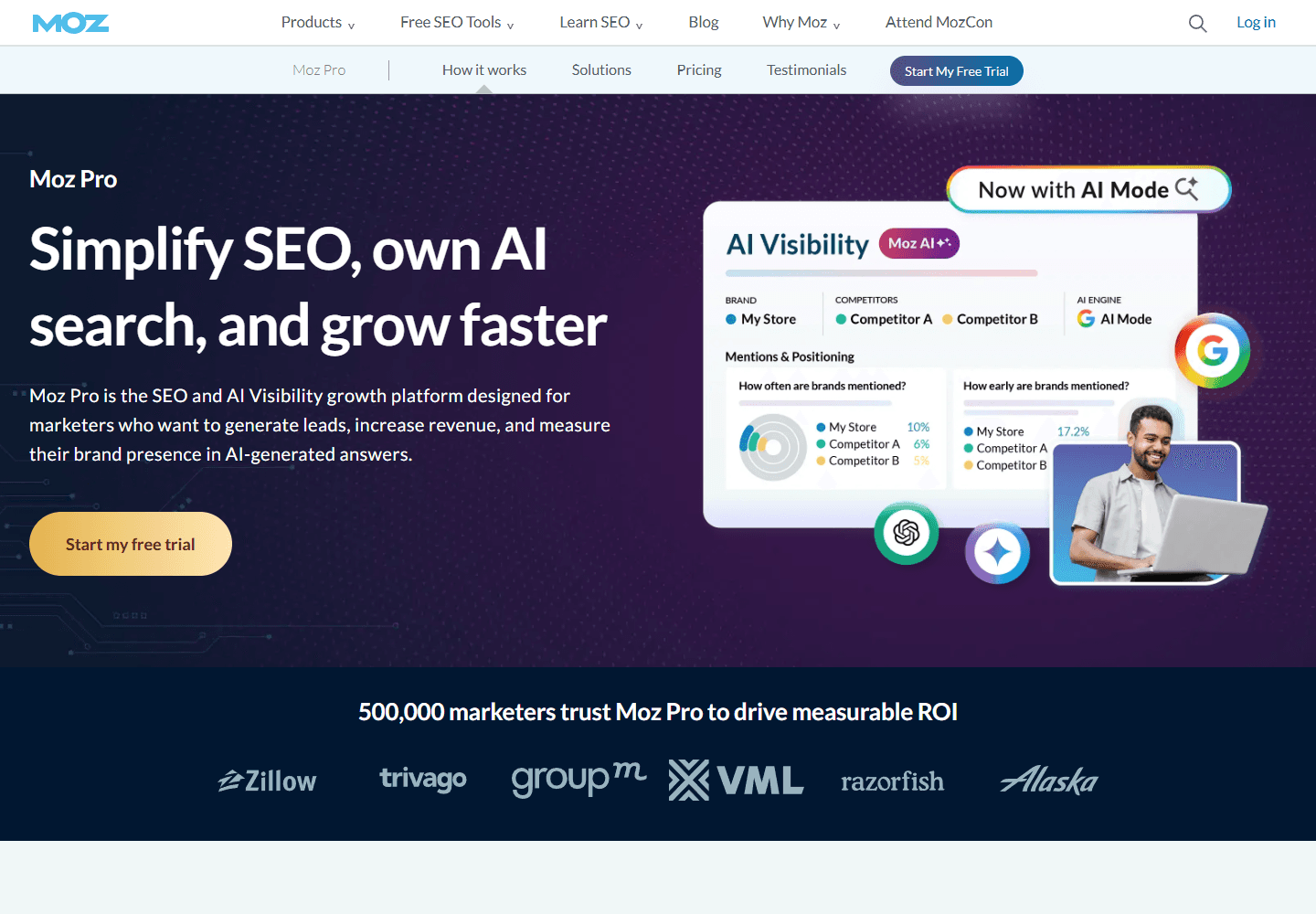
The current Moz Pro page talks about simplifying SEO, owning AI search, and measuring brand presence in AI-generated answers. Under the newer language, Moz still feels like a product built for clarity. Campaigns, rankings, crawl basics, authority metrics, and familiar reports make it easier for a founder, content lead, or client to understand what is happening.
That clarity can be a real business feature. I have seen teams waste more money on misunderstood reports than on expensive software. If the report does not turn into a decision, it is decoration. Moz can be the better choice when the job is to make SEO usable for people who need the outcome, not the full research rabbit hole.
Plain decision table
Which tool fits the next 90 days?
| Situation | Better first pick | Why |
|---|---|---|
| You build SEO strategy from competitor pages and links | Ahrefs | Site Explorer, backlink workflows, content gaps, and historical data are better aligned with research-led SEO work. |
| You report SEO to founders, clients, or non-specialists | Moz | Moz keeps the language easier. Domain Authority, campaigns, rankings, and site crawl reports are simpler to explain. |
| You run a small site and only need a few checks per month | Moz or a lighter stack | Ahrefs can be more tool than you need if the data will not change publishing, links, or technical priorities. |
| You need serious backlink prospecting | Ahrefs | This is where Ahrefs earns the bill. It is built for finding, sorting, and comparing link opportunities. |
| You inherited Moz and nobody complains | Keep Moz for one cycle | Do not switch just to feel modern. Test Ahrefs only if a missing job is slowing the team down. |
| You need a clean 90-day SEO operating plan | Test both against the same plan | One tool should own research depth. The other should own reporting clarity. The winner is whichever helps the team ship better work. |
The table is deliberately practical because the ahrefs vs moz debate can get weirdly tribal. Some people talk as if choosing Moz means you are not serious. Others talk as if Ahrefs is just expensive SEO theater. Both takes are lazy. The useful question is whether the tool changes the work you will do between now and the next reporting cycle.
A 90-day test keeps the decision honest. In three months, a tool should help you pick topics, update pages, find link targets, fix crawl problems, report progress, or stop doing work that is not worth doing. If it cannot do at least one of those jobs, it does not matter how famous the brand is.
Pricing and limits
Ahrefs makes the data limits visible. Moz makes the plan choice feel simpler.
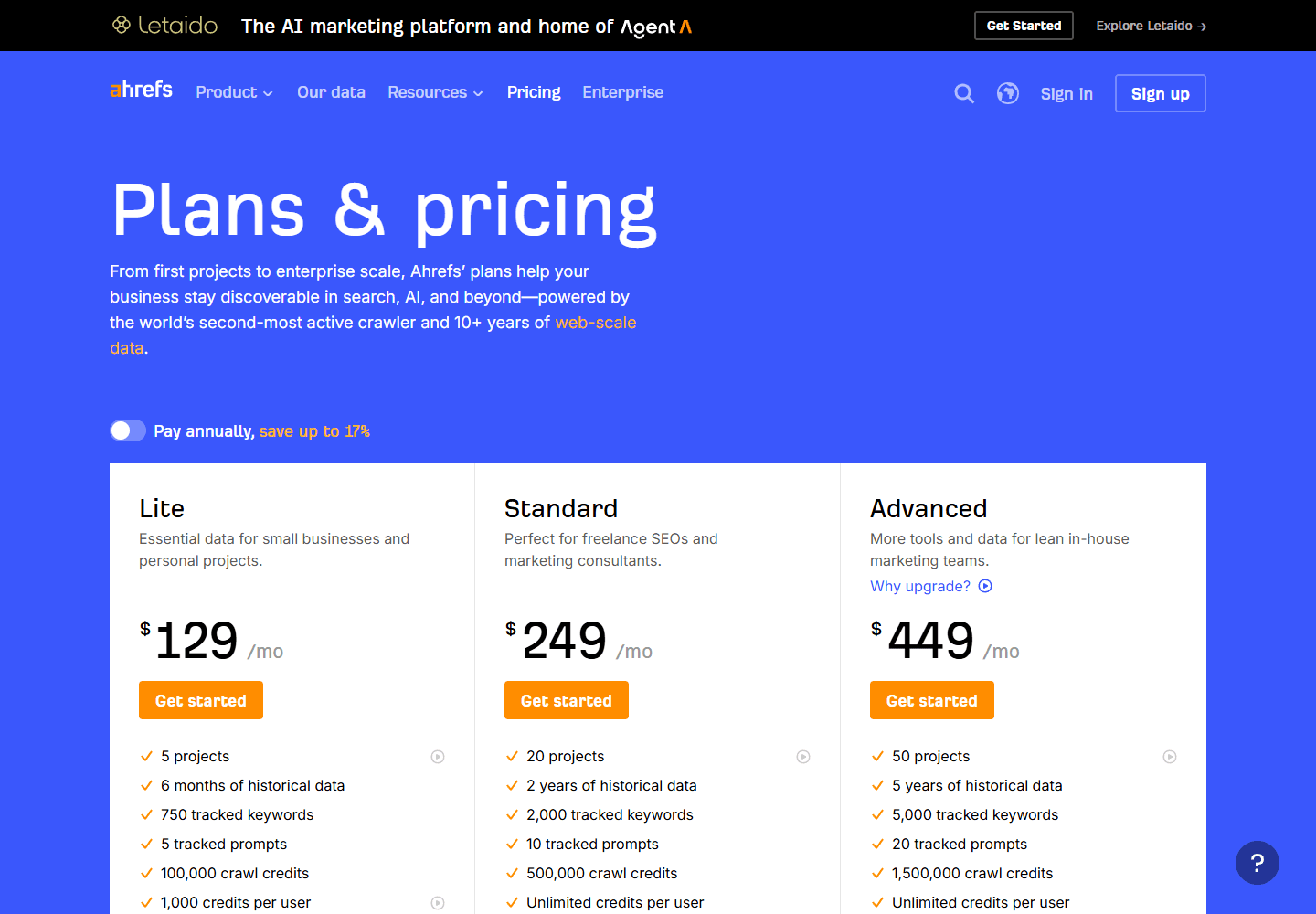
At the time I captured the official Ahrefs pricing page, the visible monthly plan cards showed Lite at 129 USD per month, Standard at 249 USD per month, and Advanced at 449 USD per month. The same screen listed operating limits such as projects, historical data, tracked keywords, tracked prompts, crawl credits, credits per user, and extra users.
This is both the strength and the annoyance of Ahrefs. The units map to real SEO work. Projects, crawl credits, historical data, and tracked keywords are not decorative. They are the stuff an SEO operator touches. But if you only need a small amount of that data, the bill can feel like paying for a warehouse because you needed one shelf.
Reddit complaints about Ahrefs often cluster around that feeling: great data, painful price, and anxiety around credits or usage. I would not dismiss those complaints as cheapness. Small sites do not always need enterprise-grade habits. A tool is expensive when the team cannot turn its output into revenue-linked work.
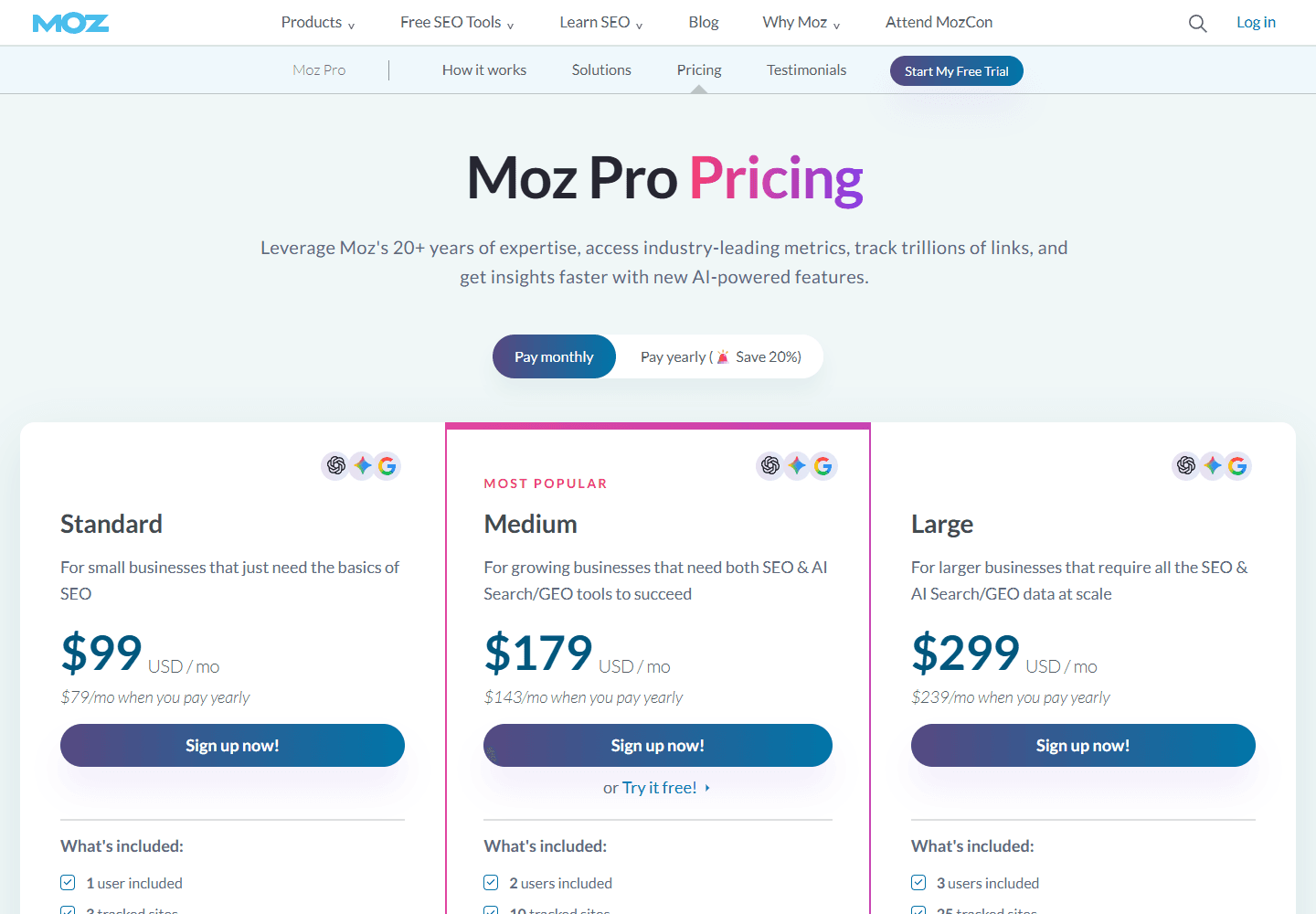
The Moz Pro pricing page I captured showed Standard at 99 USD per month, Medium at 179 USD per month, and Large at 299 USD per month, with lower monthly equivalents when paid yearly. Pricing pages change, so treat the screenshot as a captured reference and check the official page before buying.
Moz feels easier to reason about at the plan level. That matters if the buyer is a founder, small agency owner, or marketing lead who wants a useful SEO system without counting every possible data unit. The danger is the opposite of Ahrefs. You may like the simplicity, then later realize you need deeper link research, more flexible exports, or competitor evidence that Moz does not provide as well for your use case.
| Question | Ahrefs | Moz |
|---|---|---|
| Core job | Deep SEO research across competitor domains, backlinks, keyword ideas, content gaps, audits, and rank tracking. | Approachable SEO suite for rankings, keyword research, site crawl, link metrics, campaigns, and stakeholder-friendly reporting. |
| Best first user | SEO strategist, link builder, growth lead, consultant, or operator who works from competitor evidence every week. | Founder, content manager, junior SEO, small agency, or consultant who needs useful SEO direction without tool overload. |
| Pricing feel | Higher and more limit-aware. The official page makes projects, historical data, tracked keywords, prompts, crawl credits, and user credits visible. | More approachable at the entry and mid tiers. The official page presents Standard, Medium, and Large plans around business size and SEO plus AI search needs. |
| Best proof before paying | Pick three competitors and answer: which pages bring traffic, which links explain the gap, and which topics deserve the next month? | Build one campaign, track a keyword set, run a crawl, and show the report to someone who does not live in SEO tools. |
| Where it disappoints | Small sites may feel squeezed by price, credits, and the amount of dashboard they rented for a few answers. | Power users may question data depth, link freshness, and whether Moz still keeps pace with Ahrefs for serious research. |
Choose Ahrefs
Pick Ahrefs when weak research is the expensive problem.
Ahrefs is the tool I would test first when the team keeps choosing topics from vibes. That is the expensive SEO sin nobody wants to admit. A content calendar can look busy and still avoid the pages that matter. Ahrefs helps you ask better questions before the writing starts: which competitors actually get traffic, which pages attract links, which subfolders carry the market, and which keyword clusters are worth a fight.
It is also the stronger choice for link-led work. If you need to inspect backlinks, compare link profiles, find broken or lost links, build outreach lists, or understand why a page has authority, Ahrefs is usually the more natural workspace. Moz has link tools and authority metrics, but Ahrefs tends to be where power users go when link data is central to the job.
The catch is focus. Ahrefs can become a very expensive place to wander. I would give it a tight test: three competitors, ten content ideas, one site audit, one backlink gap review, and one ranked priority list by the end of the month. If the team cannot turn that into work, the problem is not Moz. It is operating discipline.
Best for
Teams that need competitor research, backlink analysis, content gaps, Site Explorer workflows, site audits, and enough data to choose work with confidence.
Not for
Owners who check SEO once a month, writers who only need simple content guidance, or teams that will not turn research into shipped pages and link work.
Reddit common complaint
Community threads often complain about pricing, credits, limits, and the feeling that Ahrefs is excellent but increasingly hard to justify for light use.
Best 90-day test
Use it to choose ten topics, map three competitors, find link gaps, run one audit, and kill at least five weak ideas before anyone writes them.
Choose Moz
Pick Moz when clarity and adoption matter more than maximum depth.
Moz is the tool I would keep when the current workflow already gets decisions made. That sounds boring, but boring is underrated in SEO. If a client understands the campaign, a founder reads the report, a content manager checks rankings, and the team fixes crawl issues from the dashboard, you have a working system. Do not break it just because another tool has a louder reputation.
Moz also has the advantage of familiar language. Domain Authority is imperfect, and serious SEOs know it should not be treated as truth. Still, it is widely recognized. For some agencies and stakeholder conversations, that familiarity lowers friction. If the metric helps people discuss link quality or site strength without turning every meeting into a lecture, it has value.
The reason to leave Moz is not boredom. Leave when the missing work is specific: competitor page research feels shallow, link prospecting needs more depth, exports are not enough, or your strategy depends on data that Moz does not give you with the confidence you need. The tool should lose because it cannot do a job, not because a Reddit thread roasted it.
Best for
Small teams, client-facing consultants, founders, and marketers who want SEO tracking, authority metrics, crawl basics, and reports that are easier to explain.
Not for
Teams whose strategy depends on deep backlink research, large competitor datasets, advanced exports, or a research engine that can drive every weekly SEO decision.
Reddit common complaint
The recurring gripe is that Moz feels friendly, but some users do not trust it as much as Ahrefs or Semrush for the deepest data work.
Best 90-day test
Run one campaign, track the keywords that matter, use the crawl issues in a real sprint, and ask whether the report made stakeholder conversations easier.
Community research
Reddit complaints are useful when you treat them as patterns, not verdicts.
Reddit is noisy. People arrive mad, proud, bored, or trying to justify the tool they already bought. Still, when the same themes show up across SEO threads, they are worth using as buying questions. In ahrefs vs moz discussions, I would not chase a single comment. I would look for repeated friction.
Price anxiety
Ahrefs gets more heat here. Threads about credits, usage, and plan limits often come from small sites that need answers but do not need a heavyweight suite all month.
Data trust
Moz gets more skepticism from power users. The complaint is not usually that Moz is unusable. It is that serious SEOs may trust Ahrefs more for link and competitor depth.
Metric mismatch
People compare DA, DR, traffic estimates, keyword volume, and link counts as if one number can settle the argument. It cannot. Each tool models the web differently.
Workflow ownership
The quiet complaint is that teams buy tools before they define the job. If nobody owns the weekly SEO process, either product becomes an expensive place to browse.
The most useful complaint is metric mismatch. Ahrefs and Moz can disagree on backlinks, authority, keyword volume, traffic estimates, and ranking context. That does not mean one tool is lying. It means each product crawls, models, stores, and scores the web differently. Use one tool consistently for trend direction. Do not stitch together numbers from both tools and pretend the result is cleaner.
The second useful complaint is price fit. If Ahrefs saves you from building the wrong ten pages, the price can be sensible. If Moz helps you keep three clients aligned without long reporting calls, the price can be sensible. If either tool sits unused until invoice day, the tool is not the problem. Your buying process is.
90-day test
Test the decision against work, not vibes.
If I were choosing today, I would run a simple 90-day test. In the first two weeks, define the jobs. Do you need more reliable competitor research, better backlink analysis, clearer reports, crawl cleanup, rank tracking, or stakeholder confidence? Write those jobs down before opening either dashboard.
In month one, use Ahrefs for research pressure. Pick three competitors, pull their top pages, inspect their links, find content gaps, and run a crawl on your own site. The output should be a priority list, not a pile of screenshots. If Ahrefs cannot produce better decisions in that month, it may be too much tool for the current problem.
In month two, use Moz for reporting pressure. Build a campaign, track a keyword set, review crawl issues, and show the report to someone who does not work in SEO all day. If that person can understand progress and approve the next sprint faster, Moz is doing useful work.
In month three, compare outcomes. Which tool helped you cancel bad ideas? Which one helped you ship better pages, fix real issues, find better link targets, or explain progress without a translation meeting? Keep the one that changed behavior. Cancel the one that only made you feel equipped.
My recommendation
Most teams should choose by bottleneck, not brand.
If the bottleneck is research, I would pick Ahrefs first. It is better suited to finding where competitors win, which pages matter, which links explain the gap, and which content ideas deserve time. For a serious SEO operator, that depth can change the week.
If the bottleneck is adoption, I would pick Moz or keep Moz if it is already working. A tool that stakeholders understand has real value. A client who reads the report and approves the next sprint is more useful than a perfect export nobody opens.
If the bottleneck is budget, be more ruthless. You may not need either tool year-round. Buy one month of Ahrefs for a research sprint. Keep Moz for ongoing reporting. Or use Google Search Console and a cheaper rank tracker until the site has enough revenue to justify a bigger suite. There is no shame in matching the tool to the size of the problem.
The best ahrefs vs moz answer is not permanent. It is contextual. Ahrefs is the sharper research engine. Moz is the friendlier SEO operating surface. Pick the one that fixes the next 90 days of work, then revisit the decision when the work changes.
FAQ
Questions people ask before choosing Ahrefs or Moz.
Is Ahrefs better than Moz?
Ahrefs is usually better for deep competitor research, backlinks, top pages, content gaps, and data-heavy SEO work. Moz can be better for smaller teams that value simpler reporting, familiar authority metrics, and a lower learning curve.
Is Moz still worth using in 2026?
Moz is still worth using when the team needs approachable SEO tracking, site crawl basics, keyword research, link metrics, and reports that non-specialists can understand. It is weaker when backlink depth is the main buying reason.
Why do Ahrefs and Moz show different backlink or authority numbers?
They use different crawlers, indexes, models, update cycles, and authority metrics. Treat the numbers as directional signals inside one tool rather than absolute truth across every SEO platform.
Which tool should a solo blogger try first?
Try Ahrefs first if you need topic discovery, competitor pages, and backlink research. Try Moz first if you need a friendlier campaign dashboard, rank tracking, crawl basics, and easier reports.
Can I use Ahrefs and Moz together?
Yes, but only if each tool has a job. Ahrefs can own deep research while Moz owns simpler reporting and authority conversations. If the jobs overlap, you will likely pay twice for the same uncertainty.
Sources